
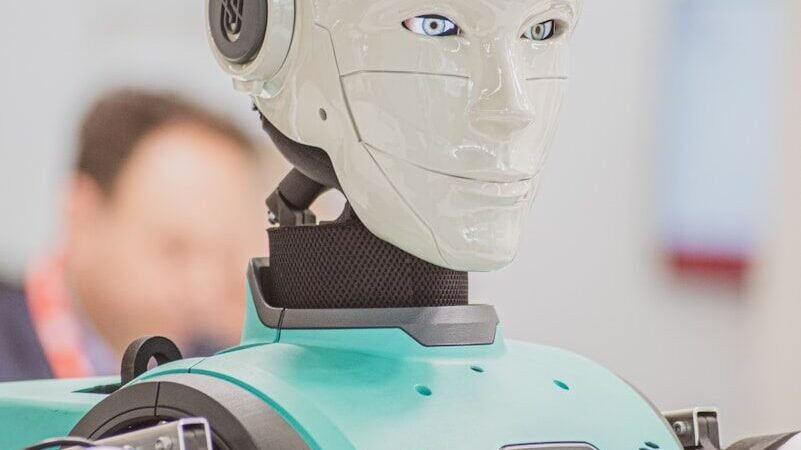
Tuya Smart (NYSE: TUYA; HKEX: 2391) unveiled Doova, an AI companion robot designed for independently living seniors, at IFA 2026 in Berlin on September 5, 2026. The Tuya Doova AI companion robot combines fall detection, LLM-powered conversation, smart home hub functionality, and autonomous home monitoring into a single mobile device — a feature set that positions it at the intersection of eldercare, consumer robotics, and Tuya’s broader AIoT platform business.
The announcement is significant because it marks the first time a publicly traded IoT platform company has entered the elderly companion robot category with an integrated hardware-and-cloud product. Tuya is not a robotics startup. It is a $341 million revenue (trailing twelve months as of June 2026) cloud platform with over 2 million registered AI developers, 155 million device shipments under the Works With Tuya program, and a dual listing on the NYSE and HKEX. Doova represents a different kind of entrant in a category dominated by venture-backed startups.
But the press release is long on capability descriptions and short on the details that matter to anyone evaluating whether this product is real, safe, or commercially viable. Here is what the press release says, what it doesn’t say, and what the publicly available data tells us.
What Doova Does — According to the Press Release
The press release describes four core functional areas:
Emergency response. Doova is equipped with LDS LiDAR, a four-microphone sound source localization system, and AI vision-based skeletal recognition algorithms. If a user falls or has an emergency, they can say “Hey Tuya, help” and Doova will locate them, move to their side, and assess the situation. If no response is detected within 60 seconds, it initiates a two-way live video call alert to family members.
Companionship and daily assistance. Powered by a multimodal large language model, Doova can hold natural conversations, play entertainment content, help interpret bills and letters, identify potential scam risks, guide users through operating smart appliances, provide medication and schedule reminders, and engage users with light interactive games. Over time, it learns preferences and offers personalized suggestions for meals, gardening, and outfits.
Home monitoring. When users are away, Doova patrols the home using a “node-oriented coverage strategy” — moving from room to room on dual-wheel drive with caster wheels, performing 360-degree scans at each location, and generating safety reports delivered to the user’s phone. It supports autonomous docking and recharging.
Smart home hub. Through Tuya’s AIoT ecosystem, Doova serves as a voice-controlled smart home hub, coordinating lighting, curtains, kitchen appliances, and bathroom devices.
The physical design includes a 10.1-inch HD display, dynamic facial expressions, a soft curved form factor, and height optimized for interaction whether the user is standing, seated, or reclining.
Layer 1 — Why Now: The Demographic and Market Pressure
The timing of Doova is not arbitrary. The global eldercare assistive robots market was valued at approximately $3.5 billion in 2026 and is projected to grow to $10–12 billion by 2035, according to multiple market research firms including Roots Analysis, MarkWide Research, and The Business Research Company. CAGR estimates range from 12.5% to 17.4% depending on market definition.
The AI care companion robot segment specifically — a narrower category focused on AI-powered companion robots for older adults — was valued at $228–277 million in 2025, with growth forecasts ranging widely from 4.6% CAGR (QY Research) to 52% CAGR (Intel Market Research), reflecting disagreement about how fast the market will mature.
The underlying driver is demographic. The WHO projects that 1 in 6 people worldwide will be aged 60 or older by 2030, with the population doubling to 2.1 billion by 2050. The WHO also estimates a global shortage of 10 million healthcare workers by 2030. In the United States, CMS reported home-health spending of $169.4 billion in 2024, up 10.2% from the prior year.
For Tuya specifically, the “why now” is also commercial. Tuya’s Q2 2026 revenue was $92.9 million, up 16% year-over-year. Smart home and robot product revenue was $13.5 million in Q2 2026, up 23.2% year-over-year — the fastest-growing segment. But in Q1 2026, that same segment declined 6.9% year-over-year before rebounding. The volatility suggests Tuya is still finding its footing in hardware, and Doova represents a bet that a purpose-built robot for a high-growth demographic segment can stabilize and accelerate that revenue line.
Layer 2 — Competitive Positioning: Where Doova Fits in a Crowded Field
The elderly companion robot market is not empty. Doova enters a field with established players across multiple form factors and price points:
Intuition Robotics (ElliQ): The most established consumer-facing option in the United States. ElliQ is a tabletop device that proactively initiates conversations, suggests activities, prompts medication reminders, and facilitates family video calls. Pricing is $249.99 enrollment plus $30–59 per month subscription. The New York State Office for the Aging reported 834 older adults enrolled in its ElliQ program by May 2025, with over 3,500 applications received. Washington State Medicaid approved ElliQ coverage under Community First Choice in March 2026. ElliQ reported a 95% reduction in self-reported loneliness among participants who used it for at least 30 days, though researchers have called for randomized controlled trials. Critically, ElliQ does not include fall detection or emergency response — it explicitly cannot call 911.
Hyodol Companion Doll
Hyodol: A ChatGPT-powered companion doll designed to look like a seven-year-old grandchild. Deployed to over 12,000 South Korean seniors as of November 2025, primarily through government welfare programs. Cost is approximately $879 in Korea, with a U.S. launch planned for 2026 following FDA registration in late 2024. Hyodol includes medication reminders, motion sensors that alert caregivers if no movement is detected for 24 hours, and conversational AI. It is a stationary device — it does not move around the home.
PARO (Intelligent System Co., Japan): A therapeutic robotic seal available since 2003. FDA-cleared as a Class II medical device for neurological therapy. Costs approximately $6,000. Used almost exclusively with dementia patients in care facilities. Over 30 countries. It does not move, converse, or monitor — it provides emotional engagement through touch and sound responses.
Lovot (Groove X, Japan): A palm-sized companion robot at roughly ¥500,000 ($3,500). Designed for the home with emotional computing, follow-me navigation, and gesture recognition. Does not provide monitoring, emergency response, or smart home hub functionality.
Other Entrants at IFA 2026
Other entrants at IFA 2026 itself: PrimeBOT (T1 and Q1 humanoid personal robots), SwitchBot (Onero home robot), LG (CLOiD robot housekeeper), and DOBOT (LUMO humanoid companion). The Verge’s Jennifer Pattison Tuohy noted that the consumer companion robot category is one “everyone demos at CES and almost nobody ships.”
Doova’s positioning is distinctive. It is the only product in this competitive set that combines mobility (it moves around the home), emergency response (fall detection + 60-second escalation to family video call), LLM-powered conversation, smart home hub functionality, and autonomous home monitoring in a single device. ElliQ is stationary and has no emergency response. Hyodol is stationary and has a 24-hour movement sensor, not real-time fall detection. PARO is therapeutic only. Lovot is companionship only.
The question is whether that breadth is an advantage or a liability. No competitor offers all of these features because each has chosen to specialize deeply in one function rather than spread across many. ElliQ focused on proactive companionship and built clinical validation and Medicaid reimbursement. PARO focused on dementia therapy and built FDA clearance and peer-reviewed evidence. Hyodol focused on government welfare deployments and reached 12,000 units. Doova is attempting all of the above simultaneously.
Layer 3 — Public-Data Sweep: Tuya’s Financials, Developer Ecosystem, and Track Record
Tuya is a different kind of company than every other player in this market. Here is what public data reveals:
Financial profile. Tuya’s trailing twelve-month revenue as of June 2026 is $341 million. Q2 2026 revenue was $92.9 million, up 16% year-over-year. The company is profitable — net profit was $18.6 million in Q2 2026, with a net margin of 20.1%. Tuya holds $976.1 million in cash, cash equivalents, time deposits, and treasury securities. The market capitalization has declined from $1.36 billion in March 2026 to approximately $950 million–$1.15 billion by August 2026, depending on the data source — a decline of roughly 16–30% over the year.
Revenue structure. Tuya’s revenue comes from three segments: PaaS ($67.9 million in Q2 2026, 73% of revenue), AI application and others ($11.5 million, 12%), and smart home and robot products ($13.5 million, 15%). The smart home and robot product segment — the one Doova belongs to — is the smallest but fastest-growing at 23.2% year-over-year in Q2 (though it declined 6.9% in Q1). This segment generated $45.7 million in FY 2025.
Developer Ecosystem
Developer ecosystem. Tuya’s AI Developer Platform had 2,092,000 registered AI developers from over 200 countries as of June 30, 2026, up from 1,970,000 in March 2026 and 1,801,000 in December 2025. Over 15,930 AI agents have been developed on the platform. The platform supports 3,000+ device categories and 155 million device shipments under the Works With Tuya program. This ecosystem is Doova’s biggest structural advantage — it is not shipping a standalone robot, it is shipping a node in a pre-existing smart home network.
Prior robot experience. Doova is not Tuya’s first robot. In January 2026, Tuya launched Aura, an AI companion robot for pets, at CES 2026. Aura featured V-SLAM navigation, binocular vision, AI pet recognition, emotional state analysis, and treat dispensing. However, as of the Aura announcement, Tuya had not shared a release date or pricing. The TechBriefs’ coverage of Tuya’s IFA 2026 presence notes that Tuya’s AI Robot product line also includes Fuzozo, Walulu, an AI owl, and an AI robot dog — suggesting multiple robot products in development or deployed through partner ecosystems.
Corporate context. Tuya is headquartered in Hangzhou, China, with a US office in Santa Clara, California. The company was founded in 2014 and went public on the NYSE in March 2021. The contact email in the Doova press release (502114262@qq.com) uses a QQ Mail address, which is unusual for a publicly traded company’s official media contact — most NYSE-listed companies use corporate email domains.
Layer 4 — The Unasked Question: Is Doova a Medical Device or a Consumer Product?
The press release describes Doova as a “home companion robot” and positions it within Tuya’s “AI+IoT ecosystem.” But the feature set — fall detection, skeletal recognition, emergency response workflow, medication reminders, scam detection — blurs the line between a consumer electronics product and a medical device.
This distinction matters enormously. If Doova is classified as a medical device, it requires FDA clearance, clinical validation, and compliance with medical device regulations in every market it enters. If it is a consumer wellness product, it avoids those requirements but also cannot make medical claims — and its fall detection and emergency response features carry legal liability if they fail.
Competitors have navigated this boundary carefully. PARO is FDA-cleared as a Class II medical device. ElliQ is explicitly classified as a wellness companion, not a medical device, and CompanionWise’s safety review noted the absence of emergency calling as a significant gap. Hyodol obtained FDA registration in late 2024 ahead of its U.S. launch. The press release does not mention FDA clearance, CE marking, or any regulatory classification for Doova.
The 60-second response window is particularly important. Doova’s emergency workflow waits 60 seconds after locating the user before escalating to family. If a senior has a stroke, cardiac event, or serious fall, 60 seconds is a long time. Traditional medical alert systems (Medical Guardian, Bay Alarm Medical, Life Alert) trigger immediately upon fall detection or button press and connect directly to 911 or a monitored response center. Doova escalates to family members, not emergency services — and the press release does not specify whether it can contact 911 or professional monitoring services.
Layer 5 — Honest Translation: What the Claims Mean in Practice
“AI vision-based skeletal recognition algorithms.” This means Doova uses computer vision to detect human body posture and identify falls. This technology is not new — Cherry Labs, Vayyar Care, SafelyYou, and Origin Wireless all offer fall detection systems. Apple Watch has had fall detection since 2023. The difference is that Doova is a mobile robot that must navigate to the user before assessing them, while dedicated fall detection systems use fixed sensors in known locations. The press release does not report accuracy rates, false positive rates, or testing conditions.
“Multimodal large language model.” This means Doova can hold conversations using AI similar to ChatGPT. Hyodol uses ChatGPT. ElliQ uses multiple LLMs with a proprietary “relationship orchestrator.” The press release does not specify which LLM Doova uses, whether conversations are processed locally or in the cloud, what happens during internet outages, or what guardrails prevent the AI from giving medical advice or making erroneous claims.
Learns User Preferences
“Learns user preferences and becomes more personally helpful.” This implies ongoing data collection and behavioral profiling. The press release does not address data privacy, storage policies, retention periods, or whether conversations and home monitoring data are shared with third parties. For a product designed for vulnerable seniors, this is a significant omission. ElliQ’s safety review by CompanionWise flagged its six-year data retention and always-on cameras as concerns.
“Node-oriented coverage strategy.” This means Doova moves to the center of each room and performs a 360-degree scan, rather than following walls like a patrol robot. This is a reasonable navigation approach, but the press release does not mention how Doova handles stairs, thresholds, carpet transitions, pets, or obstacles — the real-world conditions that plague robot vacuum navigation.
“Autonomous item-finding throughout the home.” Listed as a future value-added service, not a current capability. This is honest framing, but it means the product is being announced with features that do not yet exist.
Layer 6 — Decision-Maker Framing: Who Should Pay Attention and Why
For senior care providers and healthcare systems: Doova’s integrated approach — combining monitoring, companionship, emergency response, and smart home coordination — is architecturally interesting but unvalidated. No clinical studies, pilot deployments, or independent evaluations are referenced in the press release. ElliQ has the New York State Office for the Aging deployment data. Hyodol has Pusan National University studies. PARO has two decades of peer-reviewed research. Doova has trade show interest. Any healthcare system considering Doova should wait for independent clinical validation before deployment.
For families evaluating eldercare technology: Doova’s feature list is compelling, but the absence of pricing, availability, regulatory status, and safety certifications makes it impossible to evaluate against established alternatives. ElliQ costs $249.99 plus $30–59/month and is available now. Hyodol costs approximately $879. PARO costs $6,000. A medical alert system costs $30–50/month. Doova’s pricing is unknown. Its availability is unknown. Its regulatory status is unknown. Families should not make decisions based on trade show announcements.
Into Consumer Hardware
For Tuya investors: Doova represents a strategic expansion from Tuya’s core PaaS platform business into consumer hardware. The smart home and robot product segment generated $13.5 million in Q2 2026 — 15% of revenue and growing at 23% year-over-year. If Doova succeeds, it could accelerate this segment. But Tuya’s Q1 2026 smart home and robot product revenue declined 6.9% year-over-year before rebounding in Q2, suggesting this segment is volatile. The company’s market cap has declined 16–30% in 2026. Investors should watch for: Doova pricing announcement, regulatory clearance status, pilot deployment data, and whether the smart home and robot product segment can sustain its Q2 growth rate.
For competitors in eldercare robotics: Tuya is a different kind of competitor. It is not a startup burning venture capital — it is a profitable, publicly traded company with $976 million in cash, 2 million developers, and an existing smart home ecosystem spanning 155 million devices. If Tuya prices Doova aggressively and leverages its developer network for distribution, it could undercut ElliQ and Hyodol on price while offering a broader feature set. But Tuya has no track record in healthcare, no clinical partnerships disclosed, and no regulatory expertise in medical devices. Its prior robot product (Aura, for pets) launched in January 2026 without pricing or availability — nine months later, those details remain unclear.
What Is Genuinely New vs. What Is Repackaged
Genuinely new: The integration of mobility, fall detection, LLM conversation, smart home hub, and autonomous monitoring in a single device targeted at seniors. No competitor combines all of these. Tuya’s existing AIoT ecosystem — 2 million developers, 155 million devices, 3,000+ device categories — gives Doova a smart home integration depth that no standalone companion robot can match. Doova is also the first elderly companion robot from a major publicly traded IoT platform company, which changes the commercial dynamics of the category.
Improving: Tuya’s robotics portfolio is expanding. Aura (pet companion) launched at CES in January. Doova (senior companion) launched at IFA in September. The company’s AI developer platform grew from 1.8 million to 2.09 million registered developers in six months. The smart home and robot product revenue line grew 23.2% year-over-year in Q2. Tuya is building a robotics business incrementally, and Doova is a logical step from pet care to elder care.
Framing is Familiar
Repackaged: The “AI companion for everyday life” framing is familiar. The “soft, curved form” that “moves away from the cold, mechanical look” is a design philosophy shared by nearly every companion robot on the market — PrimeBOT says the same thing, as does Lovot, as does ElliQ. The “aging in place” market narrative is well-established and widely cited by every market research firm covering the space. The specific combination of LDS LiDAR, microphones, and AI vision is technically standard for mobile robots — robot vacuums have used similar sensor stacks for years.
Unclear: Whether Doova’s fall detection works reliably in real homes with variable lighting, clutter, pets, and multiple occupants. Whether the 60-second escalation delay is appropriate for medical emergencies. Whether Doova can contact professional emergency services or only family members. And, whether the LLM-powered conversations include medical safety guardrails. Whether Doova has received any regulatory clearance. Whether the home monitoring feature records video and, if so, how that data is stored and protected. Or, hether Tuya has clinical partners for validation. The press release answers none of these questions.
The Question the Press Release Doesn’t Answer
The most important question is not about Doova’s features. It is about trust.
A companion robot for seniors is not a smart speaker or a robot vacuum. It is a device that positions itself as a safety net for vulnerable people living alone. The press release says Doova will “assess the situation in real time” and “initiate an emergency response workflow.” These are not consumer electronics claims — they are safety claims. And safety claims require evidence.
ElliQ has deployment data from the New York State Office for the Aging. Hyodol has studies from Pusan National University and Seoul National University. PARO has two decades of peer-reviewed clinical research and FDA clearance. Doova has “strong interest from attendees at IFA 2026.”

A Legitimate Product
None of this means Doova will fail. Tuya has the resources, the ecosystem, and the engineering capability to build a legitimate product. The feature set is genuinely differentiated. The market opportunity is real and growing. But the gap between the press release and the evidence needed to take Doova seriously as a safety product is wide — and Tuya has not closed it.
Until Doova has pricing, regulatory classification, independent testing data, and at least one pilot deployment with published results, it remains a promising prototype with an ambitious feature list. The elderly companion robot market has seen many of those.
This article is based on the press release issued by Tuya Smart on September 5, 2026, via PR Newswire, and additional publicly available information including Tuya Smart’s Q1 and Q2 2026 financial results, PR Newswire, StockTitan, The TechBriefs, Third News, MarketScreener, TradingView, PitchBook, Macrotrends, Companies Market Cap, Stock Analysis, Simply Wall St, Tuya’s developer documentation, Future Market Insights, Intel Market Research, QY Research, Persistence Market Research, Roots Analysis, MarkWide Research, The Business Research Company, HTF Market Intelligence, HelpingParentsAge.com, The Robot Report, Rest of World, CB Insights, CompanionWise, RobotWale, and youngju.dev. Tuya Smart is a publicly traded company (NYSE: TUYA; HKEX: 2391). Doova’s pricing, availability, regulatory status, and clinical validation have not been disclosed. Market size figures vary significantly across research firms and should be treated as estimates. Independent testing of Doova has not been published.
Contact: techrecasteditor@gmail.com