
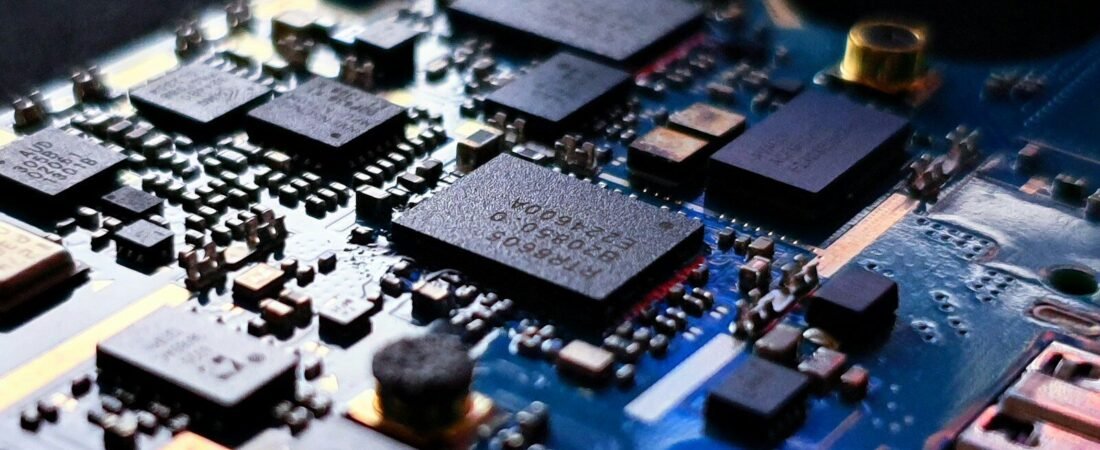
Rashi Semiconductor Solutions is holding court at Electronica India 2026 this week. Its booth at BIEC Bengaluru demos AI edge boards, robotics platforms, surveillance systems and memory products.
The release frames the booth as a capability showcase. The real story sits two weeks out. On October 1, a joint venture with Japan’s Restar Corporation takes over this business. India semiconductor distribution gains a new Japanese-backed entrant.
Rashi Peripherals (NSE: RPTECH; BSE: 544119) announced the JV in early August 2026. The deal moves Rashi’s semiconductor division into a wholly owned subsidiary in Bengaluru. A step-down subsidiary in Singapore comes with it, and Restar buys 26%. Rashi keeps 74% and three of four board seats. Neither party has disclosed what that 26% costs.
The timing is uncomplicated. The JV goes live on October 1. Electronica India, the country’s biggest embedded and electronics trade show, is the last major stage before kickoff. Rashi also held its AGM on September 9 and posted record Q1 results in August. Management is keeping the semiconductor story warm while the PC and components cycle does the heavy lifting.
The India Semiconductor Distribution Race Heats Up
The macro backdrop explains why distributors want this lane. India’s government and industry target a $150 billion semiconductor ecosystem by 2030, a figure the company itself cites. Distribution sits between global chipmakers and local manufacturers, and that layer is now consolidating around engineering capability.
The global template
Arrow Electronics and Avnet define component distribution with a design chain attached. Arrow posted $30.9 billion in 2025 sales; Avnet runs about $24.7 billion in revenue. Both pair logistics with field application engineering (FAE) support, helping customers design chips into products rather than just shipping boxes. Both already operate in India. The Rashi-Restar JV imports that playbook: local distribution plus Japanese engineering and supplier access.
The local field
India’s ICT distribution landscape looks different. Redington, the country’s largest distributor, runs a $13.5 billion-plus business across 40 markets, but its strengths are consumer tech, enterprise and cloud. Ingram Micro India, Savex and Supertron play the same IT channel game.
Rashi, with ₹15,827 crore in FY26 revenue, is smaller than Redington but claims a head start. It became the first Indian ICT distributor to enter the semiconductor business in 2021. A dedicated Embedded Lab in Bengaluru followed in May 2024.
For India semiconductor distribution, the JV effectively adds a serious design-chain contender where none of the local ICT giants had one. Restar, a Tokyo-based conglomerate of roughly $4 billion in scale, gets an India entry without building from scratch.
What Public Data Shows About India Semiconductor Distribution’s Newest Bet
The filings tell a clearer story than the booth copy.
The parent’s numbers
Rashi Peripherals’ FY26 results show revenue of ₹15,827 crore, up 14.9% year on year. Exclude a one-off AI project in the prior year, and underlying growth runs at 31%. EBITDA rose 53% to ₹459 crore, and net profit grew 35% to ₹282 crore. The semiconductor business unit grew revenue 131% year on year. Management flagged the catch on the May earnings call. The base is small, and a meaningful contribution to the top and bottom line remains “a few years away.” Margins and returns run better than the core business, but working capital runs heavier.
The JV’s targets
Restar’s Japanese disclosure is more concrete than the Indian press release. It names the venture Rashi Restar Semiconductor Solutions and lists five locations: Bengaluru, Delhi, Ahmedabad, Mumbai and Chennai. The mid-term revenue target sits above ¥10 billion, roughly ₹580 crore.
Trade reporting adds a staffing plan of 50+ engineering hires over two years. Japanese design specialists will train Indian teams on the ground. Today’s release mentions none of these numbers.
The market’s reaction
RPTECH listed in February 2024 at ₹311 and now trades around ₹876–896, up more than 140% since listing. The stock actually fell 1.2% to ₹870.90 on announcement day — a muted response to what the company calls a milestone. The same quarter, Rashi also agreed to buy 67% of IT services firm VDA Infosolutions for ₹368.5 crore. Diversification is clearly running on two tracks at once.
New vs Repackaged: A Trade-Show Debut
New — almost nothing. Rashi announced the JV on August 4 and set up the India and Singapore subsidiaries during FY26. The genuinely new event, the October 1 go-live, is still ahead of us.
Improved — the JV structure itself. The four-member board has taken shape, the JV has mapped its five-city footprint, and the hiring plan gives the engineering story teeth. That is real progress from an agreement to a going concern.
Repackaged — the showcase. The headline categories at Electronica — AI edge, industrial automation, robotics, security, memory and storage — are the existing line card. The Embedded Lab dates to May 2024, and “first ICT distributor to enter semiconductors” has been company boilerplate since 2021.
Unclear — the branding, oddly. Today’s release calls the entity Rashi Semiconductor Solutions. Restar’s filing says it becomes Rashi Restar Semiconductor Solutions on October 1. The release also omits the 50-hire engineering commitment that featured in August’s announcement.
The Questions the Press Release Doesn’t Answer
What did the 26% cost? No valuation appears in either the Indian or Japanese disclosure. Investors cannot judge whether Restar paid a premium for access or a discount for a small base.
How big is the business being transferred? A 131% growth rate without an absolute number tells you direction, not size. Against ₹15,827 crore of group revenue, the semiconductor division is a rounding error today — but how small, exactly, is undisclosable from public filings.
How will investors track it? Rashi reports two verticals, PES and LIT, with semiconductors buried inside. A separate JV line would settle the question.
What about channel conflict? The plan is to cross-sell both partners’ line cards. If Restar’s suppliers compete with Rashi’s existing brands, someone’s margin takes the hit.
India Semiconductor Distribution: What This Means for You
If you run procurement at an EMS firm, automotive Tier-1 or machine-vision OEM, the JV is good news. Local FAE support backed by a $4 billion Japanese partner is scarce in India. Demand specifics before you commit: FAE response times, image-sensing roadmaps, and design-win support terms. The October 1 date is your leverage point; the JV wants early design wins.
If you are an investor, treat the JV as a long-dated option rather than an earnings driver. The core business still rides the PC refresh and memory pricing cycle, and management itself says semiconductor profits are years away. Watch three markers: the Q2 FY27 print in November, the JV’s first quarter of operations, and VDA consolidation.
If you compete in distribution, note the asymmetry. Arrow and Avnet have the engineering depth but not the local Japanese-Indian hybrid model. Redington has the balance sheet to copy this move. India semiconductor distribution is about to get more crowded, and this JV is the opening signal.
Editor’s Note
This article draws on Rashi Semiconductor Solutions‘ 16 September 2026 press release; showcase details, JV structure and company statistics are company-reported. It also uses Rashi Peripherals’ FY26 results, earnings call commentary and NSE/BSE disclosures. Competitor and JV details come from Restar’s Japanese press release and trade reporting by CRN Asia, DIGITIMES and Indian financial media. Independently verified: financial results, JV structure and dates, stock movement and competitor scale figures. Not verified: the semiconductor division’s absolute revenue, the JV’s valuation, and the staffing plan beyond the company’s stated targets.