
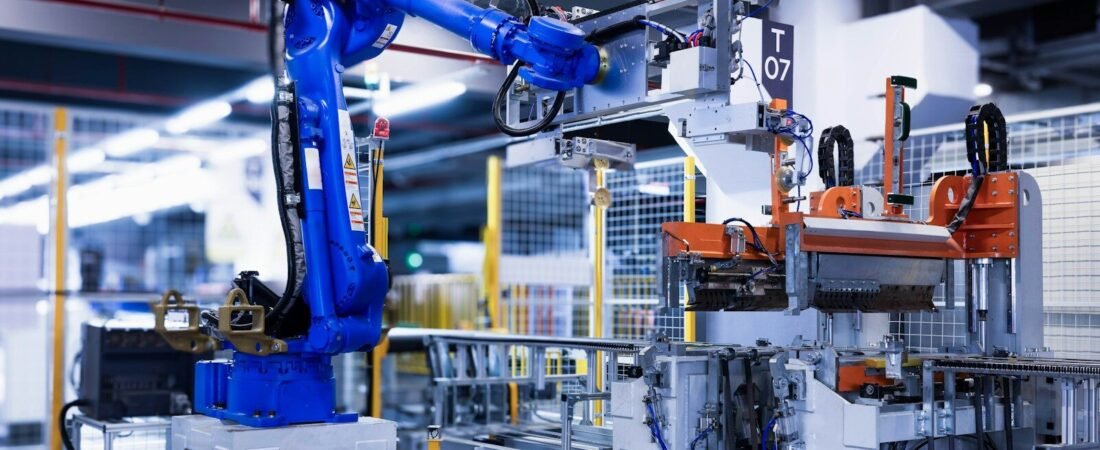
On September 16, 2026, Affordable Robotic and Automation Limited announced the ARAPL robotic welding orders — three purchase orders aggregating approximately Rs 23.69 crore (roughly $2.8 million) for the supply of turnkey robotic welding lines. The orders, from unnamed domestic customers, are valued at approximately Rs 13.66 crore, Rs 6.21 crore, and Rs 3.81 crore, with all material scheduled for delivery by December 2026. The company, India’s first listed robotics firm (BSE: 541402 | NSE: AFFORDABLE), framed the wins as routine: orders received “in the ordinary course of business.”
The framing is technically accurate and analytically misleading at the same time. These orders equal about 20 percent of ARAPL‘s entire FY26 consolidated revenue of roughly Rs 118 crore, and they land in a quarter where the company badly needs execution wins. They also arrive at an inflection point for India’s industrial robotics market, where a policy-driven boom is meeting its first real test.
Why This Announcement, Why Now
The India Automation Backdrop
To see what these orders mean, start with the market they serve. India installed a record 9,120 industrial robots in 2024, up 7 percent year-on-year, making it the world’s sixth-largest installer, according to the International Federation of Robotics. The automotive industry — ARAPL’s home turf — accounted for 45 percent of those installations, with parts suppliers ramping robot adoption by 40 percent in a single year. The country’s operational robot stock now stands at 52,570 units, tenth globally.
Yet India’s robot density sits around 12 robots per 10,000 manufacturing employees, against 415 in South Korea and roughly 400 in Japan and Germany. That gap is the entire bull case for Indian automation vendors: a growing manufacturing base that is structurally under-automated, now buying robots faster than almost any major economy. Market researchers put India’s industrial robotics market at roughly $1.6–2.1 billion today, compounding at 13–17 percent annually through the end of the decade.
The flywheel behind that growth is policy. Production Linked Incentive schemes have channelled thousands of crores into domestic manufacturing capacity, and much of that capex specifies automated lines as baseline equipment. But the International Federation of Robotics has flagged a caveat that matters for ARAPL robotic welding orders specifically: installations may contract in 2026 as PLI programmes run their course, before longer-term projects take over. Order intake in this window is the clearest signal of which integrators are winning the post-subsidy demand.
The Company-Specific Timing
ARAPL’s own numbers explain the announcement’s urgency. The automation vertical — the business these three orders belong to — has an order book that shrank from roughly Rs 53 crore in December 2025 to just under Rs 45 crore by May 2026, because execution ran ahead of new bookings. The larger car parking vertical (about Rs 82 crore) cannot carry a company whose brand identity is industrial robotics.
The revenue line tells a harder story. FY26 standalone revenue fell about 32 percent to roughly Rs 109 crore, which management attributed to a deliberate “margin-led growth” strategy of executing selective, higher-quality projects. Profitability did swing dramatically — consolidated EBITDA turned from a Rs 2.3 crore loss to a Rs 17.2 crore profit, and consolidated PAT from a Rs 11.7 crore loss to about Rs 7 crore. Then Q1 FY27 (April–June 2026) undid the momentum: revenue roughly halved year-on-year to about Rs 11 crore, with roughly Rs 13 crore of dispatches slipping from Q1 into Q2 and the quarter posting an EBITDA loss of about Rs 3.3 crore.
Fresh welding orders of Rs 23.69 crore — booked in September, deliverable by December — sit almost exactly in the gap the company needs to close. If executed on schedule, they convert into recognized revenue in Q3 FY27, the quarter that would demonstrate the FY27 recovery management has promised.
The Competitive Picture: A Fragmented, Pune-Centric Market
Look past the press release and the competitive reality is a market with no dominant domestic player. Turnkey robotic welding in India is served by a fragmented field of small integrators — Fons Robotics, Aspirants Robotics, ERAA, Catrobotics, Autobot Systems, Weldbot, Shine Robo — most clustered around Pune’s automotive belt, alongside the Indian arms of global integrators like COMAU. None approaches ARAPL’s listed-company scale of 400-plus employees across 350,000 square feet, and none has its marquee client roster: Honda, SKH-Magna, Mahindra, Tata Motors, and Piaggio among roughly 75 named customers.
The economics of the work explain the fragmentation. Indian integrators typically do not make robots; they buy arms from Fanuc, ABB, KUKA, and Yaskawa, then earn their margin on fixtures, PLC integration, simulation, commissioning, and after-sales support. Industry pricing from Pune integrators illustrates the ticket sizes: a single-robot MIG welding cell runs Rs 25–45 lakh, a two-robot body-shop station Rs 60 lakh to Rs 1.2 crore, and a full multi-station line Rs 1.5–4 crore, with delivery timelines of 16–24 weeks for the larger systems.
Orders are Substantial
Against those benchmarks, the ARAPL robotic welding orders are substantial. The Rs 13.66 crore order is the equivalent of three to eight full welding lines in a single project — a body-shop-scale engagement, not a bolt-on cell. Even the smallest, at Rs 3.81 crore, sits at the top of the single-line range. These are the kind of contracts that Tier-1 automotive suppliers place when they are committing to new model programmes. This is consistent with ARAPL’s historical customer base even though the buyers are behind the curtain.
ARAPL’s structural differentiation is the two businesses the welding integrators do not have. Its robotic multilevel parking systems vertical carries the largest share of the current order book (about Rs 82 crore as of May 2026), giving it revenue ballast its private rivals lack. And its Humro subsidiary — built with a Rs 48 crore strategic investment, deploying autonomous forklifts and mobile robots with Fortune 50 companies in the US on a robots-as-a-service lease model — is a venture into warehouse automation that no Indian welding competitor can match. The same diversification cuts both ways, as the next section shows.
What the Data Shows
The public record lets you size this announcement precisely.
Order book trajectory: Rs 130 crore (December 2025) → Rs 127 crore (May 2026) → approximately Rs 149 crore (August 2026, after Rs 22 crore of bookings from June to August). Add the September announcement, and the confirmed order book is on course to clear roughly Rs 170 crore — an all-time high for the company, and about 45 percent higher than its FY26 consolidated revenue.
Materiality of the new orders: Rs 23.69 crore equals about 20 percent of FY26 consolidated revenue (roughly Rs 118 crore), about 22 percent of standalone revenue (roughly Rs 109 crore), and — most tellingly — about 53 percent of the entire automation order book as disclosed in May 2026. One September announcement replenishes half the vertical’s backlog.
The profitability paradox: FY26 delivered a genuine turnaround in margins (EBITDA margin from roughly 9 percent to 14.2–14.5 percent consolidated), but on revenue that declined sharply. Q1 FY27 then showed the fragility of project-based businesses: one quarter of slipped dispatches halved revenue and pushed the company back to an EBITDA loss. The pattern is classic small-cap automation: profits are real, but lumpy, and order-to-revenue conversion governs everything.
The Humro bet: The subsidiary has early Fortune 50 deployments and a three-year lease order book of about Rs 36 crore, with roughly Rs 60 crore more in the pipeline and a target of 200–225 machines deployed by March 2027 at roughly $2,500 per machine per month in lease revenue. Management has also said it plans to cut prices about 50 percent over two years to compete globally. That is a venture-scale bet layer on top of a small-cap balance sheet — funding in part by a preferential fundraise — and it raises the stakes on the core automation business generating cash.
What’s New vs. What’s Repackaged
The announcement’s new content is real: three concrete orders, with values, a delivery deadline, and a vertical (welding lines, turnkey). The boilerplate is equally easy to spot. Phrases like “growing adoption of automation by Indian manufacturers” and “efficiency, consistency and productivity” describe every robotics press release of the past decade. The closing paragraphs promoting parking solutions and Humro are cross-selling boilerplate that travels unchanged from announcement to announcement.
Two details deserve more weight than the release gives them. First, the aggregation itself is the signal: bundling three orders of Rs 13.66 crore, Rs 6.21 crore, and Rs 3.81 crore into one announcement produces a headline number (Rs 23.69 crore) larger than any single order in it — a standard small-cap disclosure practice worth recognizing when reading the news flow. Second, “ordinary course of business” is doing quiet work in this release. It tells you these are not marquee, board-level wins; they are steady intake, which is precisely why the market context and the shrinking automation backlog — not the individual customers — are the story.
The Questions That Weren’t Answered
Who are the customers? Confidentiality clauses are standard, but the omission blocks the most important analytical check: whether these are repeat orders from the existing 75-client roster (low risk, low novelty) or new logos (higher growth signal). Nothing in the release distinguishes the two.
What are the margins? A Rs 13.66 crore welding line and a Rs 3.81 crore system can carry very different contribution margins. Management’s state FY26 strategy was margin-led growth; whether these orders clear the company’s profitability bar has no mention.
Is the December 2026 deadline realistic? The company just book a quarter in which Rs 13 crore of schedule dispatches slip. Multi-station welding lines take 16–24 weeks to deliver even when execution is clean. All three orders delivering by December implies commissioning begins almost immediately, and the release offers no execution schedule.
What does the order book look like now? The company updated its confirmed order book in May (Rs 127 crore) and August (about Rs 149 crore). A September release that quotes no updated book figure invites the reader to do the arithmetic — roughly Rs 173 crore if the three orders are fully additive.
Which vertical mix, and what does it signal about the cycle? Welding lines point to automotive or heavy engineering customers. India’s parts suppliers raised robot installations 40 percent in 2024 — if ARAPL is capturing that wave, the timing supports the IFR’s view that supplier-side automation, not OEM-side, is where growth has shifted. Without buyer identities, the inference stays speculative.
What about Humro’s cash needs? A business planning 50 percent price cuts and a US inventory build alongside 200-plus machine deployments requires capital. Whether the core automation vertical’s cash generation covers it — or whether another raise is coming — remains the unaddressed question underneath this and every recent ARAPL announcement.
What This Means for You
If you run a manufacturing plant: The pricing benchmarks are your negotiation anchors. A single-robot welding cell should cost you Rs 25–45 lakh; a full multi-station line, Rs 1.5–4 crore — and quotes materially above those bands need justification. As PLI support tapers, integrators competing for a shrinking subsidy-driven order pool have reason to sharpen pencils. Welding remains the highest-ROI entry point for automation in Indian manufacturing, with the fastest payback in high-volume, repeatable joints.
If you invest in small-cap industrials: Watch three things. First, the Q3 FY27 (October–December) results — the December 2026 delivery deadline means these orders either show up as revenue in exactly that quarter, or the slippage pattern from Q1 has repeated. Second, the automation vertical’s order book in the next disclosure — September’s announcement should lift it above Rs 65 crore if nothing else churned. Third, Humro disclosures: machine counts deployed, lease revenue recognized, and any further fundraise. The core business has proven it can be profitable; it has not yet proven it can be both profitable and growing at the same time.
Advantage is Credibility
If you compete with ARAPL: The listed player’s advantage is credibility with large customers and a financing profile private integrators struggle to match — but its attention is split three ways across welding, parking, and US warehouse robotics. A focused integrator that can guarantee December delivery on a Rs 13 crore line has a real pitch against a diversified one carrying a Q1 slippage on its record.
If you follow India’s automation cycle: This single announcement is a clean data point on the post-PLI question the IFR has posed. If welding order intake holds through FY27 as subsidies taper, the demand base is structural — driven by wages, quality requirements, and export competitiveness rather than policy. And, if it cracks, India’s robotics story was partly an artefact of incentive timing.
Editor’s Note
This article analyzes ARAPL’s press release dated September 16, 2026 (Affordable Robotic and Automation Limited, BSE: 541402 | NSE: AFFORDABLE), cross-referenced against the company’s audited FY26 results and investor call disclosures filed with the BSE and NSE (conference call transcripts of February 18, 2026 and June 3, 2026, and the Q1 FY27 results coverage of August 13–14, 2026 in Machine Maker, Investoomarket, and ScanX).
Order book figures (Rs 130 crore as of December 2025; Rs 127.16 crore as of May 31, 2026, split between automation Rs 44.96 crore and car parking Rs 82.20 crore; approximately Rs 149 crore as of August 2026) come from those filings and disclosures. Market data comes from the International Federation of Robotics’ World Robotics 2025 press release (September 25, 2025), Grand View Research’s India industrial robotics outlook (August 2026), PS Market Research’s India robotics in manufacturing report, Mordor Intelligence’s India industrial automation analysis (March 2026), and the Robotics Center’s State of Robotics 2026: India. Competitive landscape and pricing benchmarks are drawn from the public websites and LinkedIn profiles of Pune-based integrators including Shine Robo Automation, Fons Robotics, Aspirants Robotics, ERAA, Catrobotics, Autobot Systems, and Weldbot Systems; these are self-reported figures and represent the market’s prevailing quoting ranges rather than audited data.
Uncertainties worth flagging: the release does not name customers, disclose margins, update the order book, or provide an execution schedule; the press release spells the Managing Director’s name as “Melind Padole,” while company filings use “Milind Padole”; the USD conversion of Rs 23.69 crore (roughly $2.8 million) is approximate; and whether all three orders deliver within calendar 2026 will only be verifiable in Q3 FY27 results.