
Handcrafted animation: a new Indian feature bets on 150 artists over AI
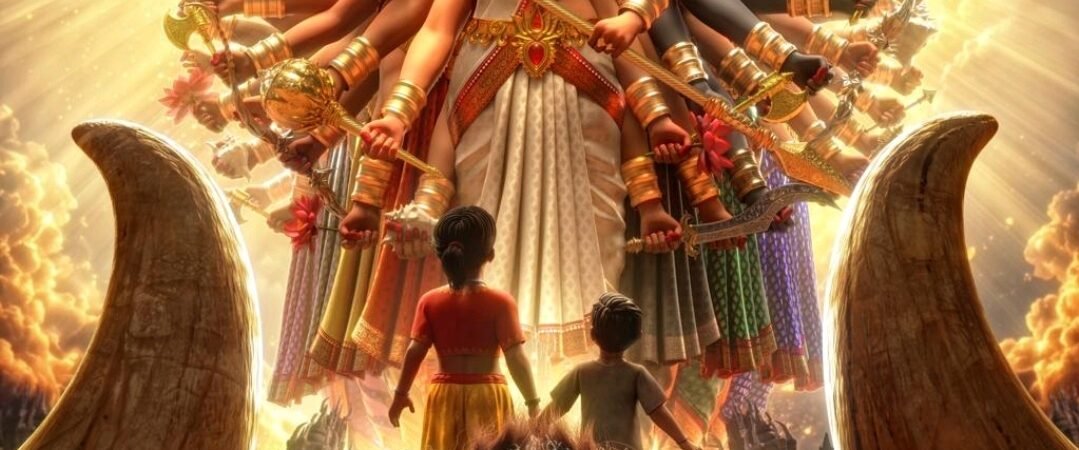
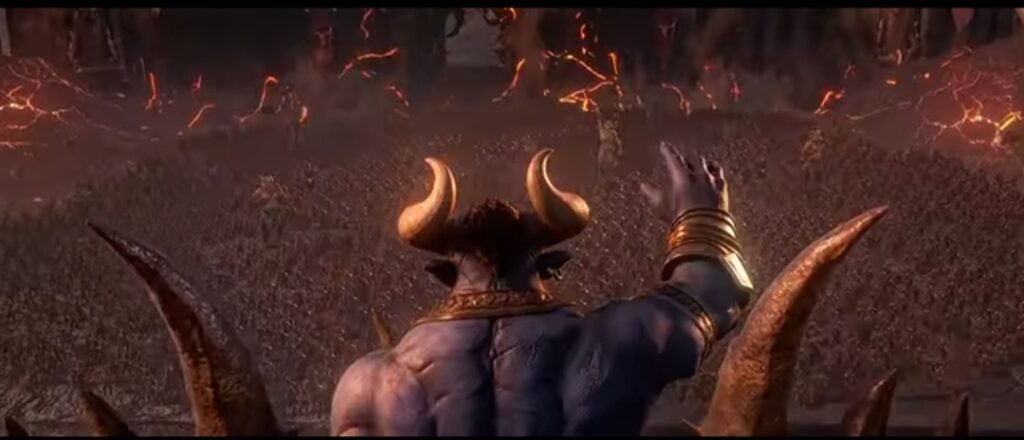
The makers unveiled the first look of Maha Devi Adishakti, an animated feature directed by Milind Nandanwar and written by author Akshat Gupta, at the start of Navratri. Gaurav Malhotra of Artha Entertainment and Animation produces the film, Shreyas Puranik composes the music, and it opens in cinemas worldwide in February 2027. It is a family film about the many forms of Devi, from Mahishasuramardini to Goddess Kali, aimed at carrying stories of the Divine Mother to a new generation.
The announcement’s most interesting line is not about the story. It is instead about how the makers produced the film: they say they chose the painstaking route of handcrafted animation, with more than 150 animators, rather than AI, at a time when AI is transforming content creation. The release discloses no distributor, budget or cast, so the claim sits inside a first look — but the claim itself is worth examining.
The choice the makers made
The release frames the decision as a commitment to animation as a deeply human craft. Director Milind Nandanwar described India as a land of spirituality and timeless wisdom, and said the team felt “divinely blessed” to bring the story to a new generation. Producer Gaurav Malhotra said the team grew up on devotional serials and books, and wanted to tell those stories in a format children can connect with, as a family film that brings grandparents, parents and children together.
Neither quote is about technology, and that is the point. By presenting handcrafted animation as the choice, the makers draw a line between a film made by artists and one generated by tools — a distinction that resonates in a sector where that line is being tested. The distinction the makers draw is between two ideas of production. In one, a small team directs generative tools and reviews their output; in the other, artists draw, rig, light and animate by hand, frame by frame. Handcrafted animation of the second kind is slower and more expensive, which is why studios under cost pressure have moved toward the first.
The release does not claim the film used no AI at all — only that its animation was made by hand, with a large team. That gap between the two methods is the real subject of the announcement, because it is the same gap that studios, training institutes and policymakers now negotiate across the sector.
Why the choice is notable
India’s animation and visual-effects industry is one of the places where AI’s effect on creative work is most measurable. The FICCI-EY 2026 report found that AI adoption in rotoscoping, paint, clean-up, asset variation, tagging and quality control delivered time savings of up to 40%, with gains of 55% to 65% in VFX-heavy genres such as sci-fi and fantasy. Those are precisely the tasks that formed the entry rung of an animator’s career.
The consequence is not only technical but human. Technicolor’s 2025 shutdown displaced up to 2,000 VFX and animation professionals in Bengaluru, and Jellyfish Pictures’ halt affected more than 100 artists in Mumbai. Analysts note that AI compresses the margins behind India’s cost advantage, leaving higher-value work — advanced compositing, simulation, virtual production — to studios that upgrade, and pushing those that do not toward contraction.
The promise of handcrafted animation is also a claim about quality: a hand-animated frame carries the weight of an artist’s decision in a way a generated one does not, and the makers are betting that the parents and grandparents who choose family films will notice. Handcrafted animation, in this reading, is not nostalgia; it is a labour position. The economics are blunt: a frame drawn by hand costs more than one generated and corrected, and the difference compounds across a feature’s length. That framing arrives at an awkward moment for the craft. Over the past two years, AI tools have moved from experiments to standard equipment in Indian VFX houses, and the studios that adopted them did so to survive re-pricing and shorter delivery windows. Handcrafted animation, in that context, is a deliberate refusal of the cheapest available route — and a bet that audiences will value the difference.
A growing but volatile sector
The market the film enters is expanding and unstable at once. India’s animation market stood at about $2.4 billion in 2025, and researchers project it will reach $13.95 billion by 2034, and the government has put money behind it: the Union Budget 2026-27 allocated ₹250 crore for AVGC content-creator labs in 15,000 schools and 500 colleges, against a projected need for close to two million professionals by 2030.
Yet the FICCI-EY 2026 report recorded a 6% contraction in Indian animation revenue in 2025, to about ₹27 billion, with weaker commissioning from US streamers and a shift toward franchise-adjacent bets. On screen, mythological and devotional animation has swung hard: Mahavatar Narsimha became the highest-grossing Indian animated film at about ₹327 crore in 2025, while Mahaprabhu Jagannath opened to about ₹2 lakh in 2026. The genre draws audiences but does not guarantee them — which makes a February 2027 release a genuine bet.
That tension — a growing market that is also re-pricing its work — is the backdrop for any handcrafted animation project, and it explains why the makers’ choice reads as a statement rather than a default. The film’s timing is also a bet on the devotional-animation audience. Indian families have shown they will turn out for mythological stories, but the record is uneven, and a February 2027 slot puts the film against both domestic releases and the streaming options that now compete for the same family viewing time. The government’s own push — ₹250 crore for creative labs and a target of two million professionals by 2030 — assumes the work will be there for them; the film’s outcome will not settle that question, but it will be cited in the debate.
The labour question
The claim of more than 150 animators is the kind of figure that reads as both a boast and a statement of intent. In a pipeline where AI can cut rotoscoping time by 40%, employing 150 people by hand is a cost decision as much as an artistic one — and the release does not say whether the pipeline used AI-assisted tooling anywhere else. That gap matters, because “manual animation” and “no AI” are not the same thing; most modern studios blend the two.
For the industry, the film is a test case with two possible readings. If it succeeds, it strengthens the argument that audiences reward craft and that hand-animation can be a commercial differentiator in a market increasingly shaped by generative tools. If it does not, it may reinforce the opposite: that handcraft is admirable but hard to sustain against AI-driven economics. Either way, the 150 animators are the story the announcement is really telling. There is a second-order question too. If a 150-artist production can succeed, it gives studios a reason to keep entry-level roles — the drawing, rigging and clean-up work that AI now automates. If it cannot, the market signal runs the other way, and the pipeline that trains new animators thins from the bottom.
What to watch
For the filmmakers, the test is whether the February 2027 release lands a distributor and a screen count, and whether the finished film justifies the handcrafted claim on screen rather than only in the press note. For the sector, the question is whether the choice becomes a template or an outlier, and whether Indian animation can keep the entry-level work that AI is absorbing. If a hand-animated devotional feature finds its audience, it makes the case that handcrafted animation is a commercial differentiator; if it does not, the case weakens. For audiences, the film offers a family-oriented treatment of devotional material in an animated form — a genre whose box-office record suggests both appetite and risk, and one that has produced both the biggest Indian animated hit and some of its quietest releases. Whether the handcrafted promise reaches the screen is the question the first look cannot yet answer.
What the announcement does and doesn’t establish
It establishes a film, a creative team, a release window and a distinctive production claim. It does not establish a distributor, a budget, a cast, or that the film used no AI anywhere in its pipeline. The animator count is a company figure, and the choice is a positioning as much as a production fact. It also does not say whether handcrafted animation extends to every part of the pipeline, or only to the character and effects work the release highlights.
The honest summary is that Maha Devi Adishakti is betting on handcraft in a sector where AI is redrawing the economics of creative labour. Whether that bet is artistic conviction, a marketing angle or both, it puts the question of who makes animation — and how — at the centre of a devotional family film that has not yet shown a frame in motion.