
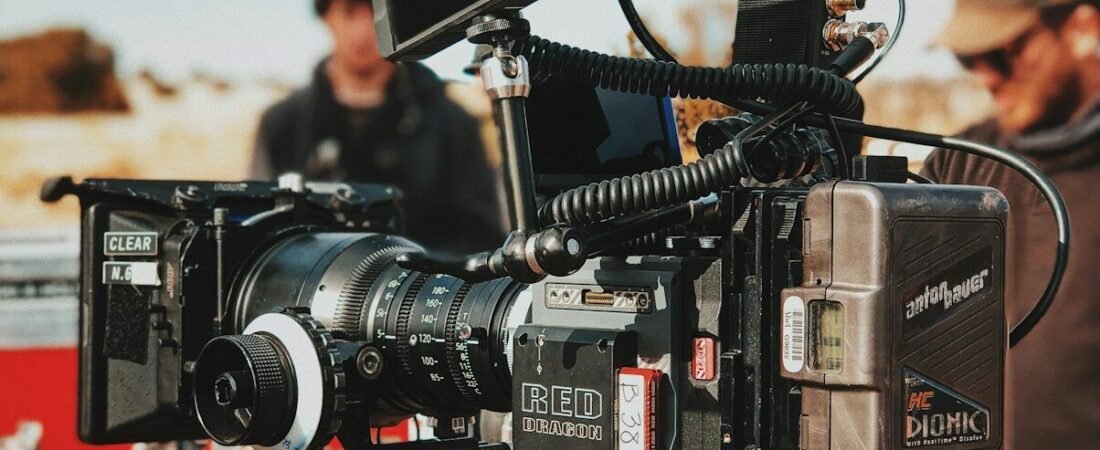
IICT and YouTube have unveiled the first four AI-enabled short films from their Create with AI programme. Four films are a small output. The machinery behind them is not: a national AI filmmaking mission, a platform supplying the tools, and a workforce target that runs into the millions.
What was unveiled
The four films come from Avium Studios, Eleventh Door Studio, Kalpanik Films and Karthik Kult Kreations. They are “Chekavar”, “CHANAKYA – The Mind of an Empire”, “DEVI: The Nine Astras” and “Laika”. The filmmakers screened them at the IICT Theatre in Mumbai and released them on their YouTube channels.
The programme pairs IICT’s infrastructure and faculty mentorship with YouTube’s AI software, tools and credits. Avium Studios has said it used Google’s Gemini and Flow in the workflow for Chekavar, a 30-minute Hindi historical film.
So these are real productions with real tooling, made by studios that chose to work inside a public programme. That is more than a demo reel.
The productivity claim, sourced
The release says a “new Gen Media India report by Public First and Google” finds generative media tools offer a 20% productivity boost for creative workers in India, saving roughly 390 hours a year.
Public First’s own data blog says something narrower. It estimates gen media tools “could boost the productivity of individual creators globally by 20%, saving them the equivalent of 390 hours a year”. The figure is a global estimate, reframed in the release as an India-specific finding.
Two further details matter. The study is a Public First × Google collaboration, and Google is a party to the programme being promoted. And Public First’s own write-up notes that employment in animation and special effects has fallen. That fall is under 1%, far below any reasonable estimate of productivity change.
The release leads with the upside and leaves out the caveat its own source supplied.
Why the state is backing AI filmmaking
The reason a national institute is running an AI filmmaking programme is that India has made creative technology a policy priority.
IICT is the National Centre of Excellence for AVGC-XR, established with the Ministry of Information & Broadcasting, the Government of Maharashtra, FICCI and CII. The Union Cabinet approved it in September 2024, and its first campus opened at the NFDC Complex in July 2025.
The Union Budget 2026-27 allocated ₹250 crore for AVGC Content Creator Labs in 15,000 schools and 500 colleges, with IICT as the nodal agency. Its AVGC Task Force projected a need for close to two million skilled professionals by 2030.
The economic case is real but modest at the base. India’s share of the global Animation & VFX industry, about $1 billion in 2022, is expected to reach roughly $6 billion by 2030. The generative AI animation segment alone is projected to grow from $61.6 million in 2023 to $931.5 million by 2033.
The gaps the films do not show
Two constraints sit under the ambition, and neither appears in the release.
The first is compute. IndiaAI Mission national capacity crossed 34,000 GPUs by May 2025, but it remains concentrated in metropolitan facilities. The creative talent the state is directing toward Tier-II and Tier-III cities is not matched by production infrastructure there. Rendering and generative workflows need distributed GPU access that general-purpose compute does not provide.
The second is copyright and tool stability. OpenAI’s Sora app went dark in April 2026, with the API set to discontinue in September. Productions built on it now carry open chain-of-title questions. Google’s Veo 3 was trained on YouTube videos, a point the company disclosed and creators have contested.
Independent production guidance is consistent that generative video works well for pre-visualisation and is not yet good enough for final shots that matter. That is a useful tool and a limited one.
What to watch
Whether the Content Creator Labs produce the pipeline the sector needs, or training that outruns production capacity. Whether the tooling stabilises enough for studios to build durable workflows on it. And whether the productivity claims get measured on Indian productions, rather than borrowed from a global model.
Four films are the start of a programme. The programme is the story.
Editor’s Note
This analysis, in fact, draws on the IICT and YouTube Create with AI release and PIB Mumbai coverage, Public First’s generative media research with Google and its published methodology, Ministry of Information & Broadcasting and PIB material on the AVGC-XR National Centre of Excellence and the 2026-27 Budget allocation, ORF analysis of AI in India’s AVGC industry, Tamil Nadu’s AVGC-XR Policy 2026, and independent reporting on AI video tooling and production workflows. Where a figure is a vendor’s own or an estimate, we say so.