
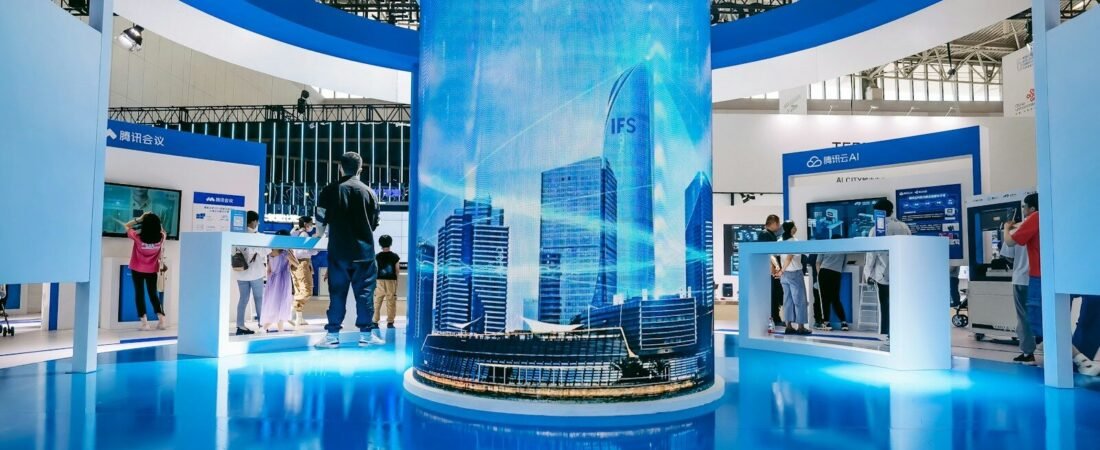
electronica India 2026 opened in Bengaluru on 16 September. The show fills 60,000 square metres of BIEC with more than 750 exhibitors from over 30 countries. Karnataka’s industries minister M. B. Patil inaugurated the three-day show, and cricketer KL Rahul welcomed the industry by video. A “Kinetic Wall” marked the ceremonial launch. The theme: “India’s Powerplay in Electronics.”
The show’s real story runs deeper than the opening ceremony. India’s electronics production has grown six-fold in a decade. Exports hit a record $48 billion last fiscal year, and the government just doubled its component-manufacturing incentive budget. Yet the industry remains heavily dependent on China for advanced core components. The trade show celebrates the boom; the exhibit floor will quietly reveal the gap.
The timing is deliberate. This is the first Bengaluru edition under a new bi-annual format. The show now runs in Greater Noida each April and Bengaluru each September. Organisers clearly want the South edition to carry the flagship weight.
What electronica India 2026 Actually Is
The event pairs two co-located fairs run by Messe Muenchen India. electronica India covers components, semiconductors, embedded systems and displays. productronica India covers production equipment: PCB manufacturing, surface-mount technology, assembly, soldering, inspection and testing.
The supporting programme
Eighteen conferences, summits and forums run alongside the exhibits, featuring more than 150 speakers. The formats largely recur from previous years. ELCINA’s CEO Forum, ICEA’s Industrial Electronics and Capital Goods Summit and MEDEPC’s exports-and-FTAs session all return. So do the Bharat PCB Tech Conference, the VDMA Symposium and the OE-A flexible-electronics symposium.
New this year are applied-technology twists. An inaugural Tech Challenge carries a ₹5 lakh prize pool, presented by DigiKey. An AI Buildathon and Masterclass joins a hand-soldering test. The programme also adds an industrial visit to the Central Manufacturing Technology Institute.
The 2027 announcements
The opening day also previewed next year’s expansion. BPCA (Bharat Printed Circuits and Assemblies) targets the PCB ecosystem. Defence Electronics NEXT addresses defence manufacturing, and an India Semiconductor Conclave joins them. All three are new conference brands, not policies.
The electronica India 2026 Numbers vs Previous Editions
The organisers’ own record frames today’s claims.
The scale story
Last year’s Bengaluru edition drew 733 exhibitors from 29 countries and 50,194 trade visitors across 55,000 square metres. This year’s release promises 750-plus exhibitors from more than 30 countries, 60,000 square metres, and 50,000-plus expected visitors. That is growth, but incremental — roughly 2% more exhibitors on 9% more floor.
The comparison gets less flattering further back. The 2024 edition in Greater Noida hosted 839 exhibitors and attracted the Prime Minister to its inauguration. It ran alongside a co-located SEMICON India. This year’s opening featured a state minister and a video from a cricketer. The 2026 release also omits any SEMICON India co-location.
The bi-annual experiment
Format strategy explains part of the picture. The new April 2026 edition in Greater Noida drew 355 exhibitors from 19 countries and 20,922 visitors. That is less than half the flagship’s scale. Splitting the show doubled the venues but halved the impact of each gathering, at least in the North. Whether two smaller fairs beat one large one remains an open commercial question for Messe München.
The India Story Behind the Show
The macro backdrop justifies the electronica India 2026 enthusiasm, even where the show’s own numbers don’t.
The boom, in verified numbers
Government data shows electronics production rising from ₹1.9 lakh crore in 2014-15 to ₹11.3 lakh crore in 2024-25. Exports rose eight-fold to ₹3.27 lakh crore over the same period. The Economic Survey 2025-26 calls electronics India’s third-largest and fastest-growing export category. Last fiscal year, exports reached nearly $48 billion, with smartphones contributing more than $31 billion. The national ambition: a $500 billion electronics ecosystem by 2030-31.
The component gap
Here the story sharpens. India has become self-reliant in enclosures, anode materials, optical transceivers and relays, per the IT minister. Domestic production now meets 60% of lithium-ion cell demand, 80% of laminate demand and 75% of connector demand. India has even begun exporting PCBs to China. But advanced core components still come overwhelmingly from China, and industry analyses flag the assembly-versus-depth problem as the sector’s defining constraint.
That is precisely why the government’s Electronics Components Manufacturing Scheme matters more to this show than any Kinetic Wall. The scheme launched in April 2025 with a ₹22,919 crore outlay, and the latest Union Budget raised it to ₹40,000 crore.
New vs Repackaged: What the Opening Actually Delivered
New — the 2027 brands. BPCA, Defence Electronics NEXT and the India Semiconductor Conclave are genuinely fresh launches, though they are conferences, not capabilities.
Improved — the applied formats. The Tech Challenge, AI Buildathon and industrial visits connect the show to engineering skills rather than just booth traffic. The bi-annual format itself is an experiment worth watching.
Repackaged — the theme and the programme. “India’s Powerplay in Electronics” was also the 2025 theme, reused verbatim. Most conference formats repeat from prior years. The visitor and exhibitor counts barely move. One more artifact deserves note: the release shipped with an internal annotation reading “to take approval” attached to the CEO quote — a reminder that even the quoted enthusiasm was pending sign-off.
Unclear — the substance. No deal values, investment commitments or policy announcements appear in the release. An exhibition opening is, by nature, a promise of activity rather than activity itself.
The Questions the Press Release Doesn’t Answer
What will the show actually produce? The release counts exhibitors and square metres, not outcomes. The 2024 edition reported over 2,000 scheduled buyer-seller meetings; this one reports none.
Do the 2027 initiatives duplicate what already exists? The government already runs a ₹40,000 crore component scheme; IESA already runs India’s flagship semiconductor events. A new “India Semiconductor Conclave” and a new PCB conference compete for the same speakers, sponsors and attendees.
Where does the visitor number come from? “Over 50,000 expected” is an organiser projection. Last year’s audited figure came in at 50,194 — a suspiciously similar bar.
What about the China pavilion? The release lists dedicated pavilions from Taiwan, Germany, Japan and China — a pragmatic acknowledgment that the country sourcing “self-reliance” still supplies the floor.
electronica India 2026: What This Means for You
If you source components or run an EMS line, prioritise the PCB and capital-goods tracks. The Bharat PCB Tech Conference and the ICEA summit are where the component-localisation pipeline — the actual commercial opportunity under the ₹40,000 crore scheme — will show up first.
If you invest in the sector, treat the show as a sentiment indicator, not a signal. The verifiable numbers — production, exports, scheme outlays — all point up. The component gap, not the show floor, determines which companies compound.
If you exhibit at electronica India 2026, weigh the bi-annual split carefully. The September edition is clearly the flagship; April in Greater Noida delivered barely 40% of this edition’s exhibitor count. Budget accordingly.
If you watch industrial policy, the honest read splits two ways. India’s electronics story is real, and the component gap is equally real. The 2027 conference launches will matter only if they translate scrutiny into sourcing commitments.
Editor’s Note
This article draws on the organiser’s 16 September press release for electronica India 2026. Event details, exhibitor counts and programme line-up are organiser-reported. It also uses Messe Muenchen India’s published figures for the 2024, 2025 and April 2026 editions. Indian government data, including the Electronics Components Manufacturing Scheme documentation and the Economic Survey 2025-26, completes the sourcing.
Independently verified: historical edition statistics, the bi-annual format change, production and export figures, and the ECMS outlay increase. Not verified: this edition’s projected visitor count, the exhibitor count beyond the organiser’s statement, and any commercial outcomes of the event.