
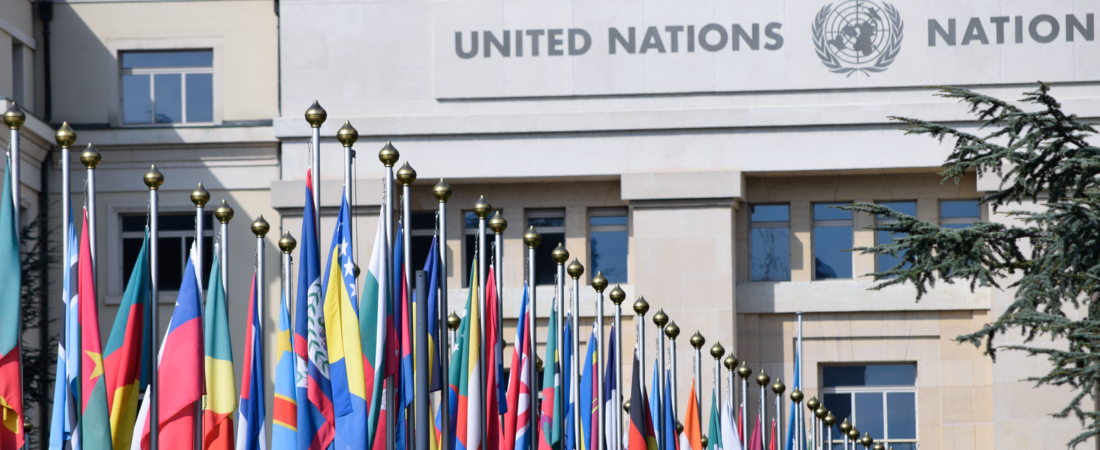
On September 20, the UN Global Compact published a summary of the 2026 UN Private Sector Forum, an invitation-only gathering at UN Headquarters in New York. The release says more than 100 CEOs, Heads of State and Government, and United Nations leaders discussed delivering a “clean, just and secure energy transition” at greater speed and scale. Secretary-General António Guterres and Global Compact chief Sanda Ojiambo both urged faster public-private cooperation.
What the release leaves out is equally informative. It names no commitments, no dollar figures, no initiatives and no attendees beyond its two quoted speakers. It describes discussions and calls.
The event’s own materials fill in the picture. The Forum ran as an afternoon gathering in the UN Delegates Dining Room, capped at 150 leaders, with registration closing on September 4. Format: a luncheon plus a one-hour moderated roundtable. Organizers marketed it as “a direct channel between business and the highest levels of the multilateral system.”
The timing is what makes it worth examining. This was Guterres’s final Private Sector Forum before his term ends on December 31. COP31 opens in Antalya seven weeks later. And the release lands amid the second major energy shock in five years.
Why the UN Private Sector Forum Met This Week
Three pieces of context explain the event’s place on the calendar.
A departing Secretary-General
Guterres steps down on December 31 after two terms, and the race to replace him has no clear front-runner. In the Security Council’s third straw poll on September 18, Costa Rica’s Rebeca Grynspan led with nine “encourage” votes. Guyana’s Carolyn Rodrigues Birkett took eight. Every candidate drew at least one “discourage,” according to diplomats who leaked the results.
Whoever takes office in January inherits the Secretary-General’s “call for accelerated action” on clean energy that this forum exists to inform. The next Secretary-General may treat that call very differently — or drop it entirely.
Seven weeks to COP31
COP31 convenes in Antalya, Türkiye, from November 9-20 under a split presidency: Türkiye hosts, while Australia’s Chris Bowen leads the negotiations under an arrangement agreed at COP30 in Belém. A Pacific pre-COP runs in Fiji and Tuvalu in early October. The Forum positions itself as the business input ahead of those talks.
One piece of context never appears in the release: the US withdrawal from the Paris Agreement took effect in January 2026. As a result, the multilateral climate process operates without its largest historical emitter at the table.
The second energy shock in five years
The International Energy Agency published its World Energy Investment 2026 report in May against the backdrop of the Middle East conflict, which it called the largest energy security threat in history. The release’s pairing of “clean” with “secure” mirrors that mood. Clean energy now sells as security and competitiveness policy, not only climate policy — a framing shift the conflict accelerated and this forum embodies.
The Competitive Picture: One Luncheon in a Crowded Climate Week
The Forum competes for relevance against bigger platforms. Climate Week NYC ran in New York at the same time. The COP31 action agenda, the World Economic Forum’s Davos gatherings, the G20 climate track and Mission 300 — the World Bank and African Development Bank’s electricity-access partnership — all chase the same corporate attention.
Its differentiator is access: the organizers promise proximity to UN principals and heads of state that few other venues offer. Its structural weakness is authority. The UNFCCC’s member states, not the Global Compact, negotiate climate outcomes. The Forum can convene, signal and shape language. It cannot decide anything.
One more difference from its competitors: attendance costs money. The event’s own FAQ states that it relies on “cost-covering contributions from private-sector participants” to fund the convening — a detail the press release never mentions.
What the Data Shows About the UN Private Sector Forum
Beyond the invitations and the framing, what do public numbers say? The IEA’s investment data gives the quantitative picture the release avoids.
The investment picture
The IEA projects global energy investment of about US$3.4 trillion in 2026, up 5% from 2025. Roughly US$2.2 trillion goes to clean energy — renewables, nuclear, grids, storage, low-emissions fuels, efficiency and electrification — against about US$1.2 trillion for oil, gas and coal.
Grid spending approaches US$550 billion, up nearly 20% year-on-year. Battery storage passes US$100 billion. Renewables attract about US$665 billion, with US$365 billion of that in solar alone. The capital the release wants mobilized is already moving — in some economies.
Where it isn’t moving
The IEA’s regional data shows the gap behind the release’s “energy access” language. Emerging and developing economies outside China attract less than 30% of global energy investment and 20% of power-sector investment, despite holding two-thirds of the world’s population. Africa receives roughly 2% of clean-energy investment while holding about a fifth of the world’s people. High financing costs, the IEA warns, hit capital-intensive clean technologies hardest in exactly those markets. That is the problem blended finance exists to solve — and the release names the tool without naming any money.
The host’s track record
The UN Global Compact, launched in 2000, counts more than 25,000 participants and calls itself the world’s largest corporate sustainability initiative. Its main compliance requirement is an annual “Communication on Progress” report; missing two in a row can delist a company.
Peer-reviewed research has long questioned whether membership changes behavior. A 2015 study of roughly 3,000 US firms found members performed worse than non-members on costly environmental and human-rights dimensions while improving on superficial ones. A 2022 study of 294 member companies against more than 12,000 controls found membership correlated with worse ESG performance — consistent with what researchers call “decoupling.” A forum of member CEOs promising action inherits that evidentiary burden.
What’s New vs. What’s Repackaged
Almost everything here is repackaged. The UN Private Sector Forum has convened during the General Assembly’s opening session since 2008. Guterres’s three-part ask — invest in clean power, use purchasing power, build infrastructure — restates messaging he has delivered for years. Grids, financing, policy stability and energy access restate the IEA’s own analysis.
The one genuine evolution is the framing. Clean energy as security and competitiveness policy, rather than purely climate policy, reflects a real shift in how governments and companies justify the spend. The Middle East conflict accelerated that shift, and the release leans on it in nearly every paragraph.
What remains unclear is substance. The release references a “collective business response” to the Secretary-General’s call without describing what it contains, who signed it, or when it will appear.
The Question the Press Release Doesn’t Answer
What did the participants commit to? The release describes what leaders “underscored,” “highlighted” and “examined.” It lists no pledges, no targets, no working groups and no follow-up dates. If the 100-plus CEOs agreed to anything specific, the release does not say so.
The UN Private Sector Forum’s format raises the follow-up questions. Which companies attended, and which paid the cost-covering contributions that fund the event? Does that funding shape the “business response” the Forum promises to deliver? And who carries this agenda after December 31, with no successor chosen and every current candidate facing opposition?
What the UN Private Sector Forum Means for You
If you run corporate sustainability, read the themes as a forecast. Grid investment, permitting reform and de-risked emerging-market finance mark where UN attention — and eventually disclosure expectations — will concentrate through COP31 in Antalya.
If you invest in energy or infrastructure, the blended-finance language marks the battleground. The IEA’s numbers show capital flowing heavily to China, the US and the EU. The growth case sits in markets where risk-sharing instruments determine whether projects close.
If you follow climate policy, judge this forum by November 20. A “collective business response” that surfaces at COP31 with names and numbers attached would mark this as a staging event. One that never appears would confirm it was a luncheon.
Editor’s Note
This article rests on the UN Global Compact press release dated September 20, 2026, plus public sources: the Forum’s own event pages and FAQ, the IEA’s World Energy Investment 2026 report and press materials, UNFCCC and Australian government COP31 pages, Reuters and PassBlue reporting on the Secretary-General selection, and peer-reviewed research on the Global Compact (Berliner and Prakash 2015; Sethi and Schepers 2014; a 2022 BI Norwegian Business School study). Forum outcomes, the attendee list and any commitments remain undisclosed beyond the press release’s summary. Statements attributed to the release or its speakers are unverified claims. Nothing here is investment advice.