
Here is the article verbatim:
Robotic Joint Replacement Meets India’s Cost Barrier as Stryker Launches Mako 4
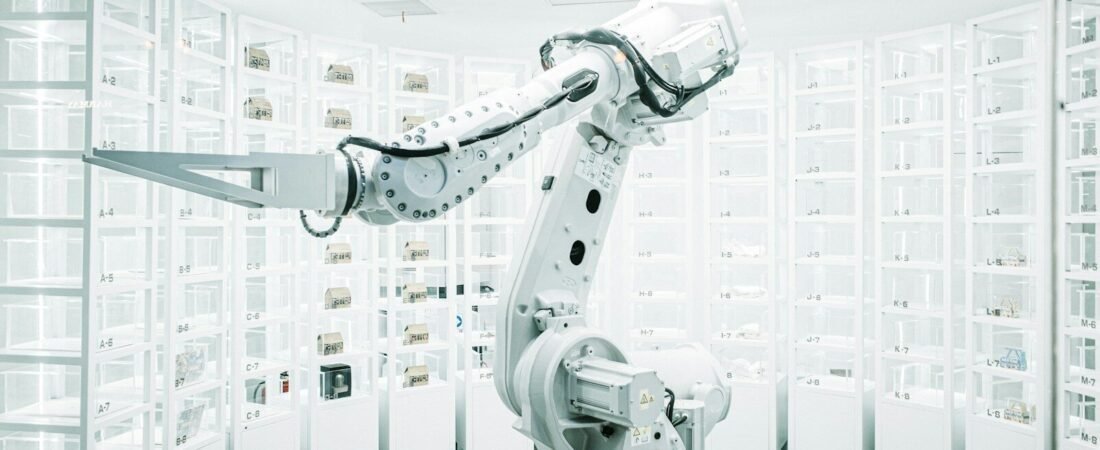
Stryker has brought its fourth-generation Mako surgical robot to India, pushing robotic joint replacement further into a price-sensitive market. The launch lands at an awkward moment: a large randomised trial, published weeks earlier, found no clinically meaningful benefit from the same system over conventional knee surgery.
Stryker announced the India launch of Mako 4 SmartRobotics on 5 October. The platform supports Mako Total Knee, Mako Partial Knee and Mako Total Hip with Advanced Primary and revision. Stryker says the global Mako platform has supported more than 2.5 million procedures across 47 countries.
What Stryker launched
Mako 4 is not new globally. Stryker commercially launched it in March 2025 in the United States, where it spans knee, hip, spine and shoulder applications and integrates the company’s Q Guidance System. The India release names only three applications.
India had already seen the system. Royal Care Super Speciality Hospital in Coimbatore installed a Mako 4 in September 2026 and called it the first in India. The national launch follows that installation by about three weeks.
A trial landed first
The evidence question is the harder one. In September 2026, The Lancet published RACER-Knee, described as the largest masked randomised trial of robotic knee replacement. It compared the Mako system against conventional instruments.
The trial found no clinically meaningful difference in patient-reported outcomes at 12 months. Robotic surgery cost more, and the authors judged it unlikely to be cost-effective. They put the probability of clearing a £30,000-per-QALY threshold at about 4%.
Broader reviews point the same way. Meta-analyses find that robotic knee surgery improves alignment accuracy but does not deliver clearly better short- or medium-term function. It also takes longer in the operating theatre. Cost-effectiveness studies suggest the economics may work only at high volumes or over long horizons.
Stryker’s release cites three studies in support. All three are favourable to the technology.
India’s cost barrier
Cost is the central obstacle in India, and the release does not mention it. A 2025 survey of Indian orthopaedic surgeons found that 93.5% named high installation cost as the main hurdle to adopting robotics. Another 82.7% cited incomplete insurance coverage, and 73.3% pointed to a lack of training.
The hardware is expensive. Robotic orthopaedic systems generally run from about US$550,000 to US$1 million, with annual maintenance near 10% of that. A Mako installation in India is reported at roughly ₹7 crore to ₹10 crore, or about US$850,000 to US$1.2 million.
That cost reaches patients. Robotic knee replacement in India typically runs US$4,000 to US$10,000 per knee. Conventional surgery costs roughly US$3,500 to US$7,000, a premium of about US$1,500 to US$2,500.
Robotic joint replacement in India: Mako is not the leader
The release calls Mako a market-leading platform. Globally, that holds. In India, the picture differs.
As of 2024, India had roughly 290 installed robotic joint-replacement units. CUVIS led with about 31%, followed by CORI at 23% and VELYS at 18%. Mako accounted for about 13%. A domestic system, MISSO, held about 9% and is priced near ₹2 crore, a fraction of imported platforms.
So the global leader enters a market where it is a minority player, competing partly on price against a cheaper local alternative.
The access claim
Stryker’s India head said the launch would help “raise the standard of care and expand access” for patients nationwide. Those two goals pull in opposite directions here.
Robotic systems concentrate in well-funded urban hospitals. Most Indian surgeons surveyed said they would adopt the technology if costs were more manageable. That suggests the barrier is price, not appetite. Premium technology priced at a premium does not, on its own, widen access.
What to watch
Three things will decide whether Mako 4’s India story is one of adoption or of a premium niche.
Whether Stryker publishes India-specific pricing, volumes or outcomes. Whether reimbursement for robotic joint replacement broadens, since insurance coverage is the second barrier surgeons name. And whether the RACER-Knee findings change how hospitals and patients weigh the premium.
Robotic joint replacement is spreading fast in some markets. In others, the evidence and the economics are still catching up with the marketing.
Editor’s Note
Sources: Stryker‘s release of 5 October 2026; Stryker’s own product and launch materials; The Lancet’s RACER-Knee trial (September 2026); a 2025 survey of Indian orthopaedic surgeons cited in a peer-reviewed editorial on indigenous orthopaedic robotics; and market and cost analyses of robotic knee replacement in India. Stryker’s procedure and country figures are its own. Cost ranges vary by hospital, city and implant. TechRecast has not independently verified Mako 4’s performance claims. This article is not medical advice; patients should consult a qualified orthopaedic surgeon.