
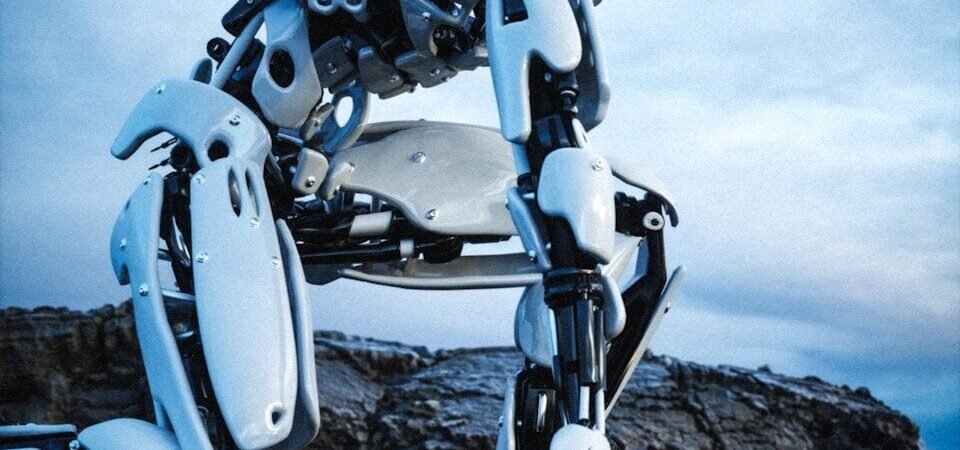
Pudu Robotics made its first appearance at IFA 2026 in Berlin this week, bringing its full robotics portfolio to Europe for the first time. The Pudu Robotics IFA 2026 showcase centers on the European debut of the PUDU D7, a semi-humanoid intelligent robot designed for real-world physical tasks, alongside the PUDU D5 quadruped, BellaBot Pro service robot, PUDU CC1 Pro cleaning robot, PUDU MT1 Max large-space cleaner, and PUDU T600 industrial transport robot.
The headline is the D7’s European debut. But the more interesting story is what it reveals about how commercial robotics is evolving — and why a Shenzhen-based company with 130,000 robots already deployed across 85 countries chose IFA, a consumer electronics show, to make its embodied AI pitch to Europe.
The Timing: Why Pudu Chose IFA to Enter Europe
Pudu Robotics is not a newcomer. Founded in Shenzhen in 2016, the company has spent a decade building a commercial service robotics business that, according to Frost & Sullivan’s 2025 market report, ranks first globally in both revenue and shipment volume, with approximately 25% revenue market share and 23% shipment market share. It has shipped over 130,000 robots across 85+ countries and 1,000+ cities, deployed across hospitality, retail, healthcare, manufacturing, logistics, and property management.
The IFA 2026 appearance is not Pudu’s first European activity — the company has been expanding in Europe steadily. In April 2026, it announced a strategic partnership with Gom Schoonhouden B.V., one of the Netherlands’ largest professional cleaning providers, to deploy its AI-native BG1 Series scrubber-dryer robot — its first European deployment of that platform, facilitated by regional partner Fulin Robot Technologie B.V. The PUDU CC1 cleaning robot series has already surpassed 20,000 units shipped worldwide, with approximately 60% deployed in Europe and North America. Pudu’s revenue in the Americas grew 285% year-over-year, and international markets account for over 80% of total revenue.
Entering Europe
So the IFA debut is less about entering Europe and more about escalating. Pudu has been selling specialized robots in Europe for years. What it has not done is present its embodied AI vision — the D7 semi-humanoid and D5 quadruped — to a European audience. IFA, which expanded its IFA NEXT emerging-tech showcase this year to include the largest humanoid robot exhibition in the show’s history, provides that stage.
The Timing Aligns
The timing also aligns with Pudu’s capital trajectory. In April 2026, the company raised nearly $150 million at a valuation exceeding $1.5 billion, bringing cumulative funding to over $300 million. In July 2026, Frost & Sullivan ranked it No. 1 globally in four dimensions of commercial service robotics. The IFA appearance is the branding and market-positioning move that follows those commercial and financial milestones.
The Competitive Picture: Where Pudu Stands in European Robotics
The European commercial service robotics market has value at approximately €16.6 billion in 2026, with service robots growing rapidly and the commercial cleaning robotics segment projected to reach $2.5 billion by 2030. But Europe is also a demanding market — the EU AI Act and updated Machinery Regulation make it the world’s first major jurisdiction with explicit autonomous-robot safety frameworks, creating both market friction and a moat for companies that can navigate compliance.
Pudu’s direct competitors in Europe include a mix of global and regional players:
In commercial cleaning robotics: Brain Corp (autonomous navigation), Gaussian Robotics (window cleaning), and traditional manufacturers like Tennant and Nilfisk developing autonomous lines. Pudu holds approximately 29% of the global commercial cleaning robotics market by revenue, according to Frost & Sullivan, and the CC1 series’ 20,000+ shipments give it a deployment scale advantage.
In service delivery robotics: Bear Robotics and Keenon Robotics are the primary competitors for restaurant and hospitality deployments. SoftBank Robotics also operates in this space in Europe. Pudu’s BellaBot series is its established offering here.
Competitive Landscape
In humanoid and embodied AI: This is where the competitive landscape is most fluid. At IFA 2026 itself, Chinese-made robots were prominently at display — Xiaomi’s CyberOne, Unitree’s G1 humanoid, Dobot’s panda-shaped robot, TCL’s AiMe, and Hisense’s home robot all shared the floor. Korea JoongAng Daily reported that IFA 2026 featured the largest humanoid robot exhibition in the show’s history. Pudu’s D7 and D5 are not competing in the same category as consumer-focus humanoid demos — they are at positioned for industrial and commercial deployment — but the visual competition for attention on the IFA floor is real.
In industrial logistics robotics: The European warehouse robotics segment grew 15.7% to €3.4 billion in 2026, with Exotec, AutoStore, and Mobile Industrial Robots leading. Pudu’s T600, with its 600 kg payload, targets a different segment — heavy material transport within factories — but overlaps with AMR providers.
Pudu’s structural advantage, as per Alabia Insights, is a 15-25% cost advantage versus European competitors, drives by production scale in China. The company’s “One Brain, Multiple Embodiments” architecture — a shared AI layer across different robot form factors — is the technical foundation that lets it span these categories without building separate technology stacks for each.
What the Public Data Shows — and What the Press Release Doesn’t
The press release positions Pudu as a “global leader” with “130,000+ robots shipped.” The public data adds important context.
Revenue and valuation: Pudu raised nearly $150 million in April 2026 at a valuation exceeding $1.5 billion, with cumulative funding over $300 million. The round was led by Longgang Financial Holdings and Asia Investment Capital, with participation from BAIC Capital, Lens Technology, and others. CB Insights data cited by Max Robotics places Pudu’s FY2022 revenue at approximately $100 million — a secondary aggregator figure, not a primary filing. The company reported 100% year-over-year revenue growth in 2025, with commercial cleaning accounting for over 70% of total revenue. If the FY2022 baseline of ~$100 million is accurate and revenue doubled, FY2025 revenue would be in the range of $400-500 million — though this is an estimate, not a confirmed figure.
Profitability: Pudu’s EBITDA is reportedly “close to turning positive,” according to 36Kr reporting, and the company expects to achieve large-scale profitability ahead of the broader embodied AI industry. None of this appears in the press release.
Customer base: The press release mentions 130,000+ robots shipped across 85+ countries, but does not name specific customers. Independent coverage confirms that Pudu’s solutions are in use by Carrefour, Walmart, and EDEKA — major enterprise customers that validate the deployment scale claims.
Technical Details
D7 specifications: The IFA exhibitor page provides technical details not in the press release. The D7 features a 360° omnidirectional chassis, a flexible dual-arm system with compliant force control and millimetre-level repeatability, interchangeable end effectors (gripper, three-finger, or five-finger dexterous hands), and dual front-and-rear LiDARs with multi-sensor fusion for 360° environmental perception. These specs position it for material handling, high-rack picking, transfer, placement, and assembly tasks — not the consumer-interaction demos (selfies, heart-hand gestures) highlighted in the press release.
D5 specifications: The D5 is an industry-grade autonomous quadruped with a wheel-leg hybrid mobility system reaching 5 m/s on flat ground, climbing 30° slopes, descending 45° inclines, and clearing 25 cm obstacles. It has power of NVIDIA Jetson Orin AGX with dual 3D LiDARs and four fisheye cameras. This is a serious industrial mobility platform, not a demo robot.
The gap between the press release’s consumer-friendly framing (selfies, heart-hand gestures) and the actual industrial specifications (millimetre-level manipulation, 600 kg payloads, 5 m/s quadruped mobility) is, in fact, notable. Pudu is using IFA’s consumer audience to showcase technology that primarily means for industrial and commercial deployment.
What’s Genuinely New vs. What’s Repackaged
New: The European debut of the PUDU D7 is, in fact, genuinely new. The robot was first introduced at WAIC 2026 in China, and IFA marks its first European appearance. The IFA Innovation Award Honoree recognition in the IFA NEXT & Emerging Tech category is a meaningful external validation, not a self-claim.
New: The D5 series’ European appearance is also new. The D5-W’s demonstration of autonomous mobility across stairs, gravel, and sand — and its positioning for industrial warehouses, tunnels, and mining sites — represents a genuine expansion of Pudu’s portfolio beyond structured indoor environments.
Improved: The full portfolio display — BellaBot Pro, CC1 Pro, MT1 Max, and T600 together — is an improvement in market positioning rather than new product. These robots have been deployed for some time. Presenting them as an integrated portfolio alongside the newer embodied AI platforms is a strategic communications choice, not a product launch.
Repackaged: The “One Brain, Multiple Embodiments” architecture and the 130,000+ shipment figure have been central to Pudu’s messaging since at least April 2026. The press release reuses these claims without updating them — the shipment figure has moved from “120,000+” in April to “130,000+” in September, which is consistent with ongoing deployment but not a dramatic inflection.
Unclear: The press release does not specify how many D7 or D5 units have been deployed in production, what industries they are currently operating in, or what the commercial timeline is for European availability of the embodied AI products. The D7 is described in demo terms — taking selfies, responding with gestures — but the IFA exhibitor page describes it in industrial terms — material handling, high-rack picking, assembly. Which is the primary use case? The press release doesn’t say.
The Question the Press Release Doesn’t Answer
The most important question: what is the actual commercial deployment status of the embodied AI robots?
Pudu’s credibility rests on 130,000+ deployed robots. But those deployments are overwhelmingly specialized robots — the BellaBot for service delivery, the CC1 for cleaning, the T600 for industrial transport. These are task-specific machines operating in relatively structured environments: restaurants, hotels, warehouses, retail stores.
The D7 and D5 represent a different category: embodied AI robots designed for unstructured environments and dynamic physical interaction. The D7’s dual-arm manipulation with millimetre-level repeatability and the D5’s quadruped mobility across stairs and gravel are technologically impressive, but the press release does not claim any production deployments for either platform. The demonstrations at IFA — selfies, heart-hand gestures, object pickup on request, terrain navigation — are show-floor interactions, not operational use cases.
Pattern Across the Industry
This is the pattern across the embodied AI industry. As the Korea JoongAng Daily noted from IFA 2026, visitors’ reactions to humanoid robots were mixed: “Some were enthusiastic, while others were wary… they’re still too slow and too expensive.” China’s humanoid robot production is predicted to grow 94% in 2025, with the market reaching 24 billion yuan ($3.6 billion) next year, according to TrendForce — but the gap between production projections and proven commercial deployments remains wide.
For Pudu, the question is whether the D7 and D5 are ready for the kind of real-world deployment at scale that has made the CC1 and BellaBot successful — or whether they are technology showcases designed to demonstrate capability and build market positioning while the commercial deployment timeline plays out over the next 2-3 years. The press release’s framing of “from 130,000+ shipments to the next generation of robotics” deliberately bridges these two stages, but it does not answer where on that bridge the D7 and D5 currently stand.
A second question: how does Pudu plan to navigate European regulatory compliance for embodied AI robots? The EU AI Act and updated Machinery Regulation create specific requirements for autonomous robots operating in human-populated environments. Pudu has successfully navigated these for its cleaning and service robots, which operate in relatively bounded environments. But the D7 — a semi-humanoid robot designed for manipulation and interaction in dynamic environments — and the D5 — a quadruped designed for industrial sites — may face different regulatory pathways. The press release does not address this.
What This Means for You
If you are a European enterprise in hospitality, retail, healthcare, logistics, or facilities management evaluating commercial robotics, Pudu’s IFA showcase demonstrates a portfolio with genuine deployment scale. The CC1 cleaning robot’s 20,000+ shipments and 60% deployment in Europe and North America is a proven track record. The BellaBot’s service delivery capabilities are well-established. For these specialized, task-specific use cases, Pudu is a credible vendor with cost advantages and a growing European support network through partners like Fulin Robot Technologie.
If you are evaluating embodied AI robots — semi-humanoid or quadruped — for industrial or commercial deployment, the D7 and D5 are worth watching but may not be ready for immediate procurement. The technical specifications are serious: the D7’s dual-arm manipulation with millimetre-level repeatability and the D5’s wheel-leg hybrid mobility at 5 m/s are real engineering achievements. But without confirmed production deployments or disclosed commercial availability timelines, these platforms are closer to advanced prototypes than off-the-shelf products. Treat them as technology previews, not procurement options.
If you are a competitor in the European robotics market, Pudu’s IFA appearance signals escalation. The company has the financial backing ($300M+ cumulative funding, $1.5B valuation), the deployment scale (130,000+ units), and the cost advantage (15-25% lower than European competitors) to compete aggressively. The “One Brain, Multiple Embodiments” architecture is a genuine platform strategy — not a single-product company. Expect Pudu to push hard on European partnerships, local service networks, and compliance certification in the next 12-18 months.
Pudu Robotics IFA 2026
If you are tracking the broader embodied AI market, the Pudu Robotics IFA 2026 appearance is a data point in a significant trend: Chinese robotics companies are moving from specialized, task-specific robots toward general-purpose embodied AI platforms, and they are doing so with deployment experience that most Western humanoid robotics companies (Figure, Apptronik, Agility) cannot match. The question is whether deployment experience with specialized robots translates to deployment success with general-purpose embodied AI — or whether those are fundamentally different problems.
This article is based on the press release issued by Pudu Robotics on September 5, 2026, and additional publicly available information including PR Newswire, Frost & Sullivan market reports, IFA Berlin exhibitor documentation, Korea JoongAng Daily, SiliconANGLE, 36Kr, Alabia Insights, Max Robotics, Robotics Business News, and prior Pudu Robotics announcements. Revenue and valuation figures are from company announcements and secondary aggregator sources. Market share figures are from Frost & Sullivan’s 2025 market report. Technical specifications are from Pudu Robotics’ IFA exhibitor page. None of the financial figures have been independently audited by TechRecast, as Pudu Robotics is a privately held company.