
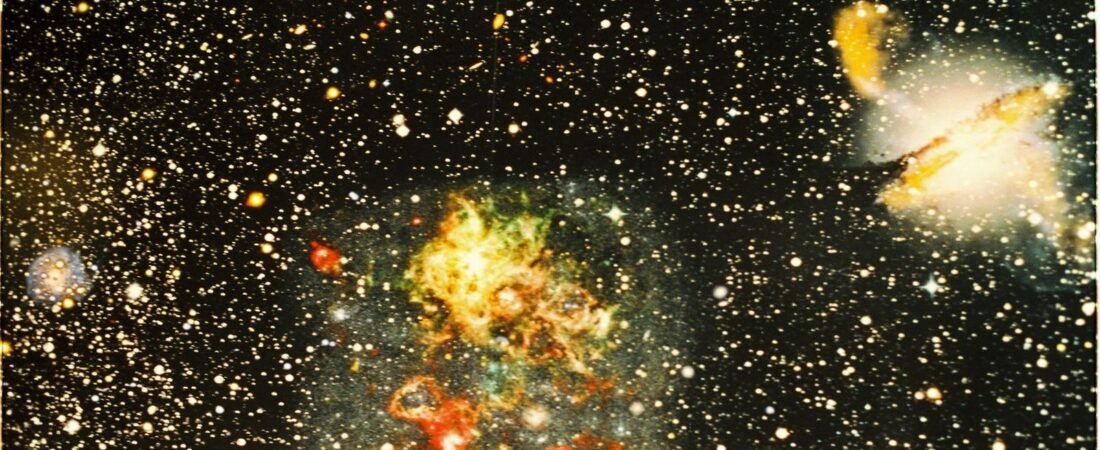
The universe has just acquired a new set of eyes in Nancy Grace Roman Space Telescope.
On August 30, 2026, NASA’s Nancy Grace Roman Space Telescope lifted off aboard a SpaceX Falcon Heavy from Launch Complex 39A at Kennedy Space Center, Florida. The observatory is now beginning a roughly three-month journey toward its operating location, about one million miles from Earth.
But Roman is not simply another successor to the Hubble Space Telescope or a companion to the James Webb Space Telescope. Its scientific ambition is different.
Where Hubble revolutionized deep, detailed views of relatively small portions of the sky, Roman is designed to survey enormous areas rapidly. Its Wide Field Instrument will combine Hubble-like image sharpness with a field of view at least 100 times larger.
NASA expects Roman to survey the universe up to 1,000 times faster than Hubble while investigating dark energy, dark matter, exoplanets and infrared astrophysics.
That makes the mission significant not merely because of what it may discover, but because of how it will change the scale of astronomical observation.
A successful launch begins a much larger mission
The launch took place at 7:26 a.m. EDT on August 30. Roman separated from the Falcon Heavy’s second stage at 7:57 a.m. EDT and began flying independently.
NASA’s ground team received telemetry only seven minutes after launch. The observatory subsequently deployed its solar panels and lower instrument sunshade, marking the transition from launch operations to the early stages of commissioning.
Roman is now heading toward the second Sun-Earth Lagrange point, known as L2. The location is approximately one million miles from Earth.
L2 is particularly useful for a space observatory because it provides a stable environment for long-duration observations while allowing the spacecraft to maintain an advantageous relationship with Earth and the Sun.
The journey itself is only the beginning. NASA expects approximately three months of deployments, instrument activation, calibration and testing before Roman begins its full scientific operations. The agency currently anticipates releasing the telescope’s first images in early 2027.
NASA Administrator Jared Isaacman described the mission as a model for how a major scientific project can be delivered.
“Delivered ahead of schedule and on budget,”
Isaacman said, adding that Roman will provide a “new atlas of the universe.”
That achievement is notable for a flagship-class observatory. NASA says the launch date was accelerated after the spacecraft completed development early.
Why Roman is different from Hubble
The easiest way to understand Roman is to stop thinking of it as simply a newer Hubble.
Roman and Hubble have primary mirrors of essentially the same diameter: 2.4 metres. Yet Roman is designed to see vastly more sky in a single observation.
Its Wide Field Instrument can capture an area at least 100 times larger than Hubble’s field of view while maintaining comparable image sharpness. NASA estimates that during its first five years of observations, Roman will image more than 50 times as much sky as Hubble covered during three decades.
That difference changes the scientific questions scientists can ask.
Hubble is exceptionally effective when astronomers want to study an individual galaxy, nebula, star or other target in detail. Roman is optimized for statistical astronomy — observing enormous populations of objects and identifying patterns across them.
Instead of asking only, “What is this galaxy?”
Scientists can ask:
How do billions of galaxies behave?
How does matter cluster across cosmic time? How has the universe’s expansion changed? How frequently do planets form? How common are planetary systems resembling our own?
Those questions require enormous datasets.
Roman is being built for exactly that challenge.
The dark universe is one of its biggest targets
One of Roman’s central objectives is to investigate dark energy, the mysterious phenomenon associated with the accelerating expansion of the universe.
Scientists know that the universe is expanding. They also know that its expansion has accelerated over cosmic history. What they do not know is precisely why.
Dark energy is one possible explanation.
Another possibility is that our understanding of gravity is incomplete on the largest scales.
Roman will investigate these possibilities through several complementary observations. It will map the distribution of galaxies, study galaxy clusters, observe Type Ia supernovae and measure weak gravitational lensing — the subtle distortion of distant light caused by intervening matter.
Weak lensing is particularly powerful because gravity itself becomes an observational tool.
Mass bends spacetime. That bending slightly changes how light from distant galaxies reaches Earth. By measuring those distortions across enormous areas of sky, astronomers can reconstruct how matter — including invisible dark matter — is distributed.
Roman will therefore not merely photograph galaxies.
It will use their distorted light to investigate the architecture of the universe.
NASA says Roman will study galaxies across cosmic history, potentially reaching back to a period when the universe was only about half a billion years old.
A planet census on an extraordinary scale
The second major scientific frontier is closer to home.
Roman is expected to transform the study of exoplanets — worlds orbiting stars beyond our Sun.
The mission will use several techniques, but one of its most important is gravitational microlensing.
When a foreground star passes almost directly between Earth and a more distant star, its gravity bends and magnifies the background star’s light. If a planet is orbiting the foreground star, that planet can produce an additional, short-lived signal.
The technique can reveal planets that other methods frequently miss.
NASA expects Roman’s microlensing survey to monitor about 100 million stars for hundreds of days and potentially discover around 2,500 planets. These could include rocky worlds, ice giants and planets farther from their stars than the planets most commonly found by transit surveys.
That is important because today’s exoplanet catalogue is not a representative census of planetary systems.
Many known exoplanets are relatively large and orbit extremely close to their host stars because those worlds are easier for existing detection techniques to find.
Microlensing opens another part of the planetary population.
It could reveal worlds analogous to planets in our own Solar System — including planets at distances where conventional transit surveys are less effective.
Roman also wants to see planets directly
The Nancy Grace Roman Space Telescope carries another instrument with a very different purpose: the Coronagraph Instrument.
A coronagraph attempts to solve one of astronomy’s most difficult imaging problems.
A star is enormously brighter than a planet orbiting it. Trying to photograph an exoplanet beside its star is therefore similar to trying to photograph a firefly immediately next to a searchlight.
Roman’s coronagraph will use specially designed masks, deformable mirrors, detectors and active wavefront control to suppress the star’s glare.
The objective is to allow the much fainter light reflected by a planet to become detectable.
The instrument is a technology demonstration rather than the mission’s principal survey instrument.
That distinction matters.
Roman is not being launched primarily to find Earth 2.0.
Instead, the coronagraph is intended to demonstrate technologies that could eventually enable future observatories to directly image and characterize much smaller, potentially habitable planets.
NASA says the technology could help pave the way toward concepts such as the Habitable Worlds Observatory, designed to search for signs of life on Earth-like planets around Sun-like stars.
In that sense, Roman is also a technology testbed for the generation of space telescopes that will follow it.
The telescope is becoming a massive data machine
Perhaps the most technologically interesting aspect of Roman has little to do with its mirror.
It is the data.
NASA says Roman will transmit approximately 1.4 terabytes of data every day, currently making it the highest-data-rate NASA astrophysics mission.
Its Wide Field Instrument contains a 300-megapixel infrared camera with 18 4K detectors. Together, these capabilities allow Roman to generate enormous cosmic panoramas at extraordinary speed.
This creates a problem that is increasingly familiar across modern technology: collecting data is becoming easier than understanding it.
Astronomers cannot manually inspect every object in every Roman image.
NASA therefore expects machine learning, artificial intelligence and citizen scientists to help process the torrent of information and flag potentially significant discoveries for astronomers to investigate.
This makes Roman an important example of the convergence between astronomy and AI.
AI will not replace astronomers.
Instead, algorithms can act as a first-pass discovery system — identifying unusual light curves, transient objects, possible supernovae, gravitational lensing signatures and other phenomena that deserve human attention.
The telescope will effectively create an enormous stream of astronomical observations that requires an equally sophisticated computational ecosystem.
A 300-megapixel camera looking back in time
Roman’s primary instrument is the Wide Field Instrument, a near-infrared camera designed for both imaging and spectroscopy.
Its 300-megapixel architecture is not simply about producing beautiful pictures.
Infrared observations allow astronomers to detect light that has travelled across enormous distances and has been shifted toward longer wavelengths by the expansion of the universe.
Looking farther away therefore means looking further back in time.
Roman’s combination of wide coverage, infrared sensitivity and stable optical performance will allow researchers to build large statistical maps of cosmic evolution.
That is why the mission is particularly powerful for questions involving populations rather than individual objects.
A single galaxy can tell scientists something.
Millions or billions of galaxies can reveal a trend.
And trends are what scientists need to distinguish between competing explanations for how the universe works.
The legacy of Nancy Grace Roman
The telescope’s name is itself a story.
Nancy Grace Roman was NASA’s first chief astronomer and one of the most important advocates for space-based astronomy.
She helped establish the scientific and institutional case for placing powerful observatories above Earth’s atmosphere.
Her efforts were instrumental in making Hubble possible.
NASA notes that Roman was eventually nicknamed the “Mother of Hubble.”
The irony is compelling.
The woman who helped establish the scientific vision behind Hubble now has her name attached to a telescope designed to survey the universe on a dramatically larger scale.
Roman herself understood the importance of Hubble’s discoveries. NASA records that when she was asked about Hubble’s most interesting discovery, her answer was “dark energy.”
That makes the mission’s focus on cosmic acceleration especially fitting.
Her legacy is therefore not simply commemorative.
It is scientific.
Built for a universe of big questions
The Nancy Grace Roman Space Telescope is ultimately a mission about scale.
Its mirror is comparable to Hubble’s, but its field of view is vastly larger.
Its instruments will not simply capture isolated astronomical curiosities. They will build enormous surveys capable of revealing relationships among galaxies, stars, planets and the structure of the cosmos.
NASA says Roman could measure light from roughly one billion galaxies over its mission lifetime.
That scale could change how astronomers approach some of the biggest unresolved questions in science.
Why is the universe’s expansion accelerating?
What is dark matter?
How has cosmic structure evolved?
How common are planetary systems like ours?
How many planets exist beyond the reach of today’s most productive detection methods?
And, eventually, could the technologies demonstrated by Roman help humanity directly investigate potentially habitable worlds?
The answers will not arrive immediately.
Roman must first complete its journey to L2, deploy its remaining systems, activate its instruments and undergo months of calibration and testing.
But the mission has already crossed its first major threshold.
What comes next
The next few months will be less dramatic than launch day but scientifically crucial.
Controllers will complete deployments and trajectory corrections. The spacecraft will activate its instruments and undergo extensive calibration. Scientists will verify that the Wide Field Instrument and Coronagraph are performing as designed.
NASA expects the first Roman images in early 2027.
After that, the real experiment begins.
Astronomers will start receiving a continuous stream of observations from a telescope designed to survey the sky at unprecedented speed.
Julie McEnery, Roman’s senior project scientist at NASA Goddard, perhaps captured the scale of the opportunity best:
“We’ve never been able to view the universe with eyes like Roman’s before.”
She added that there is no telling how much humanity will know and have seen by the same time next year.
That may be the most important point about the mission.
The greatest discoveries of Roman may not be the objects scientists already expect to find.
They may be the things nobody is expecting.
And that is precisely what makes a survey telescope of this scale so powerful.
The Nancy Grace Roman Space Telescope has begun its journey. The next chapter will be written not only by mirrors and detectors, but by algorithms, astronomers and billions of pieces of cosmic data — potentially changing humanity’s map of the universe in the process.