
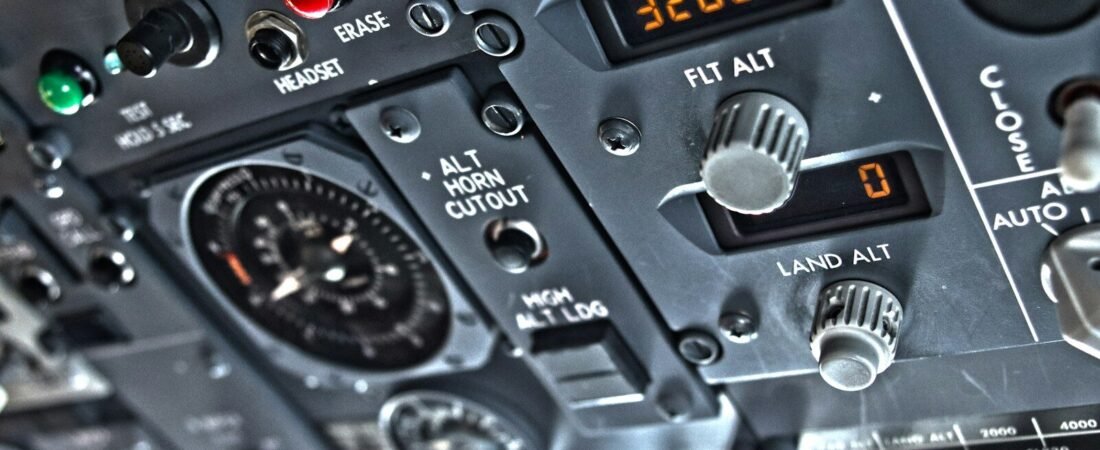
A new defence-tech entrant founded by three IIT Bombay batchmates went public in New Delhi on 30 September. Kokasa will build mission-critical electromechanical and electrohydraulic systems: actuation, motion control, sensing, instrumentation and embedded control. Over time it plans an autonomy layer that coordinates multiple platforms toward shared missions. The founder mix is the first thing that stands out.
Rahul Jain co-founded the yoghurt brand Epigamia. Snehil Gautam was a CXO at Housing.com. Vikalp Bagdi came up through HAL and Textron. Consumer food, proptech and aerospace do not often share a founding team.
The launch itself is thin — no named contracts, no funding disclosure, no technical specifications. What makes Kokasa worth watching is the moment it lands in. India’s indigenisation push has moved from platforms to the components inside them. That shift is opening the market Kokasa is betting on.
The market moment behind the launch
Three verifiable facts frame this launch. First, the government notified its sixth Positive Indigenisation List in August 2026. It bans imports of 405 strategically important items — Su-30MKI and AL-31FP engine parts, T-72 and T-90 components among them. The list carries an estimated ₹3,070 crore in business potential, with indigenisation timelines running from December 2026 to December 2029. Kokasa’s stated programmes target exactly these platforms: Su-30MKI, MiG-29, T-72.
Second, the Indian Air Force released its Sankalp-2026 compendium in July 2026. It is a roadmap for indigenising spares, avionics and line-replaceable units. The Russian-origin fleet — roughly 270 Su-30MKI and 70 MiG-29 aircraft — is the priority. Sustaining that fleet has grown harder and costlier since the Russia-Ukraine war disrupted supply chains. Around 300 indigenisation projects are already executing across DRDO, IITs, DPSUs and startups.
Third, the ecosystem has money and intent. ADITI offers grants of up to ₹25 crore for strategic deep-tech, and the Technology Development Fund up to ₹50 crore. The national targets: ₹3 lakh crore in defence manufacturing, ₹50,000 crore in exports, by 2029-30.
This is the tailwind. A startup selling actuation systems and embedded control into that pipeline does not need to explain its market.
What the claims can — and cannot — support
Now the weighting. Kokasa Advanced Manufacturing Private Limited was incorporated on 18 February 2026, per corporate records, with a paid-up capital of ₹1 lakh. The release says the company is “already executing indigenisation programmes” on the Su-30MKI, MiG-29 and T-72. That is possible: indigenisation work moves through HAL and the SRIJAN portal, and young firms do qualify as vendors. But the release names no contracts, no values and no customers.
The public record adds one corroboration and one discrepancy. A Kokasa recruiting post from June 2026 references HAL programmes including Sukhoi engine components and T-72 systems. It is company-sourced, but specific.
The same post claims a $3 million Series A. The release discloses no funding, and Tracxn still lists the company as unfunded. None of this proves anything except that the story is young.
The vision layer — collaborative autonomous systems across platforms, sensors and effectors — is roadmap language. The physical-systems foundation is the more credible near-term business. Actuation and embedded control are the unglamorous, qualification-heavy work that indigenisation lists actually pay for.
What to watch
Three markers would convert this from announcement to story. A named contract — with HAL, the IAF or through an ADITI or TDF award — with a disclosed value. A funding announcement that resolves the Series A question.
And qualification evidence. MIL-STD and JSS compliance testing decides whether defence claims live or die. Kokasa’s co-founder calls the prototype only the beginning.
For context on survival odds: of 676 entities in the iDEX ecosystem, 58 prototypes have been cleared for procurement and 45 acquisition contracts signed. The valley of death between prototype and order is where most entrants stall. Kokasa is entering at the right time. Proving it belongs there will take more than a launch release.
Editor’s Note
This article draws on Kokasa’s launch release of 30 September 2026, corporate registry records (via The Company Check), Tracxn’s profile and Kokasa’s public recruiting posts. Further sources: BW Disrupt’s coverage, the sixth Positive Indigenisation List notification, reporting on the IAF’s Sankalp-2026 compendium, and ET Government’s iDEX analysis.
The Su-30MKI, MiG-29 and T-72 execution claims, the collaborative-autonomy vision and the recruiting post’s $3 million reference are company statements. The analysis of the subsystem-level indigenisation shift and the survival-odds framing is TechRecast’s own interpretation of the cited policy documents.