
Jungheinrich EFG M Series Reaches Asia-Pacific as Forklift Electrification Accelerates
The German intralogistics group has opened its three- and four-wheel electric counterbalance trucks to order across the region. The specification is straightforward; the decision to buy one turns on charging, service and price.
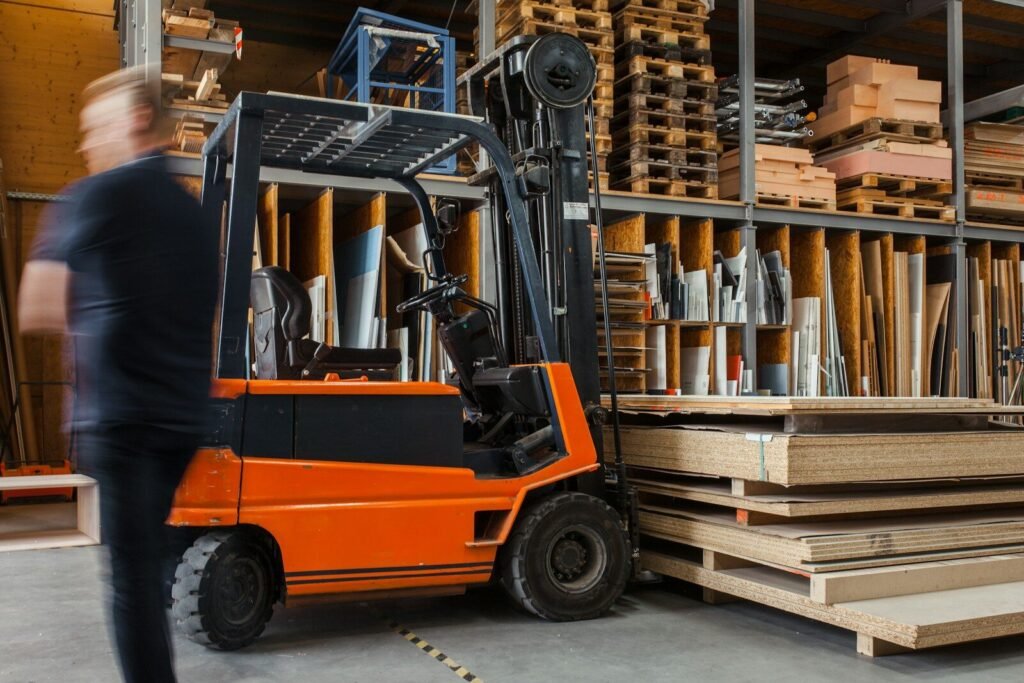
Jungheinrich has launched the next generation of its EFG MB and EFG MC electric counterbalance forklifts across Asia-Pacific, opening the two model families to order in the region. The three-wheel EFG MB covers loads from 1.6 to 2.0 tonnes; the four-wheel EFG MC covers 2.0 to 3.0 tonnes. Both offer lift heights up to 6,500 mm and a choice of lead-acid or lithium-ion batteries, and both are configurable across performance, safety and digital options. The group says the series is for warehouses, manufacturing plants, distribution centres, retail operations and pharmaceutical facilities.
For a manufacturer whose future depends on Asia-Pacific, the launch is a regional rollout as much as a product story. Jungheinrich’s APAC revenue was 375 million euros in 2025, about 7 per cent of the group’s 5.5 billion euros, and it fell 2.1 per cent year on year while the company grew overall. The EFG M series is the configurable core of its electric counterbalance offer in the region, and its success will be measurable less by the specification sheet than by whether Jungheinrich can convert it against cheaper Chinese-built trucks in a fast-electrifying market.
What Jungheinrich announced
The release describes the Asia-Pacific launch of the next generation of the EFG MB and EFG MC, with both available to order. Customers can choose between two performance packages: efficiencyPLUS, which balances performance and energy use, and drive&liftPLUS, which prioritises higher driving and lifting performance and is standard on the 2.5 to 3.0 tonne models. Battery options run from 346 to 690 Ah, lead-acid or lithium-ion, to suit different shift patterns. Integrated telematics is standard and feeds Jungheinrich’s fleet-management system from day one.
The trucks carry a familiar set of features: curveCONTROL, which reduces speed automatically when cornering and is standard on the four-wheel MC; wet disc brakes; flexible seating and control options, including a choice of manual hydraulic levers or fingertip controls; and a standard two-inch display with an optional four-inch version. Jungheinrich says energy recovery during braking of up to 30 per cent helps extend uptime and reduce energy costs per shift.
Jungheinrich leans heavily on service in its positioning. The release cites a global team of more than 6,100 trained technicians, genuine parts and product-specific expertise, and argues that because the series uses proven components and integrated truck data, parts supply and maintenance planning are faster. In a category where uptime is the metric that matters, that is the company’s main non-price differentiator, and it is also the hardest to verify from outside: the release gives no regional response times, no parts-availability figures and no service-level commitment.
What the M series actually is
It is worth being precise about what is new. The EFG M series is not a model line appearing for the first time; versions of the EFG MB and EFG MC have been in Jungheinrich’s catalogue, and the series already appears on the company’s Australian and Singapore sites. What the announcement marks is the regional push across Asia-Pacific, presented as a next generation of the two families. The release does not itemise what changed from the prior models, beyond the configurable performance packages and the battery range, so a buyer comparing generations will need the specification sheets rather than the announcement.
The battery question is the real story
The more consequential detail is the battery choice, because it is where the material-handling market is reshaping. Interact Analysis projects that lithium-ion will overtake lead-acid in the electric forklift segment around 2026, and reach more than 70 per cent of new electric forklifts by 2034, up from roughly 32 per cent in 2024. The reasons are operational: lithium-ion can opportunity-charge in one to two hours against six to eight for lead-acid, needs no watering or equalising, and lasts longer, so its higher purchase price is usually recoverable over a five-to-ten-year life. Jungheinrich offers both chemistries here, which is the right call in a region where cost sensitivity is high, but the lithium-ion option is where the growth is.
The catch is infrastructure. Lithium-ion’s economics depend on charging, and industry data suggests that 50 to 60 per cent of charging installations require electrical upgrades to the facility, which can add up to a quarter to a project’s cost. A forklift that opportunity-charges is only cheaper than one that swaps batteries if the site can supply the power. That is a systems question, not a truck question, and it is the one buyers most often underestimate.
Why Asia-Pacific, and why now
Jungheinrich is a European company with an Asian ambition. Its Strategy 2030+ names Asia-Pacific as a priority alongside North America, and the group is spending to get there: a Global OEM Center in Shanghai, a Business Excellence Center in Malaysia, and a partnership with EP Equipment that produced the value-oriented AntOn by Jungheinrich brand launched in September 2025. The EFG M series sits above AntOn: it is the configurable mid-range, positioned as the core of the electric counterbalance portfolio in APAC, with the FalcOn platform reserved for future heavy-duty electric handling.
The timing is not accidental. The group is running a transformation programme intended to save about 100 million euros a year, and its 2025 EBIT fell 47.5 per cent to 228 million euros, though adjusted EBIT was a steadier 448 million euros. Asia-Pacific is a growth bet being funded partly by those savings, and it is also where the competition is hardest: Chinese manufacturers now account for more than half of global forklift shipments, and their price advantage has already eroded the pricing power of established brands in standardised segments. Jungheinrich’s defence is the same as its rivals’: service networks, software and project delivery.
India, in particular, is a market the release addresses directly through its distribution on the India newswire, and one where warehouse capacity is expanding quickly. But it is also a market where the leading Chinese brands have made deep inroads on price, and where a German premium truck has to justify itself on service and financing rather than sticker price.
What is not disclosed
Several things a buyer would want are absent. There is no pricing, in a category where total cost of ownership rather than the sticker decides the sale. There is no delivery timeline beyond available to order, and no statement of which of the eight APAC direct sales units and fourteen partner countries will stock the series first. The thirty per cent energy-recovery figure is a company claim with no stated test cycle. And the release does not say where the APAC units are built, though Jungheinrich’s Qingpu plant in China is the group’s electric-counterbalance production site, which matters for duty and lead time in markets such as India.
How big the market is
The category is large and growing, which is why the competition is intense. The electric forklift market was valued at about 25 billion dollars in 2025 and is forecast to grow at roughly 7.7 per cent a year to about 53 billion dollars by 2035, with Asia-Pacific the largest region. Counterbalance trucks, the class the EFG M series competes in, are the single biggest product segment. For Jungheinrich, that is the prize. For buyers, it means plenty of choice and a market where price competition is real.
The competitive set
The EFG M series lands in the most contested part of the market. Toyota Industries leads electric forklifts with roughly 13 per cent share, followed by KION, then Jungheinrich at about 11.5 per cent; BYD Forklift, Crown, Hyster-Yale, Mitsubishi Logisnext and the Chinese exporters Hangcha and Anhui Heli fill out the field. The differentiators at this level are not lift heights, which are standardised, but battery integration, fleet software and the depth of the local service network. Jungheinrich is betting that its 6,100-plus technicians and integrated telematics justify a premium over the value brands, including its own AntOn line. That the group entered the value segment with a partner rather than defending it under its own badge is itself a signal about where it believes its brand premium still holds.
What buyers should weigh
For an operator in the region, the decision turns on a few concrete questions. What is the delivered price, and what does the lithium-ion premium buy in your duty cycle? Can your site support opportunity charging, or will you need a facility upgrade that adds to the project cost? Which battery chemistry and capacity fits your shift pattern, given the 346 to 690 Ah range? What do the telematics actually report, and does the data integrate with the systems you already run? And what are the service response times and parts availability in your market, since a truck that is down is a line that is down? It is also worth asking how the truck and its battery will be recycled at end of life, a question that is becoming routine in markets with extended producer-responsibility rules.
What the launch signals
The EFG M series is a competent, configurable truck in a category where competence is table stakes. The real story is the market it enters: a fast-electrifying, price-competitive region where Jungheinrich needs growth to justify its global expansion, and where the shift to lithium-ion is rewriting the economics of ownership. The trucks are available to order, but the questions that decide whether a fleet buys them, on price, on charging, on service and on the local supply chain, are the ones the announcement leaves open.