
GitLab 19.4 landed on 18 September under the theme “agentic automation at a lower cost.” The bundle includes a /goal command for the Duo CLI, hosted open weight models, new MCP tools and usage controls. Behind the feature list sits a quieter story about a public company mid-way through changing how it charges for AI. Here is what the announcement says, what the record shows, and what nobody asked.
What GitLab 19.4 Announces
Breadth is the headline. Agentic automation now reaches every surface developers work in, from the terminal to Slack threads, with cost levers attached.
The /goal command
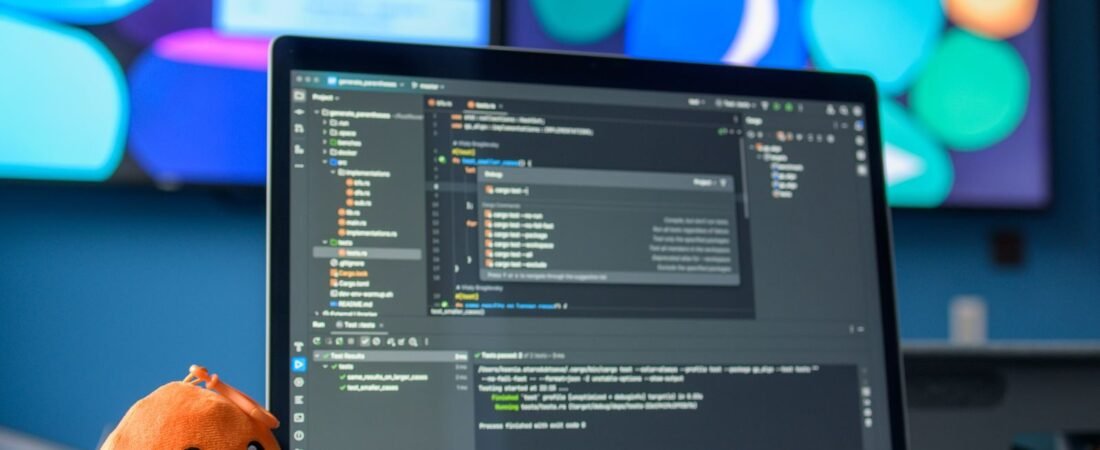
The /goal slash command in GitLab Duo CLI is now in public beta. It lets a developer hand an agent an open-ended objective. The agent implements the work; a separate model verifies it against the stated goal at each step.
The flow runs locally under the organisation’s existing rules. It stops at an iteration limit and reports what it could not resolve. A developer directs an outcome instead of supervising each step — that is the pitch.
Open weight models, hosted
Duo Agent Platform now hosts three open weight models: Kimi K3 (Moonshot AI), GLM 5.3 (Z.ai) and MiniMax M3 (MiniMax). Per the release, the hosted models deliver up to 4x more calls per GitLab Credit than many comparable frontier models. Performance is comparable, per GitLab’s internal testing. Group owners set default models per feature and curate which models teams may choose. All three are served through Fireworks AI under a zero data retention policy.
MCP tools and usage controls
New GitLab MCP server tools — also in public beta — let outside agents trigger pipelines and run merge requests end to end. Agents can also search work items and triage vulnerabilities. Read-only tools default to Always Allow; write and delete tools default to Always Ask.
Meanwhile, GitLab Credits usage visibility reached general availability. The feature brings per-user caps, per-event usage exports and a developer’s own consumption view. A Slack experiment for @GitLab rounds out the release.
The GitLab Credits Math Behind the Cost Claim
The “lower cost” headline rests on GitLab Credits, the consumption currency behind the Duo Agent Platform. One credit costs $1 on demand. Premium and Ultimate subscribers receive 12 and 24 included credits per user per month during a running promotion.
How the pricing actually works
GitLab meters credits per model call, at wildly different rates. On GitLab’s published multiplier table, MiniMax M3 gets 8 calls per credit and GLM 5.3 gets 5. The default model behind most Duo Agent Platform features gets 2.
Kimi K3 gets 1.82 — slightly more expensive per call than the default it claims to outperform. At the frontier end, Claude Opus 4.7 gets 1.1 and GPT-5.5 gets 1.0. Cheaper calls exist; so do far more expensive ones.
What “4x” really means
The 4x claim is real but narrow. It compares the cheapest open weight model against a 2-calls-per-credit default — not against the frontier models the release invokes. Eight calls per credit is 4x two calls per credit; the arithmetic checks out. What the release omits: agentic code review runs 4 executions per credit ($0.25 per review). A failed flow is still billed in full, and some beta features already consume credits. “Lower cost” means lower than GitLab’s own expensive tiers — with the meter running either way.
The Company Shipping GitLab 19.4
GitLab reported Q2 FY2027 results on 1 September. Revenue hit $286.3 million, up 21% year over year, with record gross bookings and net ARR growth above 40%. The GAAP net loss widened to $36.8 million and GAAP operating margin sat at negative 20%. Adjusted free cash flow fell to $9.8 million from $46.5 million a year earlier. FY2027 guidance sits at $1.129-1.133 billion.
The business-model switch
The cash-flow dip is not incidental. GitLab is transitioning from pure seat-based subscriptions to a hybrid model with consumption billing — the Flex programme and GitLab Credits. Management says the shift creates near-term revenue recognition timing changes. CEO Bill Staples frames AI natives like Cursor and Claude Code as tailwinds rather than threats. Every AI-generated codebase, on his telling, still needs a governed platform to run on. Ultimate now carries 59% of ARR.
The competitive field
Staples described “one primary competitor” on the earnings call as struggling with reliability in the agentic era. The competitor went unnamed; everyone reads it as Microsoft’s GitHub. GitLab’s counter-positioning is governance: one permission model, one audit trail, per-user attribution. Its own numbers say the bet is landing early, with first orders up 100% year over year. A commissioned Forrester study claims 400% ROI on the Duo Agent Platform; it is vendor-funded, so treat it as marketing.
New vs Repackaged: What the Release Delivers
Partially new — the model roster. Hosting open weight models inside an enterprise DevSecOps platform, with vetted vendors and group-level curation, is a genuine addition. Chinese-origin open models reaching regulated enterprises through a US inference layer is itself a shift.
Repackaged — the automation surface. Duo Agent Platform, agentic code review, credits and the CLI are all pre-existing. GitLab 19.4 extends them. The /goal command generalises what agent flows already did. MCP tools open an existing capability to outside clients, and usage visibility polishes billing that arrived months ago.
New in name only — “at a lower cost.” Cheaper calls come from choosing cheaper models, an option the market already had. The genuinely new pricing is the metering around them.
The Questions the Press Release Doesn’t Answer
Which model verifies /goal work? A second model checks the agent at each step, and the release never names it. Verification quality decides whether the feature is a supervisor or a rubber stamp.
What does “performance comparable” mean? The claims rest on GitLab’s internal testing, with no published benchmark, no methodology and no third-party evaluation.
When do the betas end? The /goal command and MCP tools are public betas that already consume credits. No general availability date appears — customers are paying to test.
Who eats the cost of failed agent runs? GitLab’s own documentation says flat-priced features are charged in full even when a flow fails partway. The release is silent on failure economics.
Why Bengaluru? The release is datelined Bengaluru and distributed through an Indian PR agency. It is part of GitLab’s India market push, though the announcement mentions no India-specific pricing.
What GitLab 19.4 Means for You
If you run engineering platforms, the release is a governance checklist arriving just in time. Agents touching CI/CD, merge requests and vulnerabilities now run under existing permissions, with per-user caps and per-event exports. That answers the question security teams ask about agentic tools.
If you are a buyer, do the multiplier math before the feature math. Your default model swings credit burn by roughly 8x between MiniMax M3 and GPT-5.5. The governance settings that cap the burn sit right next to the ones that enable it.
If you build AI coding tools, note the positioning shift. GitLab is selling itself as the governed surface where any agent — including its competitors’ — does enterprise work. Orbit, its context-graph beta, already sees about 80% of queries arrive from external agents like Claude Code and Codex. The platform is choosing to be the bank, not the casino.
Editor’s Note
This article draws on the GitLab 19.4 press release of 18 September 2026: feature descriptions, model roster, Manav Khurana quote and dateline.
Verified from public sources: credit pricing, model multiplier tables, failed-flow billing terms and included credits from GitLab’s documentation and January 2026 credits announcement. Open weight model call rates and Fireworks AI hosting come from GitLab’s September 2026 blog post. Financial results, guidance, Orbit adoption and Forrester study details come from GitLab’s Q2 FY2027 earnings release and call transcript of 1 September 2026.
Company-reported and unverified: the “performance comparable to frontier models” claim and all internal-testing figures. Also unverified: 50 million registered users, ~50% of Fortune 100, and the 4x claim beyond the published multiplier arithmetic.