
Here is the full article, verbatim, for copy-paste:
Flipkart Gridlock Hackathon 2.0: 1,100 AI Prototypes, Zero Guarantee Any Will Reach Bengaluru’s Roads
On 3 September 2026, Flipkart announced the results of Flipkart Gridlock Hackathon 2.0, an open challenge that drew 33,600 registrations and produced over 1,100 AI and machine-learning prototypes for Bengaluru’s traffic crisis. Three winning teams walked away with prizes of ₹2.25 lakh, ₹1.75 lakh, and ₹1 lakh respectively. A press release via Edelman India framed the event as a milestone in public-private-technology collaboration.
Its scale is genuinely impressive. The first edition in 2017 drew close to 3,000 registrations. This edition drew eleven times that. Participants built on real-world data from the Bengaluru Traffic Police’s ASTraM platform, not simulations. The winning solutions — a congestion-cascade predictor, a resource-deployment optimiser, and a parking-violation intelligence tool — are technically non-trivial.
What the press release does not say is what happened to the 2017 winners. The first edition’s top solution proposed AI-driven traffic signal switching, tested at Silk Board Junction with a claimed 17 per cent wait-time reduction. Nine years later, that solution was never deployed at scale, and Bengaluru is now the world’s second most congested city. This article asks whether Flipkart Gridlock Hackathon 2.0 breaks that pattern — or repeats it.
Why Now: The Timing Logic
A city at its breaking point
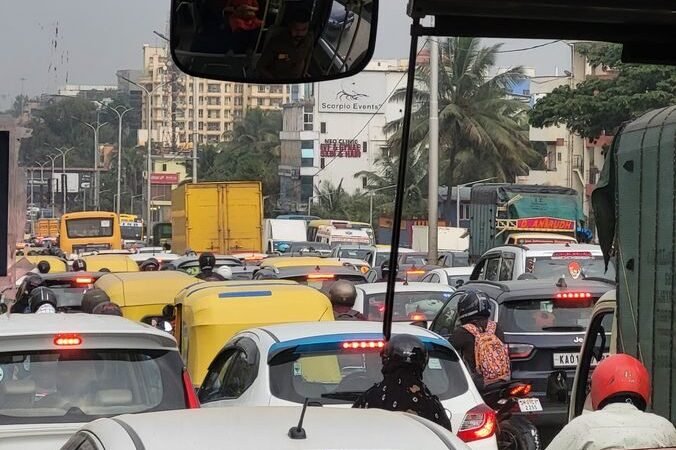
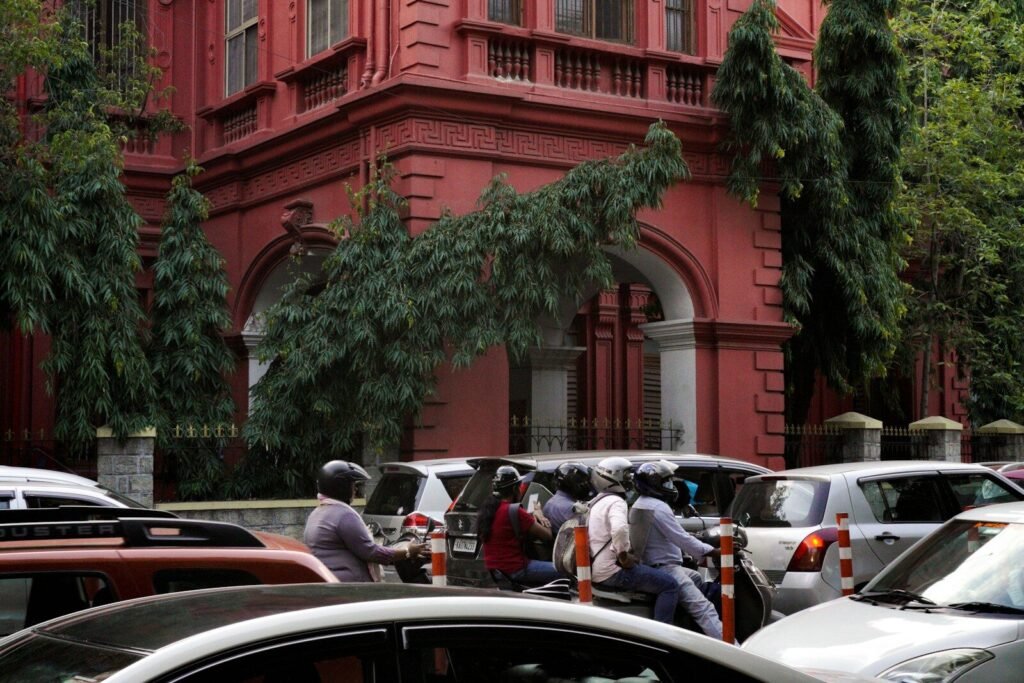
Bengaluru’s traffic has worsened measurably since the first hackathon. The TomTom Traffic Index for 2025 ranks Bengaluru as the second most congested city globally, up from previous years, with an average congestion level of 74.4 per cent. A 10-kilometre drive takes 36 minutes and 9 seconds. During evening rush hour, the average speed drops to 13.2 km/h — barely faster than running. Motorists spend an estimated 168 hours per year in traffic, equivalent to seven full days.
The press release does not cite any of these figures. It describes the problem as “chronic traffic congestion in a city of over 14 million people” without quantifying how bad it has become. The timing of the announcement — two days after the TomTom data went viral in Indian media in August 2026 — is worth noting.
ASTraM as a new data layer
The 2017 hackathon asked participants to use Google and Bing Maps data. Flipkart Gridlock Hackathon 2.0 gave participants access to the ASTraM platform, Bengaluru Traffic Police’s AI-driven traffic management system designed by Arcadis. ASTraM, launched in January 2024, pulls data from 9,000 police cameras, cab aggregators, map services, and public transport utilities to provide real-time congestion monitoring, incident detection, and predictive analytics.
Arcadis claims ASTraM has reduced congestion by up to 20 per cent on critical corridors and cut emergency response times by 30 per cent. If those figures are accurate, the platform represents a genuine data infrastructure upgrade from 2017. It also means the hackathon participants had access to richer, more localised data than the first edition — which raises the question of why the solutions need to be crowdsourced at all when a paid platform is already operational.
Flipkart’s CSR and corporate affairs strategy
Rajneesh Kumar, Chief Corporate Affairs Officer at Flipkart Group, is the named executive in both the 2026 hackathon press release and recent Flipkart Foundation announcements. The Flipkart Foundation has been actively building a CSR portfolio across skill development, education, and community initiatives in Karnataka and beyond since 2022. The hackathon fits a pattern of Bengaluru-focused corporate citizenship — visible, city-specific, and tech-aligned.
This is not a criticism. Corporate engagement with urban problems is legitimate and often useful. But it is worth distinguishing between genuine infrastructure investment and a branded event that generates positive coverage. A hackathon with ₹5 lakh in total prize money is a marketing roundabout, not a capital allocation.
The Competitive Picture
Hackathons as urban problem-solving
Flipkart Gridlock Hackathon 2.0 is not the only crowdsourced AI initiative targeting Bengaluru’s traffic. IISc Bangalore, supported by the Ministry of Education’s AIRAWAT programme and the Kotak IISc AI-ML Centre, ran an Urban Vision Hackathon focused on creating India’s largest annotated traffic image dataset. That initiative aimed to build open-source AI models tailored to Indian road conditions, with prizes sponsored by Capital One.
The IISc approach differs structurally. It focused on data creation and open-source model development rather than prototype competition. Its outputs — annotated datasets and trained models — are public goods that any developer or city can use. Flipkart’s hackathon produced proprietary prototypes owned by the participating teams, with no stated commitment to open-source the solutions.
Commercial urban mobility players
The press release names MapmyIndia as a partner. MapmyIndia (now Mappls) provides the mapping and local traffic intelligence layer. It is a publicly listed company with its own commercial interests in traffic data and navigation. Arcadis, the Dutch design and consultancy firm, designed and implemented ASTraM and stands to benefit from its wider adoption. HackerEarth provided the hackathon platform.
None of these partners has committed to deploying the winning solutions. MapmyIndia’s role was to provide data access, not to integrate prototypes into its products. Arcadis’s role was to provide the ASTraM platform, not to build on the prototypes. The gap between “hackathon partner” and “deployment commitment” is the gap that matters.
What the city is already doing
Bengaluru Traffic Police has already invested in ASTraM, a citizen companion app, a digital twin project (targeted for March 2025), and integration with e-attendance systems for automated congestion alerts. This hackathon builds on infrastructure the city has already paid for. What 1,100 prototypes from a hackathon add that ASTraM’s existing AI capabilities — congestion prediction, incident detection, and simulation modelling — do not already cover is an open question.
What the Data Shows
The 2017 track record
The first Gridlock Hackathon’s winning team, Affine Anonymous, proposed AI-driven traffic signal switching. They tested it at Silk Board Junction and claimed a 17 per cent reduction in wait times. Flipkart announced the results in July 2017. Binny Bansal, then Group CEO, said the city had “the potential to be a world-class business and social destination, only if its traffic menace is addressed.”
No public record exists of the solution being deployed at scale. Flipkart formed a committee with Namma Bengaluru Foundation to take the solutions forward. That committee’s subsequent activity is not publicly documented. Bengaluru’s congestion has worsened every year since.
The ASTraM claims
Arcadis claims that ASTraM has delivered a 20 per cent congestion reduction on critical corridors, a 30 per cent improvement in emergency response times, and a 10 per cent cut in vehicular emissions. These are company-reported figures, not independently audited. The TomTom data showing Bengaluru as the world’s second most congested city in 2025 suggests that whatever improvements ASTraM delivered on specific corridors have not moved the city-wide needle.
The press release does not reconcile the ASTraM improvement claims with the city’s worsening congestion ranking. Both can be true — targeted corridors improved while overall city traffic worsened — but the tension deserves acknowledgment.
The winning solutions
The three winners of Flipkart Gridlock Hackathon 2.0 are technically interesting. Gridlock Oracle uses a Hawkes Process model to predict how a single incident cascades into city-wide congestion, with a live control-room dashboard. PRAHAR uses multiple ML models to forecast congestion severity, junction risk, and resolution time, then recommends deployment of officers and barricades. ParkSight analyses parking violation records to identify enforcement zones with hotspot detection and patrol optimisation.
All three are software-only solutions. None requires hardware installation. All three could theoretically integrate with ASTraM’s existing infrastructure. Whether they will is a question the press release does not answer.
What’s New vs. What’s Repackaged
Genuinely new
Access to ASTraM data. The 2017 hackathon used publicly available Google and Bing Maps data. This edition gave participants access to anonymised real-world data from 9,000 police cameras and the ASTraM analytics platform. That is a material upgrade in data quality and specificity.
The scale of participation. 33,600 registrations and 1,100 prototypes represent a significant jump from the 2017 edition’s 3,000 registrations. Whether the prototypes are deployable is a separate question, but the participation numbers are real.
The technical sophistication of winners. In 2017, the winning team proposed feeding Google Maps data into traffic signals. This time, winners use Hawkes Process models, multi-model ML ensembles, and spatial hotspot analysis. The technical bar has risen.
Repackaged
The “public-private collaboration” framing. Flipkart used the same framing in 2017. Opening city data to innovators is sound, but it is not a new idea — and the 2017 version did not produce deployed solutions.
The prize structure. Total prize money of ₹5 lakh in 2026 is marginally higher than the $5,500 (approximately ₹3.7 lakh at 2017 exchange rates) offered in 2017. Adjusted for inflation, the prize pool has barely moved. For a company of Flipkart’s scale, this is symbolic, not transformative.
Unclear
Deployment commitments. The press release says the winning solutions were “felicitated” by the Chief Guest. It does not say they will be deployed, piloted, or even evaluated for deployment by Bengaluru Traffic Police or ASTraM. The 2017 edition similarly ended with felicitation, not deployment.
IP ownership. The press release does not clarify who owns the intellectual property of the 1,100 prototypes. If the teams retain ownership, there is no mechanism for the city to adopt the solutions. If Flipkart or BTP acquires them, the terms are not disclosed.
The Question That Wasn’t Answered
Will any of these prototypes actually be deployed?
This is the only question that matters, and it is the one the press release avoids entirely. A hackathon that produces 1,100 prototypes and deploys zero is an event, not a solution. The 2017 edition demonstrated this pattern. What commitment — financial, operational, or contractual — does Flipkart, Bengaluru Traffic Police, or ASTraM have to piloting the winning solutions? The press release names no pilot programme, no deployment timeline, no integration plan, and no budget.
What is Flipkart’s actual investment?
The total prize pool is ₹5 lakh. Flipkart’s registered user base exceeds 500 million. The company’s technology budget is not public, but it is orders of magnitude larger. A hackathon is a low-cost way to generate brand-positive coverage for urban problem-solving without making a capital commitment to infrastructure. What is Flipkart investing beyond the event itself?
Why crowdsource what ASTraM already does?
ASTraM already provides congestion prediction, incident detection, and simulation modelling. The winning solutions overlap with these capabilities. If ASTraM’s existing AI can predict congestion hotspots, why does the city need a separate hackathon to produce the same thing? The answer may be that ASTraM’s capabilities are narrower than Arcadis’s marketing suggests, or that the hackathon serves a different purpose — community engagement, not technical gap-filling.
What This Means for You
For urban planners and city administrators
The ASTraM data access model is worth studying. Opening anonymised traffic data to external developers, even temporarily, could reveal use cases that internal teams miss. But data access without a deployment pipeline is a half-measure. If your city is considering a similar hackathon, build the adoption path before the event — identify which department will evaluate prototypes, what the integration criteria are, and what budget exists for piloting.
For corporate CSR and public affairs teams
A hackathon generates coverage and goodwill. It does not generate infrastructure. If the goal is brand visibility, a hackathon is cost-effective. If the goal is reducing congestion, the same budget directed at a sustained partnership with a traffic engineering team — or at funding a pilot of ASTraM’s existing capabilities — would likely produce more durable results. Be honest about which goal you are optimising for.
For AI developers and hackathon participants
The technical quality of the winning solutions is genuinely strong. The data access through ASTraM is a real upgrade from typical hackathon datasets. But participants should understand that the probability of their prototype being deployed is low, based on the 2017 track record. Enter for the learning, the exposure, and the prize money — not for the expectation of impact.
Editor’s Note
This article draws on the Flipkart press release issued via Edelman India on 3 September 2026, supplemented by independent web research. Company-claimed information includes the participation figures (33,600 registrations, 1,100 prototypes), the winning solution descriptions, the prize amounts, and the claim that the 2017 edition’s winning solution demonstrated a 17 per cent wait-time reduction at Silk Board Junction.
Independently verified information includes the TomTom Traffic Index 2025 data ranking Bengaluru as the world’s second most congested city (74.4 per cent congestion, 36 min 9 s for 10 km), the ASTraM platform’s launch details and capabilities (from The Hindu and Arcadis’s project page), the 2017 hackathon’s results and participant details (from YourStory, Times of India, and Bloomberg), and the IISc Urban Vision Hackathon as a comparable initiative. The ASTraM performance claims (20 per cent congestion reduction, 30 per cent emergency response improvement) are Arcadis-reported and not independently audited. We could not find any public record of the 2017 winning solution being deployed at scale, nor any deployment commitment for the 2026 winners.