

Fixed broadband: ONE Broadband appoints a chief business officer
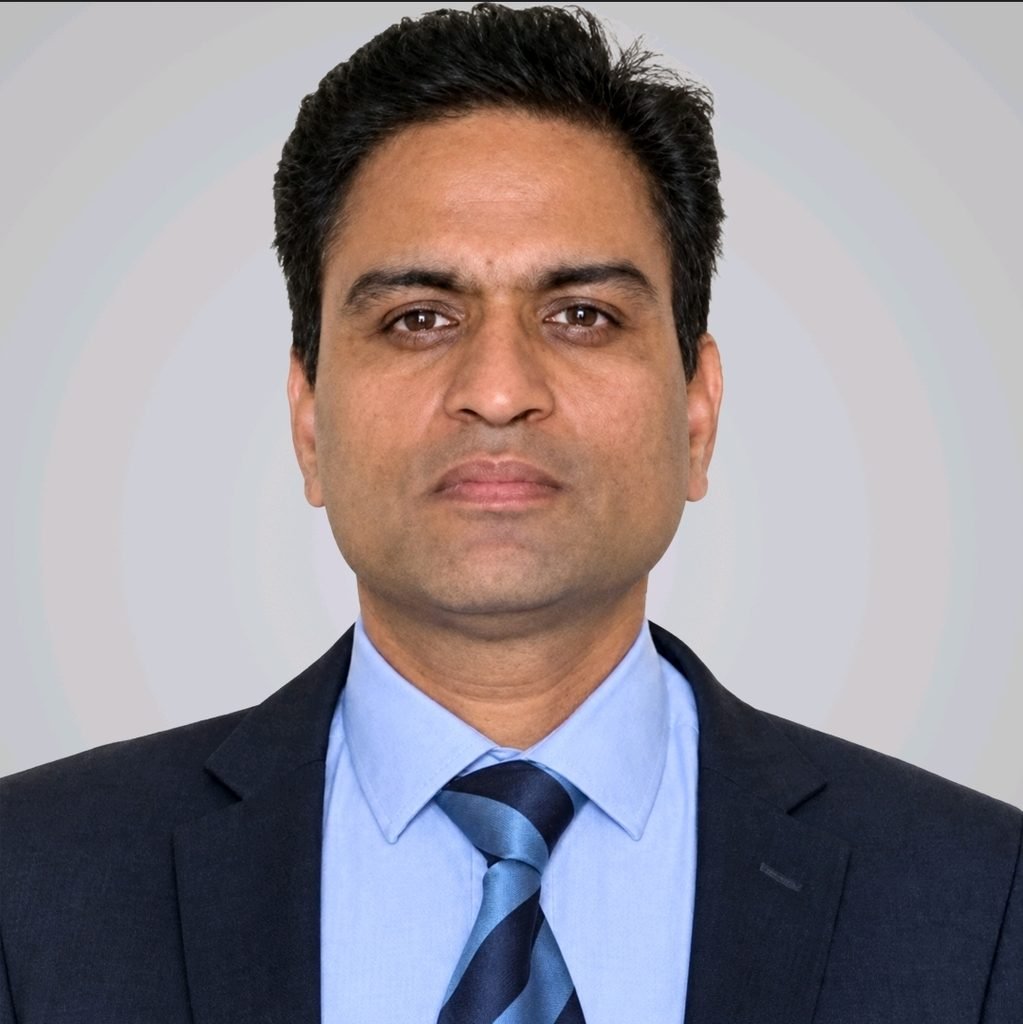
OneOTT Intertainment Ltd. (OIL), the broadband vertical of Hinduja Global Solutions, has appointed Ashish Krishana Sharma as Chief Business Officer for its Retail & Institutional vertical. Sharma will lead OIL’s broadband business across India — sales, distribution and customer acquisition for the ONE Broadband brand — with a portfolio that runs across fixed broadband, IPTV, OTT, CCTV and public WiFi. He brings more than 25 years in telecom, broadband and DTH, including a 12-year tenure at Bharti Airtel and, most recently, a national divisional-head role at DishTV India.
“I am delighted to join OIL at such an exciting point in its journey,” Sharma said, pointing to rising demand for high-speed broadband in India’s smaller cities and towns. Vynsley Fernandes, Whole-time Director at HGS and MD & CEO of OIL, said Sharma’s experience building a fibre broadband business from the ground up would be valuable as ONE Broadband expands to more cities.
The company
OIL is the broadband arm of Hinduja Global Solutions and part of the NXTDIGITAL Media Group; it became an HGS subsidiary in 2022 when the group merged its media business with its IT services arm. It operates under the ONE Broadband brand in more than 350 cities and towns, at speeds up to 1,000 Mbps, and says it has about one million retail broadband customers alongside five million digital TV customers. Its enterprise unit, CelerityX, offers connectivity with SD-WAN capabilities.
Its model is distinctive. Rather than outspending larger rivals on infrastructure, OIL leans on a partner network of roughly 15,000 franchisees and local cable operators that together own close to 2 lakh kilometres of fibre. It bundles television, broadband and OTT into plans of about ₹399 to ₹899, against entry-level broadband tariffs from ₹299, and it runs a government partnership in Uttar Pradesh — Project GANGA — to train 8,000 to 10,000 local “Digital Service Providers” to connect households. Fernandes has described the approach as “phygital”: digital services delivered through a physical partner network built over decades.
The market it competes in
India’s fixed broadband market is large and concentrated. As of August 2026, the country had about 48.6 million fixed wired broadband subscribers, and the top five providers held roughly 72% of that segment. Reliance Jio leads with about 14.8 million, followed by Bharti Airtel with about 11.4 million and BSNL with about 4.6 million. Market research projects fixed broadband customers to grow from about 63.6 million in FY2026 to 150.4 million by FY2031, with the market value rising from ₹340–350 billion to ₹920–930 billion.
That growth is real, but it is not evenly shared. Jio captured roughly two-thirds of fixed-broadband net additions in FY2026, and the wireline subscriber base as a whole grows slowly — under 1% month-on-month. For a mid-sized fixed broadband player, the opportunity sits less in headline scale than in reach: the Tier-2, Tier-3 and rural markets where penetration remains low and where a local partner network matters more than a national brand. OIL says about 60% of its customers come from those markets, and that is the ground on which its strategy depends.
What the hire signals
The appointment is best read as a distribution play. Sharma’s background is sales and go-to-market across DTH, fibre and telecom — the parts of the business that reach customers, not the parts that build networks. That fits a company whose growth model is partnership-basis rather than capital-basis, and it suggests the priority is adding subscribers through franchisees and institutional deals rather than through infrastructure.
The institutional side matters too. The role covers retail and institutional sales, and OIL’s enterprise brand has been building a customer base that includes public-sector and financial-services clients. Growing both segments with one business leader is a coherent structure, though the release gives no target, budget or timeline against which to judge it.
What the announcement does and doesn’t establish
It establishes an appointment, the role’s scope, and the executive’s background. It does not establish a subscriber target, a revenue figure or a growth timeline. The description of OIL as “one of India’s largest private ISPs” needs context: by fixed broadband subscribers, it sits well behind Jio, Airtel and BSNL, and its one million retail customers are a fraction of the leaders’ base — though among independent private ISPs it is a significant player.
The honest summary is that a partner-led challenger, in fact, has hired a distribution veteran to push its fixed broadband brand deeper into the retail and institutional markets. In a market where two telcos dominate the subscriber tables, the bet is that being hyper-local can compete with being hyper-scale. The hire is a reasonable step; whether it moves the subscriber numbers is the part the release cannot show.