
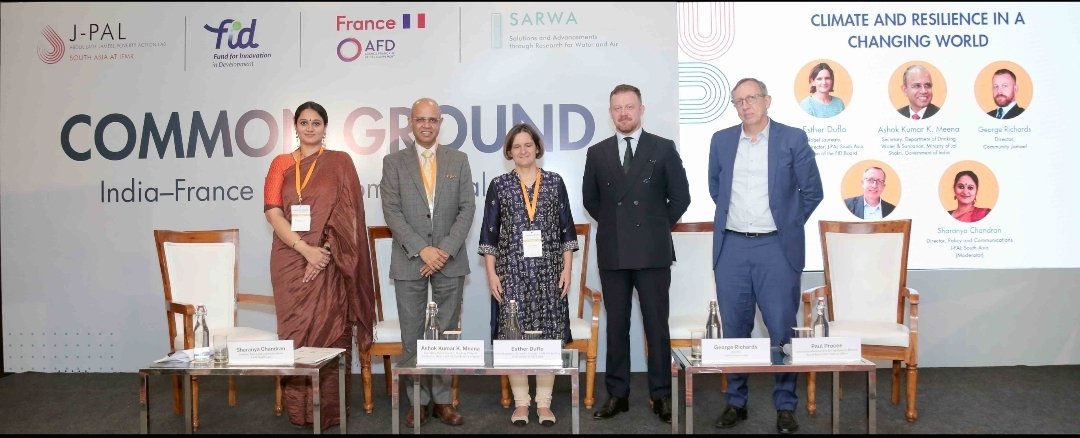
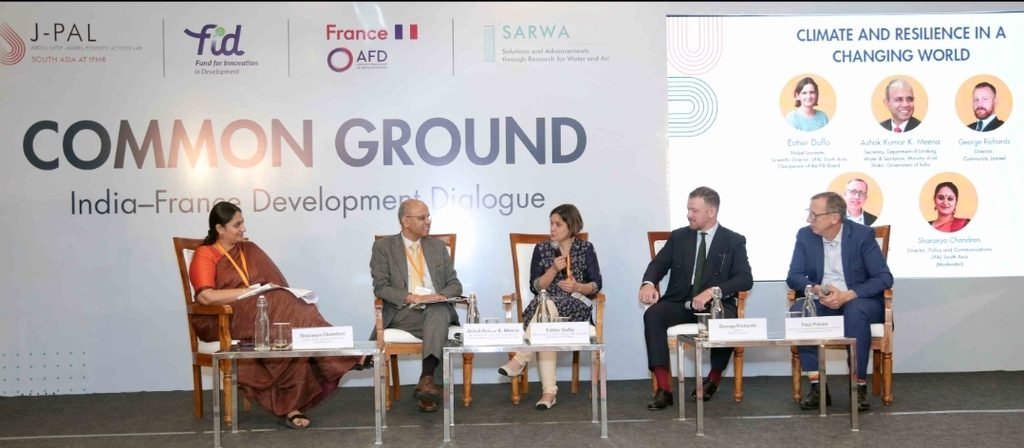
A dialogue on evidence-based policy in New Delhi has brought together policymakers, researchers, funders and practitioners around a single question: how to move promising development innovations from testing to scale in public systems. The Fund for Innovation in Development, Agence Française de Développement and J-PAL South Asia convened “Common Ground: India–France Development Dialogue” as part of the India–France Year of Innovation 2026, with sessions spanning education, gender, health and climate.
The event’s concrete news was a new partnership. The Brevo Foundation has committed approximately €786,000 over five years to work with J-PAL South Asia on two priorities: supporting the scale-up of the Graduation Approach to strengthen pathways out of extreme poverty, and generating evidence on how social connections shape development outcomes. It is a modest sum by development-finance standards, but the model it sits within is the more interesting part of the story.
The model behind it
The convening is an expression of a specific idea: that innovation in development should be tested rigorously, and that what survives testing should be handed to governments to own and expand. That is evidence-based policy in practice, and J-PAL’s operating method — randomised evaluations to establish what works, for whom and at what cost, followed by partnerships that help governments scale effective programmes. J-PAL South Asia, hosted in Chennai by the Institute for Financial Management and Research, says it works with about 20 Indian state and central ministries.
The speakers reflected that emphasis. Esther Duflo, the Nobel laureate who co-founded J-PAL and chairs FID’s board, argued in her keynote that when governments, implementers, researchers and funders work together, evidence can turn promising ideas into better policy — and that recognising failure is part of the process, because testing is what separates ideas that sound promising from those that deliver results. The closing message from AFD’s India country director, Virginie Dago, made the same point in reverse: innovation is essential, but not sufficient without evidence and partnerships.
Proof of concept: the Graduation Approach
The Graduation Approach, which the new partnership will help scale, is the clearest example of evidence-based policy working. Developed by the Bangladeshi NGO BRAC, it combines business training, life-skills coaching and short-term financial support to help the poorest households become self-sufficient. Randomised evaluations by researchers affiliated with J-PAL and Innovations for Poverty Action across seven countries over 16 years found it effective at lifting people out of extreme poverty — evidence that then travelled into policy.
In India, that journey is visible. The Government of Bihar adapted the approach as the Satat Jeevikoparjan Yojana in 2018, and it now reaches roughly 200,000 women-headed households; J-PAL describes it as among the largest government-led scale-ups of the approach anywhere. The Ministry of Rural Development then took a version national through the Samaveshi Aajeevika Yojana. That is the path evidence-based policy describes: a tested idea, a state willing to adopt it, and a national programme built on the same evidence.
What to watch
Three things will show whether the dialogue translates into impact. First, whether the new Brevo Foundation partnership produces published evidence on the social-connections question, which is the less-developed half of its brief. Second, whether the four projects showcased at the event — spanning women’s financial independence, student well-being, police training on gender-based violence, and reducing drug use among young people — advance to measurable results and public scale-up. Third, whether the India–France Year of Innovation produces durable development-innovation collaboration beyond a single convening, given the year spans several sectors.
What the dialogue does and doesn’t establish
It establishes that a coalition of French and Indian institutions convened around evidence-based scaling, and that a new five-year partnership will fund work on the Graduation Approach and on social connections. It does not establish any measured outcome for the showcased projects, a detailed workplan for the partnership, or that the dialogue itself will change policy — its value is prospective.
The honest summary is that this is a convening with a small grant attached, and its significance lies less in the sum than in the evidence-based policy mechanism it promotes. The Graduation Approach’s path from randomised trials to a Bihar scale-up to a national programme is a working example of evidence-based policy, and it is the strongest argument the participants have. Whether the dialogue’s other ambitions follow the same route will depend on the unglamorous work that comes after the event: publishing results, winning government ownership, and adapting programmes to local contexts — the steps the discussion itself identified as necessary.
Editor’s Note: This article draws on the FID/AFD/J-PAL South Asia release, J-PAL’s and FID’s published materials, and public documentation of the India–France Year of Innovation 2026 and the Graduation Approach.