An IT services firm has announced new capabilities for the used-vehicle industry. It names no product, no client and no price. On 20 September, Coforge said it now turns vehicle inspections into AI-powered vehicle lifecycle intelligence for lenders, fleets and remarketers. One number anchors the claim: the solution already supports more than 60,000 vehicles annually. Here is what the release says, who Coforge is, and what nobody asked.
What the Vehicle Lifecycle Intelligence Release Says
The workflow
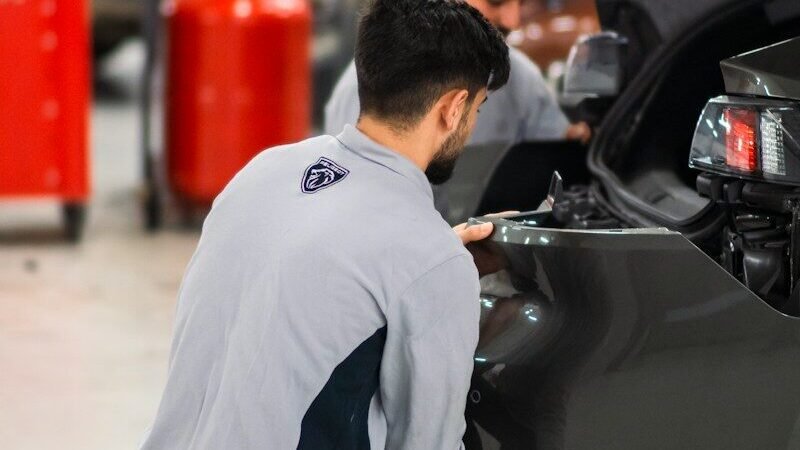
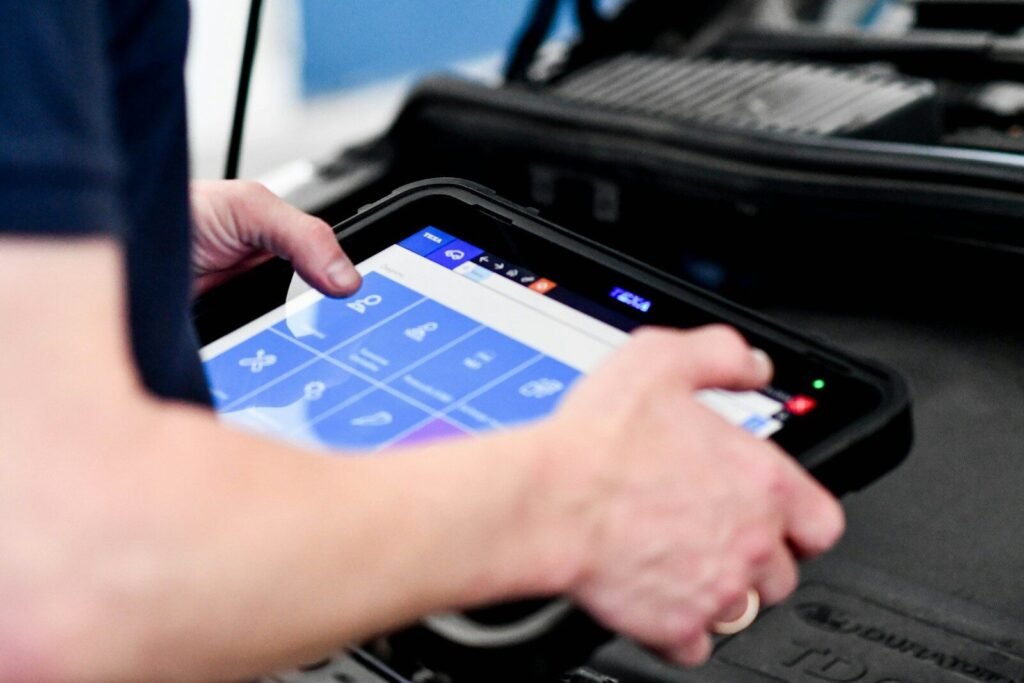
The offering targets a real pain point. When a lease or fleet vehicle comes back, the owner organization often lacks a trusted view of its condition. Coforge’s solution assembles VIN, mileage, maintenance history and return data before an inspection begins. Standardized workflows then capture 360-degree condition evidence, assessments and wear. The output is a single condition record used for repair, certification, routing and resale decisions.
The claims
The metric comes first: the solution is “already operating at scale” across more than 60,000 vehicles a year. Niraj Patel, Senior Vice President, frames the ambition: “Vehicle inspections should not end with documentation. They should create intelligence that powers every downstream decision.” No client is named. No accuracy figures, cycle-time improvements or pricing appear anywhere.
The Company Making the Announcement
Coforge is a Noida-headquartered, NSE-listed IT services firm that has rebranded itself as an “AI-native engineering services leader”. The numbers behind the rebrand are substantial. FY2025 revenue reached $1.445 billion, up 31.5% in dollar terms. Headcount stands at 33,497, with a $1.5 billion executable order book.
The firm has been buying scale. It closed its acquisition of Cigniti Technologies in April 2026. Margins at that business expanded from 11% to 19% in six quarters.
A larger deal for Encora, announced in December 2025, creates a combined entity of roughly $2.5 billion in revenue. It will have about 44,000 employees, with a claimed $2 billion core of AI-led engineering, data and cloud services. Both acquisitions target the same pitch: scaled AI-led engineering for enterprises. Private equity backer BPEA EQT exited fully in 2023 through a $924 million block trade.
Chief Executive Sudhir Singh says the firm has deployed more than 200 AI and GenAI solutions. The vehicle announcement is one of many vertical plays in that portfolio — and reads like one.
The Market Behind Vehicle Lifecycle Intelligence
The incumbents
Vehicle lifecycle intelligence is already contested territory, and by companies with deeper inspection DNA. UVeye, an Israeli maker of drive-through vehicle scanners, has raised roughly $390 million. That includes $191 million in January 2025 led by Toyota’s Woven Capital. CarMax and Amazon are among its backers. Its June 2026 “Scan to Sold” platform turns inspection data into same-day vehicle listings, cutting time-to-market by nine days.
Tractable, a London-based computer vision firm, has processed more than $1 billion in auto claims. Its insurer clients include Tokio Marine and Ageas. Its software grades up to 10,000 salvage vehicles a day for parts recycler LKQ. Solera’s tools predict within ten seconds whether a damaged car will be totaled. Ravin AI, Monk AI, Click-Ins and India’s Spyne and Inspektlabs crowd the same space.
The growth segment
The market data explains the timing. AI vehicle inspection generated about $289 million from insurance applications in 2025, the largest segment. That figure comes from Next Move Strategy Consulting.
But the fastest-growing application is auctions and remarketing, projected to expand at a 28.6% compound annual rate through 2035. That is the segment Coforge now targets. Sixty thousand vehicles a year is roughly 164 a day. The scale claim is real, but modest against the incumbents’ volumes. Vehicle lifecycle intelligence is the frame; integration volume is the bet.
The Questions Nobody Asked
What is the product called? The release announces “expanded capabilities”, not a named platform. It cannot be bought, compared or benchmarked on the information given.
Who are the clients? The 60,000-vehicle scale is impressive without attribution. Client concentration, geography and use cases are all unknown.
Whose AI does the inspecting? Coforge describes workflows and data assembly, not computer vision. Whether the damage detection is proprietary, partnered or licensed from the incumbents above is unstated.
What does “trusted” mean legally? A condition record that drives repair, certification and resale decisions becomes evidence in disputes. The release addresses accuracy and liability nowhere.
Where is the EV battery question? Battery health is the decisive condition variable in electric-vehicle remarketing. The release does not mention it.
Services or software? The offering reads like a consulting engagement wrapped in product language. Pricing, licensing and delivery model are absent.
New vs Repackaged: What the Release Delivers
New — the vertical packaging. Coforge has assembled inspection workflows, data integration and remarketing decision support into a financial-services use case. A 60,000-vehicle deployment backs it.
Repackaged — the concept. Condition reports feeding downstream decisions are what remarketing software has done for years. Solera, Cox Automotive and the inspection specialists already connect condition data to pricing and routing.
Missing — the product. A name, a client, a benchmark, a price and an AI disclosure are all absent. What remains is a capabilities statement.
What Vehicle Lifecycle Intelligence Means for You
If you run auto lending or fleet remarketing, target the workflow Coforge describes. Assemble data before inspection, capture evidence during it, and decide from a single record. Demand accuracy benchmarks and liability terms before trusting any condition record, and check EV battery coverage if your portfolio includes electrics.
If you compete in inspection AI, expect IT services firms to wrap integration services around your category. Their buyers are your buyers’ systems.
If you track IT services, note the pattern. A thin product announcement is itself a signal: firms sitting on AI portfolios and M&A-fueled scale are spraying vertical use cases to see what converts.
Editor’s Note
This article draws on the Coforge press release of 20 September 2026 (workflow description, quote, 60,000-vehicle claim, company description).
Verified from public sources: Coforge‘s FY2025 results, headcount, order book, Cigniti closure and Encora transaction details come from company materials. Those include its earnings call, the FY25 results release, the Cigniti-closure announcement of 30 April 2026 and a BSE filing on Encora. The BPEA EQT exit comes from EQT’s own announcement of 24 August 2023. AI vehicle inspection market figures come from Next Move Strategy Consulting’s market report of July 2026. UVeye and Tractable funding, deployments and partnerships come from company announcements and trade coverage in Autobody News and Fleet Maintenance.
Company-reported and unverified: the 60,000-vehicle scale, the claim of operating “at scale”, and all implied performance benefits. No client, product name, pricing or accuracy metric is disclosed in the release.