
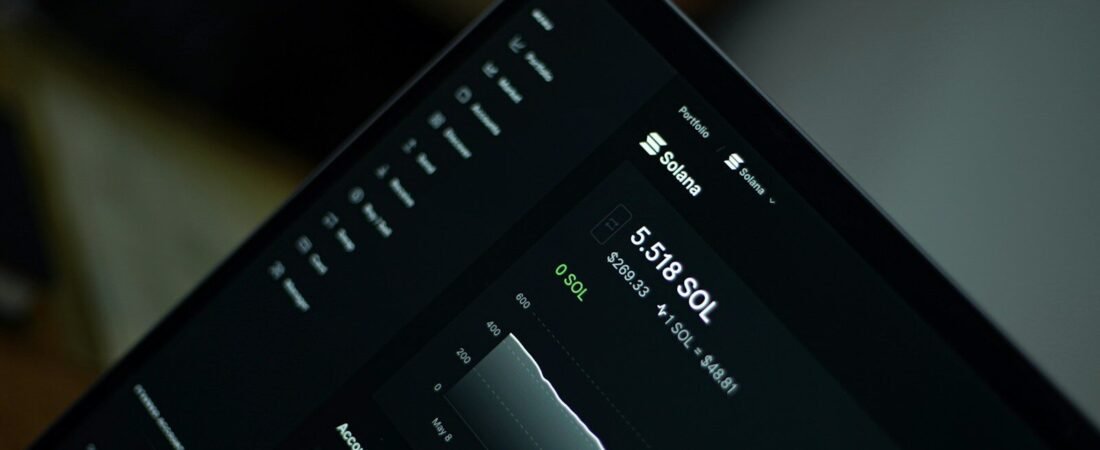
The Solana Foundation released Solana DvP on 5 October 2026. It is an open-source escrow program that lets institutions settle trades on Solana with delivery-versus-payment. The Foundation says it brings the atomic settlement certainty banks require to public blockchain infrastructure “for the first time” as a reusable standard. It is MIT-licensed, externally audited, and, by the Foundation’s account, ready for use with real funds.
Atomic settlement is the mechanism underneath. Delivery-versus-payment ensures the asset and the cash move at the same moment, so neither side can deliver without being paid. Traditional markets reach that outcome through a chain of clearinghouses, depositories and custodians, and capital can sit tied up for a day or two. On-chain, both legs settle in a single transaction, or neither does.
The release also carries a name that will do a lot of work: J.P. Morgan.
What Solana actually released
Solana DvP is a program and an API, not a venue. It supports SPL Token and Token-2022, including the extensions regulated issuers lean on: permanent delegate, pausable tokens, and transfer hooks. Any two counterparties can use it with any settlement agent, whether a bank, a custodian or an exchange. The Foundation says it plans to add privacy so settlements can be confidential.
The code is open, and that matters. Until now, the Foundation argues, institutional trades settling on-chain relied on bespoke smart contracts. A shared, audited program lowers the cost of inspecting and reusing the mechanism. The Foundation is seeking design partners ahead of a production release, so this is infrastructure on offer, not infrastructure in use.
The J.P. Morgan caveat
J.P. Morgan gave input on institutional settlement practices, and its head of markets digital assets endorses the idea of a shared standard. That engagement is real.
The disclaimer is equally real. It states that the bank’s involvement “was limited to providing input regarding securities settlement practices” and should not be construed as designing, developing, operating, approving, certifying, warranting, endorsing or guaranteeing Solana DvP or its performance. For a release whose headline pairs Solana with the bank, the boundary is worth holding in view. The bank contributed expertise. It has not put its name behind the product.
Why atomic settlement matters
Settlement risk is not abstract. When the two legs of a trade are not synchronised, one party can deliver without receiving, the principal risk that has shadowed securities markets since the Herstatt failure in 1974. Atomic settlement does not reduce that gap. It removes it, by construction. The transaction either completes in full or not at all.
The prize is capital efficiency. If settlement is instant, collateral does not sit idle across a multi-day cycle. Venues, banks and infrastructure providers are all circling the same problem for that reason. The Bank for International Settlements calls the target model atomic, real-time, gross delivery-versus-payment.
The “first” problem
The Foundation’s “for the first time” claim is narrower than it sounds, and that is fair. Public-chain delivery-versus-payment is not new in concept. Solana had already published a reference guide using Token-2022 and USDC. What is new is a Foundation-blessed, audited, reusable program rather than one-off contracts.
Other firsts are landing elsewhere. In August 2026, Virtu Financial, Tradeweb and M1X completed what they described as the first fully on-chain sovereign repo, with the securities leg a natively issued digital bond. That ran on the Canton Network, a permissioned chain, not a public one. The distinction between “first on a public chain” and “first overall” is where most of these claims live.
The netting question
The most serious counterargument comes from the incumbent. DTCC began rolling out its tokenisation service in July 2026 with more than 50 institutions, keeping securities in traditional custody while on-chain entitlements move across chains. Its infrastructure could support atomic settlement, but DTCC has argued against applying it broadly.
Its netting efficiency sits around 98%. Atomic, gross settlement at scale would demand liquidity the market is not structured to provide, because it removes the netting that currently lets participants settle only their net obligations.
“The technology supports atomic settlement, but the question is: should we?” one DTCC executive put it. That is the tension Solana’s program will run into. Atomic settlement is a powerful tool. Whether institutions want it everywhere is a separate decision.
What to watch
Two signals matter. The first is conversion: whether named institutions adopt Solana DvP in production, rather than contributing input or piloting quietly. The second is scope: whether atomic settlement stays where it is strongest, in bilateral and high-value trades, or spreads into markets where netting does the heavy lifting.
Solana has earned a real position in tokenised assets. It hosts billions in real-world asset value and the large majority of on-chain tokenised equity volume. A settlement standard is the logical next layer. The open question is not whether the code works. It is whether the market’s plumbing, and its liquidity, will allow it.
Editor’s Note
This analysis draws on the 5 October 2026 Solana Foundation announcement and its disclaimers, Solana’s published DvP documentation, and independent reporting and commentary from DTCC, J.P. Morgan and market participants, alongside BIS settlement frameworks. Where a claim is a company’s own, we say so.