
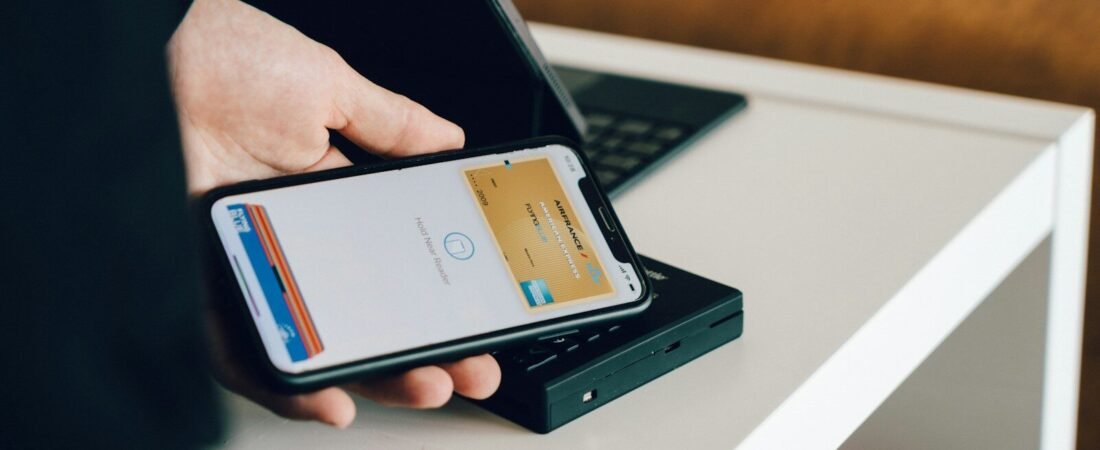
Apple Pay enters into India via Axis Bank
On 30 September 2026, Apple Pay went live in India with Axis Bank as its first banking partner, ending a wait of more than a decade since the service debuted in the United States in 2014. The launch is deliberately narrow. At the outset, only eligible Axis Bank Visa and Mastercard credit cards can add to Apple Wallet, and the service works on iPhone, iPad and Apple Watch (with Mac support promised soon). India’s homegrown RuPay network, debit cards, and cards from HDFC Bank, ICICI Bank and SBI Card are not part of the initial rollout.
The strategic significance is larger than the addressable base. Apple Pay arrives not as a challenger to India’s dominant Unified Payments Interface (UPI) but as a card-based overlay on an existing credit-card habit. It is entering a market where UPI carries roughly 84% of digital payment volume and dwarfs credit-card transactions by a factor of about 39 in volume terms. Apple’s bet is narrower and more specific: that affluent iPhone users, who are disproportionately likely to hold premium credit cards and shop at organised retail, travel and food-delivery platforms, will find tapping an iPhone or Apple Watch easier than pulling out a card or scanning a code.
Finally Unlocked the Launch
Three forces finally unlocked the launch: the Reserve Bank of India’s move to permit biometric (device-native) authentication for card payments, which let Face ID and Touch ID stand in for the OTP; Apple’s agreement to comply with India’s data-localisation and system-audit regime; and the willingness of at least one large issuer, Axis Bank, to accept Apple’s commercial terms. Those same commercial terms — Apple reportedly sought about 20 basis points per transaction against the roughly 15 basis points banks were willing to pay — are precisely why India’s three biggest card issuers stayed out at launch.
This report examines the launch across every relevant dimension: the mechanics of the service, the twelve-year regulatory journey, the bank-economics standoff, the competitive field (UPI, UPI Tap & Pay, Google Pay, Samsung Pay), the merchant and payment-gateway ecosystem, the size of the realistic market, the gaps left open, and the bull and bear cases for adoption.
The Launch at a Glance
| Dimension | Detail |
|---|---|
| Launch date | 30 September 2026 |
| First banking partner | Axis Bank — India’s 4th-largest credit-card issuer (~16.3 million active cards) |
| Cards supported | Eligible Axis Bank credit cards on Visa and Mastercard |
| Not supported at launch | RuPay cards; debit cards; cards from HDFC Bank, ICICI Bank, SBI Card; UPI |
| Devices | iPhone XR or later (iOS 18+), Apple Watch Series 6 or later (watchOS 11+), iPad; Mac support coming soon |
| Where it works | Contactless/NFC terminals in stores, and in apps and on the web at participating merchants |
| Named merchants | Apple Store, Blinkit, Chaayos, Comet, Croma, Interflora, Ixigo, Le15 Patisserie, Reliance brands, Tata 1mg, Zomato (and, via Juspay, MakeMyTrip, Zepto, Myntra, BigBasket, IndiGo, BookMyShow) |
| Payment partners | Cashfree, Juspay, Mswipe, Paytm, PayU, Pine Labs, Razorpay, Worldline (and BillDesk) |
| Global footprint | Apple Pay is available in 90+ countries/regions and works with 11,000+ bank and network partners globally |
How Apple Pay Works in India
Setup
A customer can add an eligible card in one of two ways: directly through the latest version of the Axis Bank mobile app, or by opening the Wallet app on iPhone, tapping the plus sign and following the on-screen steps. The issuing bank authenticates the customer and decides whether to approve the card for Apple Pay. Once approved, the card is ready to use across the person’s Apple devices.
Paying in a store, in an app and online
In a store, the user double-clicks the side button, authenticates with Face ID, Touch ID or the device passcode, and holds the top of the iPhone near a contactless terminal. On Apple Watch the flow is similar. The physical action mirrors a tap of a contactless card, but the credential generates on the device.
In apps and on the web, Apple Pay replaces manual card-detail entry and the OTP step at checkout: the user selects the Apple Pay button and confirms with biometrics.
The security model: tokenisation, not card numbers
Apple Pay does not hand a card number to the merchant. When a card adds, the issuing network (Visa or Mastercard) issues a unique Device Account Number (DAN). This is a token — that is encrypted and stored in the device’s Secure Element, a certified chip. At payment, the DAN plus a per-transaction cryptogram comes to the network to authorise the purchase. The real card number neither stores on the device nor on Apple’s servers, nor shared with the merchant. Mastercard and Visa both frame this tokenisation layer as the core fraud protection of the service.
Crucially, every Apple Pay transaction in India also satisfies the RBI’s Additional Factor of Authentication (AFA) requirement for card payments. The stored credential is one factor; the biometric confirmation (Face ID or Touch ID) or device passcode is the second. This is the single most important regulatory enabler of the launch — without it, Apple Pay’s global biometric flow would not have been compliant.
If an iPhone is lost or stolen, the user can use the Find My app to locate it, lock it or suspend payments. Axis Bank has confirmed that customers keep the rewards and benefits attached to their existing cards when paying through Apple Pay — the underlying instrument does not change.
The Twelve-Year Wait: Why Apple Pay Took So Long
Apple Pay’s absence from India was never a technical limitation. The infrastructure was largely ready years before launch; the delay was a tangle of regulatory and commercial constraints, each of which had to be cleared.
Data localisation and the System Audit Report
India’s data-localisation mandate required that payment data be stored within the country, with companies also subject to an annual System Audit Report (SAR). Globally, Apple backs up tokenised payment data on servers in the US, Denmark and China. To comply, Apple reportedly agreed to keep Indian tokenised payment data on-device and with the card networks rather than mirroring it overseas — an architecture that let it meet the requirement without replicating its global backup model. Card networks (Visa, Mastercard, American Express) had already complied. Apple had initially argued it should be exempt from the SAR requirement on the grounds that it does not directly store payment data, and later accepted the regime to unlock approval.
Authentication: the OTP problem and the biometric fix
For years, India’s card-payment rules required a second factor in the form of an OTP or an Aadhaar-linked flow, which Apple regarded as inconsistent with its seamless, device-native experience. The turning point was the RBI’s evolving framework on authentication mechanisms for digital payment transactions. Risk-based authentication was first mooted under the RBI’s Payments Vision 2025 in 2022; a formal framework was announced in February 2024, a draft followed in July, and the final RBI (Authentication Mechanisms for Digital Payment Transactions) Directions, 2025 were issued in September 2025, becoming fully effective across the ecosystem from April 2026. This allowed biometric authentication for card payments — enabling Face ID and Touch ID to serve as the second factor. Apple’s Jennifer Bailey has described this as the development that let ‘the pieces come together.’
Recurring payments and the 2022 retreat
India’s 2021–22 rules on recurring online payments — which required 24-hour pre-debit notifications and cancellation options, and forced the use of RBI-mandated card tokens — prompted Apple to stop accepting debit and credit cards in India for App Store and iCloud subscriptions from June 2022, steering users to UPI. Restoring card payments became a necessary step on the road to Apple Pay, and by mid-2026 Apple was testing card acceptance again with a limited set of users.
The NPCI and UPI question
Offering UPI within Apple Pay would require approval from the National Payments Corporation of India (NPCI) and a sponsor bank. That path was complicated by UPI’s zero-MDR framework (which made it commercially unattractive for Apple) and by differing views on authentication — Apple wanting its device-native biometrics to lead, versus NPCI’s UIDAI-backed model. Apple therefore chose a card-first entry and left UPI for a later, unresolved phase.
The Money Question: Bank Economics and the 20-basis-point Standoff
The most consequential reason for the narrow launch is commercial, not regulatory. Apple is reported to have sought about 20 basis points (0.20%) of transaction value from partner banks for Apple Pay transactions, while large issuers were willing to offer roughly 15 basis points — the level broadly consistent with Apple’s model in other markets. Against a payments-layer margin of roughly 40–50 basis points, that fee is a substantial slice.
India’s three largest card issuers — HDFC Bank (~27.1 million cards), SBI Card (~23.0 million) and ICICI Bank (~19.8 million) — were not part of the launch. HDFC Bank and ICICI Bank had held talks with Apple but had not agreed terms. The banks’ argument is straightforward: a card transaction routed through Apple Pay would very likely have happened anyway, so why surrender 15–20 basis points of value to Apple? Unlike some Western markets, where a wallet can be a customer-acquisition and engagement channel, Indian banks already hold direct relationships with their cardholders, and engagement is largely mediated by UPI apps.
The counter-argument, which Apple makes, is incremental spend: that a frictionless tap experience can shift some spending from UPI or cash to cards, and increase card usage among iPhone owners. If Apple Pay genuinely grows card spend, the commission is defensible; if it merely makes an existing card transaction more convenient, the economics are hard to justify. This tension is the central commercial question hanging over the India rollout, and it explains why Apple is proceeding bank by bank rather than securing the whole market at once.
Axis Bank, as the launch partner, gains a first-mover positioning among India’s card issuers and access to the affluent iPhone customer segment — a bet that the marketing and wallet-share value outweighs the fee.
Competitive Landscape: A Card Rail in a UPI World
Apple Pay enters a payments market that looks nothing like the card-heavy economies where it first succeeded. UPI is the default rail, QR codes are ubiquitous from street stalls to supermarkets, and mobile payments were normalised long before Apple Pay arrived.
The scale gap
In August 2026, UPI processed 24.51 billion transactions worth about ₹29.82 lakh crore. In the same month, credit cards processed 632.45 million transactions worth roughly ₹2.02 lakh crore. And, in other words, UPI is roughly 39 times the size of the credit-card space by transaction volume and about 15 times larger by value. UPI carries about 84% of India’s digital payment volume; for the full FY2025–26 it handled over 24,162 crore transactions worth around ₹314 lakh crore, and accounts for roughly 49% of the world’s real-time payment volume.
Within UPI, the market is concentrated: PhonePe held about 45.6% of August 2026 volume and Google Pay about 32.3%, with Paytm a distant third at roughly 8%. These are the platforms Apple Pay’s card experience is implicitly competing with for the everyday-payment habit.
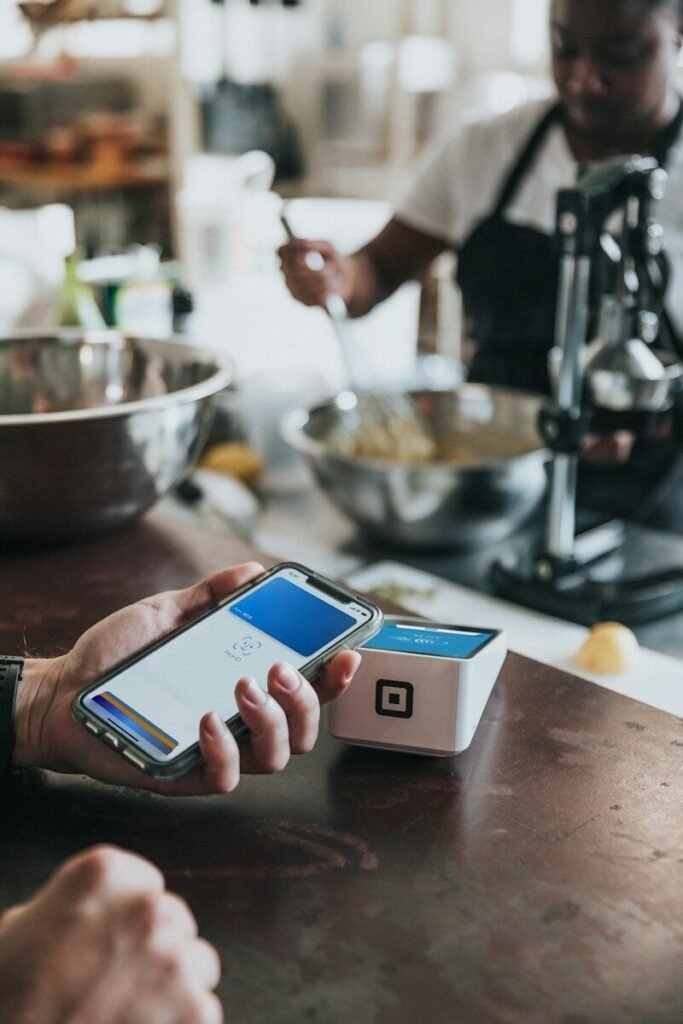
Apple Pay is not India’s first tap-to-pay
Contactless card payments have existed in India for years. Samsung Pay launched in March 2017 with Visa, Mastercard and major banks (including Axis, HDFC, ICICI and SBI Card). Google Pay, launched as Tez in 2017, added NFC-based tokenised card payments in 2020, starting with Axis and SBI Card. Both allow Android users to tap registered cards at NFC terminals. Apple Pay therefore brings a better-integrated experience to Apple devices rather than contactless payment itself.
UPI Tap & Pay: the direct counter
In September 2026, at the Global Fintech Fest, the RBI Governor and NPCI launched UPI ‘Tap & Pay’, which lets a user unlock an NFC-enabled smartphone and tap it on an NFC-enabled POS terminal — without even needing mobile internet, since the terminal’s connectivity carries the transaction. It supports PIN-less payments up to ₹5,000 (PIN required above that) and works with multiple UPI-linked account types, including RuPay credit cards on UPI. This is significant because it makes the physical act of tapping familiar to a mass audience, while offering an NFC route that does not require a credit card. Analysts see UPI Tap & Pay as the single biggest enabler of NFC habituation in India — a tailwind for the behaviour Apple Pay depends on, but also a competitor using the same gesture.
Shifting UPI economics
From 15 October 2026, NPCI will apply a 0.4% Merchant Discount Rate (MDR) to eligible person-to-merchant UPI transactions above ₹2,000, capped at ₹300 for transactions of ₹75,000 or more, with a flat ₹5 for categories such as railways, telecom, insurance and fuel. Consumers remain unaffected, and roughly 96% of P2M transactions (those up to ₹2,000) stay free. The change slightly narrows the pricing gap between UPI and cards, though credit-card MDRs (typically 1.5%–2.5%) remain far higher. Cashfree’s product head argues that shifts in payment behaviour are driven more by convenience than by MDR alone.
The Partner Ecosystem: Merchants and Payment Gateways
Apple has assembled a broad acceptance layer through payment service providers rather than merchant-by-merchant deals. At launch it named Cashfree, Juspay, Mswipe, Paytm, PayU, Pine Labs, Razorpay and Worldline as partners bringing Apple Pay to their merchant networks, with more merchants and apps to follow.
Gateways at the centre
Juspay reported it had already enabled Apple Pay for several leading merchants — facilitating the majority of integrations — naming IndiGo, BookMyShow, Myntra, Zepto, BigBasket and Tata 1mg among those enabled, with more in the pipeline. Its documentation provides express-checkout and hosted-checkout paths plus native (app and mobile-web) integration, including the certificate and token-decryption flows merchants need.
Cashfree cited its international experience, where introducing Apple Pay cut checkout abandonment by up to 75%, attributing the gain to the elimination of repeated card-detail entry and a familiar, trusted payment option. It expects similar improvements in India over the medium term.
PayU brought Apple Pay into its merchant network across online, in-app and in-store flows, with documented hosted-checkout, merchant-hosted and seamless API integrations (payment category APPLEPAY).
The practical implication of this gateway-led model is uneven acceptance at first: a payment may succeed at one provider’s terminal that has enabled the service but fail at another whose acquiring bank has not. Apple expects coverage to broaden over time.
Where Apple started
The merchant list is telling. It skews towards quick-commerce, food delivery, travel, pharmacy and organised retail — precisely the categories where iPhone users already use credit cards and where higher ticket sizes and reward-seeking behaviour make card use attractive. That is a deliberate choice to start where Apple’s customers already are, rather than attempting UPI-like ubiquity.
Market Opportunity: Who Can Actually Use It
At launch, the addressable base is bounded by two filters: you must own a compatible Apple device, and you must hold an eligible Axis Bank Visa or Mastercard credit card. Both circles are narrow but strategically attractive.
The credit-card market
India’s credit-card base has grown to more than 120 million cards (estimates range from ~122 million to ~124 million), nearly doubling since the pandemic. Axis Bank, with about 16.3 million active cards, is the fourth-largest issuer. Credit-card transactions are growing at double-digit rates — August 2026 volumes were up about 28% year on year — and contactless (NFC) acceptance has spread widely, with roughly 60–70% of active POS terminals estimated to be NFC-enabled, and a higher share in metros and Tier-1 cities.
The Apple installed base
Apple accounted for a record 28% of India’s smartphone market by value in 2025 and shipped about 14 million iPhones, making India its fourth-largest market globally. In the ₹600–800 premium band Apple held about 74% share, and in the super-premium (US$800+) segment about 63%. iPhone users are concentrated in the affluent, urban, credit-card-holding segment that overlaps neatly with Apple Pay’s value proposition. Apple’s India revenue is estimated at over ₹1.4 lakh crore for FY26, and India now assembles roughly a quarter or more of global iPhones. The strategic logic is that Apple Pay deepens the role of Apple devices in a user’s daily life, even if the service never approaches UPI’s scale.
Gaps and the Roadmap
| Gap | Status / what to watch |
|---|---|
| RuPay | Not supported. India’s domestic network is excluded at launch; adding it would widen the base considerably. |
| UPI integration | Not offered. Would require NPCI approval and a sponsor bank; Apple has not confirmed any timeline, and zero-MDR UPI economics remain a hurdle. |
| Debit cards | Not covered at launch; the rollout is credit-card-first. |
| Mac support | Coming soon; iPhone, iPad and Apple Watch are live. |
| More banks | HDFC Bank, ICICI Bank and SBI Card are the big prizes; their inclusion depends on commercial terms. Apple is adding banks one by one. |
| Merchant coverage | Acceptance is enabled per provider/terminal, so it is uneven early on and expected to broaden. |
Will It Succeed? The Bull and Bear Cases
The bull case
- The target segment is high-value. iPhone owners are affluent, credit-card-heavy and concentrated in organised retail, travel, food delivery and quick-commerce — categories with higher ticket sizes where card economics work.
- Friction removal is real. Eliminating card-detail entry and the OTP at checkout can lift conversion; Cashfree reports up to 75% lower abandonment in markets where Apple Pay is live.
- The infrastructure tailwind. UPI Tap & Pay is normalising the tap gesture across India, and NFC terminal penetration is already high in metros, making the behaviour change smaller than it looks.
- Ecosystem lock-in. Apple Pay strengthens the iPhone, Apple Watch and Wallet proposition, deepening Apple’s services business in its fastest-growing major market.
- A big enough niche can be enough. Apple does not need to beat UPI — only to make card use through Apple devices meaningfully easier for a segment that already spends on cards.
The bear case
- The addressable base is small at launch. Without HDFC, ICICI and SBI Card, and without RuPay or debit cards, most Indian cardholders cannot use it at all.
- UPI is deeply entrenched. With ~84% of digital volume and a QR habit that costs merchants nothing to accept, UPI is hard to displace for everyday, small-ticket payments.
- The bank economics may not close. If issuers remain unconvinced that Apple Pay generates incremental card spend, the 15–20 bps standoff could persist and keep the rollout narrow.
- UPI Tap & Pay competes on the same gesture without needing a credit card, muting Apple Pay’s differentiation on the very behaviour it is promoting.
- Apple has already seen a similar QR-dominant dynamic in other markets and acknowledges that behavioural shifts take time.
On balance, most analysts frame Apple Pay’s India opportunity as a durable but niche one: a premium, convenience- and privacy-led card experience that captures a slice of Tier-1 urban, card-using, Apple-owning consumers rather than a mass-market challenger to UPI. Its trajectory will hinge far more on how many more banks join than on the headline launch itself.
Implications by Stakeholder
Consumers: Eligible Axis Bank cardholders get a faster, OTP-free checkout in stores, apps and online, with rewards preserved and no change to their credit limit. The main caveats are device requirements and partial merchant acceptance.
Axis Bank: First-mover advantage among issuers, a differentiated proposition for premium cardholders, and association with Apple’s brand — offset by the per-transaction fee and the risk that Apple Pay mainly re-routes existing spend.
Other banks: A watch-and-see position. If Apple Pay demonstrably lifts card spend or becomes a competitive necessity, larger issuers will be under pressure to join; if it stays niche, they retain leverage on price.
Merchants and gateways: Higher conversion and reduced checkout friction, particularly online; a new integration workload and a payment-mix shift to manage. Gateways that enable Apple Pay early gain a differentiation point.
UPI ecosystem (NPCI, PhonePe, Google Pay): Largely insulated, in fact, for now. Apple Pay targets card-based, higher-value transactions rather than the account-to-account, small-ticket flow that defines UPI.
Apple: A new monetisation channel over its growing Indian install base, and, in fact, a deeper services and ecosystem hook in its fastest-growing major market.
Outlook: Scenarios
The next 12–18 months, will define a few observable variables: how quickly HDFC Bank, ICICI Bank and SBI Card sign on; whether RuPay and debit cards add; whether Mac support and any UPI integration materialise; and whether NFC acceptance broadens beyond metros.
- Base case: A gradual, bank-by-bank expansion. Apple Pay remains a premium, card-first experience concentrated in Tier-1 urban, iPhone-owning cardholders, with steady but unspectacular growth. India becomes a meaningful services market for Apple without, in fact, disturbing UPI’s dominance.
- Bull case: Large issuers, in fact, join on acceptable terms, RuPay adds, and the tap habit spreads alongside UPI Tap & Pay. Apple Pay, therefore, becomes a standard checkout option for a substantial slice of high-value digital commerce and organised retail.
- Bear case: The fee standoff persists, big banks stay out, and Apple Pay remains a niche feature for Axis Bank cardholders — useful to Apple’s ecosystem story but commercially marginal as a payments business in India.
Whichever scenario unfolds, in fact, the launch marks a structural first: a global, card-network-based wallet operating inside India’s card rails, in a market where the default payment habit is something else entirely. Apple’s task is not to replace the QR code; it is to convince a specific, affluent slice of users that, sometimes, tapping is easier than scanning.
Key Facts and Figures
| Metric | Figure |
|---|---|
| Apple Pay launch date in India | 30 September 2026 |
| Axis Bank credit cards outstanding | ~16.3 million (4th-largest issuer) |
| India credit-card base | >120 million (est. 122–124 million) |
| UPI share of digital payment volume | ~84% |
| UPI transactions, Aug 2026 | 24.51 billion, worth ~₹29.82 lakh crore |
| Credit-card transactions, Aug 2026 | 632.45 million, worth ~₹2.02 lakh crore |
| UPI vs credit cards (volume) | ~39x larger by volume; ~15x by value |
| PhonePe / Google Pay UPI share (Aug 2026) | ~45.6% / ~32.3% of volume |
| Apple’s India smartphone share (by value, 2025) | 28% (record); ~14 million iPhones shipped |
| Apple Pay global reach | 90+ countries/regions; 11,000+ bank/network partners |
| Commission sought by Apple | ~20 bps per transaction (banks offered ~15 bps) |
| UPI MDR (from 15 Oct 2026) | 0.4% above ₹2,000, capped at ₹300; flat ₹5 for rail/telecom/insurance/fuel |
| UPI Tap & Pay PIN-less limit | Up to ₹5,000; PIN above that |
Sources
This report synthesises reporting and primary material from: Apple’s official launch announcement and Apple Pay product/support pages; Axis Bank’s statement (via ANI/ETBFSI); Reuters (via MarketScreener); TechCrunch; Moneycontrol (including ‘Why big Indian banks are not biting into Apple Pay’ and the earlier commission-standoff report); CNBC-TV18; The Economic Times and ETBFSI; Business Standard; Mint (Livemint); The Indian Express (Explained); Hindustan Times (interview with Jennifer Bailey); The Times of India; Outlook Business; ETEntrepreneur; NDTV; News18; AppleInsider; MacObserver; Wikipedia (Apple Pay); Stripe’s Apple Pay business guide; NPCI press release and UPI/MDR FAQs; Press Information Bureau (UPI statistics); Grant Thornton Bharat India Payments Trends Report 2026; IDC and Counterpoint Research data (as cited); and the PayU and Juspay developer documentation for Apple Pay integration.
Figures, in fact, are as reported as of 2 October 2026. Where sources differ (for example, on the exact number of active Axis Bank cards or the size of the credit-card base), ranges are there. This document, actually, is a research synthesis and does not constitute financial or investment advice.