
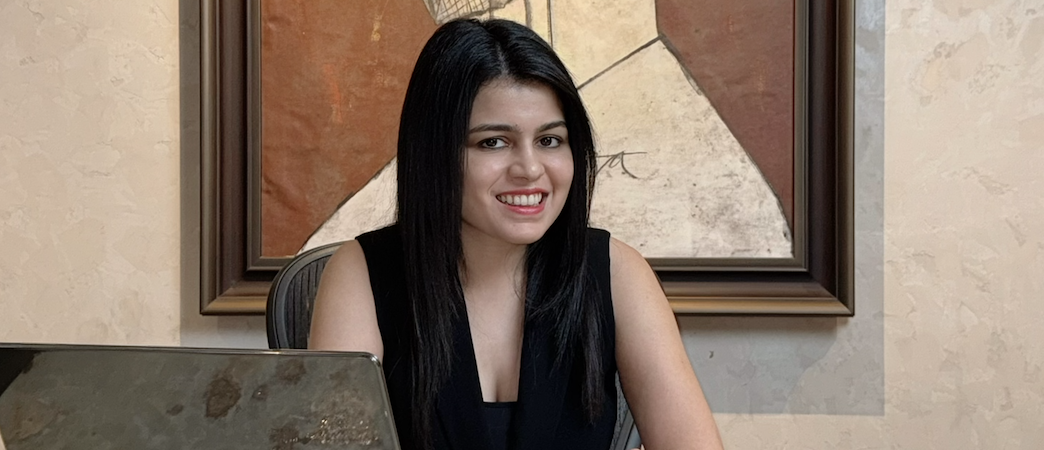
AI design platform interview: how Agent B Studio’s Natasha Jain is building the AI operating system for interiors
Agent B Studio wants to be the operating system for the $800B+ interiors economy — an AI platform that turns real floor plans and dimensions into photorealistic renders, quotations and client presentations in one session. In this AI design platform interview, founder Natasha Jain explains the gap she is closing and why spatial accuracy is the whole game.
Executive Introduction
Ask a designer to visualise a space and they face a trade-off: fast, or accurate. Traditional rendering, in fact, can take days to create and revise; most generative AI tools produce images that ignore the real layout, dimensions and spatial requirements of a project. The result is a workflow that is creative at the front and painfully fragmented at the back.
Agent B Studio is Natasha Jain’s attempt to remove that trade-off. The company describes its platform as spatially accurate AI: it generates photorealistic renders from real floor plans and dimensions, so designers can build from what they see. In this AI design platform interview, Jain explains how that capability connects to the rest of the workflow — space planning, product selection, quotations and technical documentation — and why, in fact, she thinks the industry’s real problem was never visualisation alone.
Jain is not a software founder who discovered interiors. She spent a decade building Bent Chair, one of India’s leading premium furniture and décor brands, and Natelier, its high-end design house, serving architects, designers, hospitality groups and real estate developers globally. Before that, she founded Ruplee, a fintech payments startup acquired by Paylo. An engineer by training — a B.S. in Industrial Engineering from Georgia Tech and an M.S. in Management Science & Engineering from Stanford — she combines systems thinking with a decade of operating experience in the category she is now rebuilding through software.
The early traction is notable: Agent B Studio reports more than 4,000 designer signups within ten weeks of launch, with users adopting it as an end-to-end workflow rather than a point tool. Readers will come away with a clear view of why the interiors industry is a software problem, what “spatially accurate AI” actually requires, and where commerce fits into a design platform.
About the Company
Agent B Studio is an AI-powered design and visualisation platform for the $800B+ interiors and furnishings industry. It helps architects, interior designers, real estate developers and furniture brands design, visualise, specify and, in fact, deliver projects faster.
The platform addresses a specific gap: visualisation tools that are both fast and accurate. Traditional rendering processes can take days to create and revise, while existing generative AI tools often produce visuals that do not follow real layouts, dimensions or spatial requirements. Agent B Studio’s spatially accurate AI generates photorealistic renders from real floor plans and dimensions — visuals designers can confidently build from. This is the capability at the heart of this AI design platform interview.
Combining space planning, AI rendering, product visualisation and workflow management, the platform, in fact, lets designers integrate real products from brand libraries, customise designs, generate quotations, create technical documentation and present projects to clients — all within one connected workflow. Its tools include floor plan generation, Quick Generate and Smart Project rendering workflows, Photo Edit for material and furniture changes that preserve spatial accuracy, and Bella, its AI assistant.
Agent B Studio reports more than 4,000 designer signups within ten weeks of launch, with users adopting it as an end-to-end workflow for planning, specifying and rendering projects. The platform is built on a multimodal orchestration engine that connects renders to real products from brand libraries, client presentations, quotations and transactions in a single workflow.
About the Executive
Natasha Jain is the Founder and CEO of Agent B Studio, an AI platform for the design and furnishings industry. She is an AI founder rebuilding the category through software.
Before founding Agent B Studio, Jain spent a decade building Bent Chair, one of India’s leading premium furniture and décor brands, and Natelier, its high-end design house, serving architects, designers, hospitality groups and real estate developers globally. Earlier, she founded Ruplee, a fintech payments startup acquired by Paylo. That combination — fintech, consumer brands and a decade in furniture and interiors — is the foundation behind this AI design platform interview.
She is an engineer by training, holding a B.S. in Industrial Engineering from the Georgia Institute of Technology and an M.S. in Management Science & Engineering from Stanford University.
Under her leadership, Agent B Studio has grown into an end-to-end AI platform serving a community of 4,000+ designers alongside architects, developers, and furniture and material brands across space planning, rendering, product visualisation, image editing and automated documentation. Her vision extends beyond design software: Agent B is building the operating system for a global furnishings and interiors economy worth hundreds of billions of dollars that still relies heavily on manual workflows.
Jain writes and speaks on AI and design, entrepreneurship, deep-tech innovation from India for global markets, and women founders in technology. She believes AI’s greatest near-term impact will be accelerating creativity by collapsing the gap between a creative decision and its execution.
Fast versus accurate
Q1. In one line, what is the real problem with design visualisation tools today — speed, accuracy, or something else?
NJ: The real problem is accuracy – design visualisation tools must respect actual dimensions and spatial proportions to create designs that can be executed as shown.
Q2. Why do existing generative AI tools struggle to follow real layouts and dimensions?
NJ: An image model can learn what a beautiful room looks like without understanding why a particular room works. A wall, a doorway and a sofa become visual patterns. For a designer, they are constraints with consequences.
A sofa can look perfectly placed in an image and still block the only way into the room. Visual plausibility is a much easier problem than spatial correctness.
What “spatially accurate AI” requires
Q3. Agent B is built on a multimodal orchestration engine. Walk us through the decision to build that architecture rather than layer on an existing image model. What was the alternative, and why did you reject it?
NJ: We started with the designer’s problem: understand the plan, preserve the constraints, interpret the references and make the result useful.
The alternative was to put an interface around an existing image model and keep improving the prompts. That would make us dependent on one model getting every part of the problem right.
Orchestration lets us assign different jobs to the capabilities best suited to them. The image model is a component. The designer’s intent is the system’s responsibility.
Q4. What did getting spatial accuracy right cost you — in engineering time, data, or something harder to measure?
NJ: The biggest cost was iteration. Every correction had to hold through the next change: fixing the sofa’s proportions means very little if the next edit moves the door.
That demands engineering time, rigorous testing and the discipline to reject results that look impressive but fail the brief. Progress can feel slower because the failures become smaller – and harder to catch.
We had to measure progress in how much less the designer needed to correct.
From operator to founder
Q5. You ran Bent Chair and Natelier for a decade before building software. What did that teach you that a software-first founder would have missed?
NJ: That the render is the beginning of a responsibility.
Someone has to source that finish, manufacture that piece, get it through the doorway and install it within a budget. Then someone has to live with it.
Working in furniture teaches you to respect the consequences of a design decision. We are building for the room that gets delivered, because we have been accountable for delivering it.
Q6. What did you get wrong in those years, and what did it change about how you build Agent B?
NJ: I underestimated how much work remained after everyone agreed on the design.
Approval feels like progress. But then come the substitutions, revised costs, supplier conversations and details that get lost between teams. A beautiful concept does not automatically survive that journey.
That changed the question I ask about every feature: Does this help someone make a decision, and does that decision survive execution?
Commerce at the point of decision
Q7. Connecting design to real products and quotations puts brands into the buying decision earlier. What changes for furniture and material brands?
NJ: Brands get the chance to earn their place while the room is being designed.
Today, a product can be discovered after the important decisions have already been made, leaving the brand competing on availability or discount. Earlier participation means its dimensions, finish, price and lead time can shape the specification.
The opportunity is to become part of the designer’s reasoning before becoming a line in the quotation.
Deep-tech from India for global markets
Q8. You are building a category-defining platform from India for a global market. What is genuinely harder about that — and what is an advantage?
NJ: The harder part is earning trust across markets while solving a category that is intensely local: different suppliers, measurements, budgets and ways of working.
India gives us a demanding place to learn. We have extraordinary design ambition alongside fragmented supply, price sensitivity and complex execution.
Building here teaches you how much complexity a product must absorb before it feels simple to its user. That lesson travels.
AI and creativity
Q9. You have said AI’s greatest near-term impact is collapsing the gap between a creative decision and its execution. What does that look like for a designer in practice?
NJ: A client asks, “Can we make this warmer, keep the layout and bring the budget down?”
That conversation should lead directly to a reviewable option: the revised space, suitable products and the cost implications. The designer can then explain the trade-offs while the client is still engaged.
The breakthrough is keeping the creative conversation alive long enough to reach a decision. Too often, it disappears into days of production work.
Q10. What will be true about AI in design in 24 months that is not true today?
NJ: My bet is that a beautiful first image will become the baseline. People will judge systems by what survives the tenth revision: the dimensions, the chosen products, the budget and the decisions already approved.
The defining question will move from “What can it generate?” to “What can I trust it to carry forward?”
That is where professional value will concentrate.
OS For The Interiors Economy
Q11. What stands between Agent B today and becoming the operating system for the interiors economy?
NJ: Earning the right to hold the next decision.
A designer might enter for visualisation. They stay if the platform reliably carries their work into specification, costing, sourcing and execution. Each handoff has to preserve what has already been decided. That means dependable product data, useful integrations and consistent performance on real projects. “Operating system” is a position customers give you when enough of their work depends on you.
Q12. What is the one thing you would tell a woman founder building deep-tech in India today?
NJ: Trust the ideas that come from your own experience. When you have lived through a problem, you bring an understanding that is valuable when building a solution. Build the technical expertise around that insight, stay open to feedback, and trust your gut enough to see the idea through.
TechRecast Analysis (The Recast)
The Shift in Context — Generative AI has flooded design with images, but most of them are decorative rather than buildable. The next phase of the category is not better-looking renders — it is renders that respect the constraints of a real space. This AI design platform interview sits at that transition, from generative novelty to spatially grounded tools.
Why This Interview Matters — Agent B Studio’s founder is an operator, not a tourist. A decade running Bent Chair and Natelier means Jain knows how projects are won, designed, priced and delivered — the exact chain the software is trying to compress. That combination of category depth and engineering training is unusual, and it is the reason this interview is worth reading rather than skimming.
Technology Perspective — The claim to watch is the multimodal orchestration engine: renders generated from real floor plans and dimensions, then connected to real products. If spatial accuracy holds under real project constraints, the technical moat is meaningful. If it is a wrapper over an image model with a floor-plan prompt, the advantage is thinner. Bella, the platform’s AI assistant, and the Photo Edit workflow are the clearest test cases.
Business, Market, and More
Business and Market Perspective — The commercial insight is positioning. By connecting design to product libraries, quotations and transactions, Agent B inserts itself at the point where purchasing decisions are made — a far more valuable place to sit than a rendering tool. The 4,000+ signups in ten weeks show demand; the open question is conversion from a free workflow to a paying one.
Leadership Perspective — Jain’s path — fintech exit, then a decade building a premium furniture brand, then an AI platform — is the profile of a founder who earns the right to rebuild a category by having operated it first. Her stated focus on deep-tech from India for global markets and on women founders adds a second dimension to the story.
The Counterpoint — A sceptic would argue that the interiors industry has resisted software for decades for good reasons — projects are bespoke, relationships are local, and no platform has yet changed how design is bought. On this view, AI improves the rendering step but does not rewire the economics, and incumbents in CAD and product catalogues will absorb the features. This is the strongest opposing case and deserves a direct answer.
What Next
What Comes Next — Watch three signals: whether spatial accuracy holds as project complexity rises, whether design-to-transaction conversion becomes a real revenue line rather than a feature, and whether Agent B can extend from individual designers to the enterprise buyers — developers, hospitality groups and brands — that shape large projects.
Industry Outlook — If Agent B is right, the design platform of the next few years looks less like a rendering tool and more like an operating system that connects creativity, specification and commerce. If it is wrong, spatial accuracy becomes a feature inside established design software, and the category stays where it has been.

Key Takeaways
1. The design workflow’s core problem is not visualisation alone but the trade-off between speed and spatial accuracy.
2. Agent B’s differentiator is spatially accurate AI — renders generated from real floor plans and dimensions, not decorative images.
3. Connecting design to real products and quotations places the platform at the point where purchasing decisions happen.
4. Founder-market fit is the story: a decade operating in furniture and interiors before building the software.
5. The commercial test is conversion — turning 4,000+ signups into a paying, end-to-end workflow.
6. The strongest counter-argument is that interiors has resisted software for structural reasons, and incumbents will absorb the features.