
Krown Technologies has announced KROWN, a Web3 browser in development that bundles hybrid post-quantum connection security, local scam-link protections and a companion wallet experience. The KROWN browser targets an 8 October 2026 launch. The Monroe, Louisiana company is also selling advertising: four long-term placements on the browser’s left sidebar, each with sector exclusivity.
Both halves of that sentence deserve scrutiny. The post-quantum claim arrives more than two years after Chrome made the same technology a default setting. And the sidebar sale opens a revenue line before a single user has downloaded anything.
Why the KROWN Browser News Arrived Now
Three threads explain the timing.
A September announcement blitz
Krown has issued four product releases in two weeks. The KROWN Watch arrived on 9 September. QwickAuth, a five-factor authentication product, followed on the 10th. KrownBook, a dual-screen laptop, landed on the 17th. The browser completed the sequence on the 22nd, keeping the ecosystem’s name in paid distribution ahead of the 8 October launch date.
The company needs visibility. Tracxn lists Krown Network as a 2024 seed-stage company that raised $400,000. LinkedIn’s company page counts roughly eight employees. A steady newswire cadence is an affordable substitute for a marketing department.
A token that needs a story
KROWN Coin presold at $0.0001 per token against a 100-billion supply. The final batch sold out in nine minutes and raised $835,580 in December 2025, according to the company’s own announcement. The project’s site now claims a $212 million market capitalisation. Third-party presale listings put the token on Binance Smart Chain; the company’s tokenomics page describes an Ethereum token that migrates to a native chain later.
The browser gives that token a consumer surface. The release never says whether KROWN Coin integrates with the browser, the sidebar sales or the Qastle wallet. That silence matters more than the dateline.
Post-quantum timing that is actually late
NIST standardised ML-KEM in August 2024 as FIPS 203. Chrome made the draft hybrid default in April 2024 and the standardised X25519MLKEM768 default in November 2024. Edge and Firefox followed within weeks. Cloudflare had enabled the server side back in 2022.
Krown’s release presents an “experimental strict mode” using that same TLS 1.3 group. Strict enforcement applies only to explicitly selected test workspaces. Ordinary browsing “does not require every connection to use post-quantum key exchange”, in the release’s own words. That is narrower coverage than the default settings of every major browser shipping today.
The Competitive Picture Facing the KROWN Browser
That timing sets a crowded field of play.
Everyone already ships this
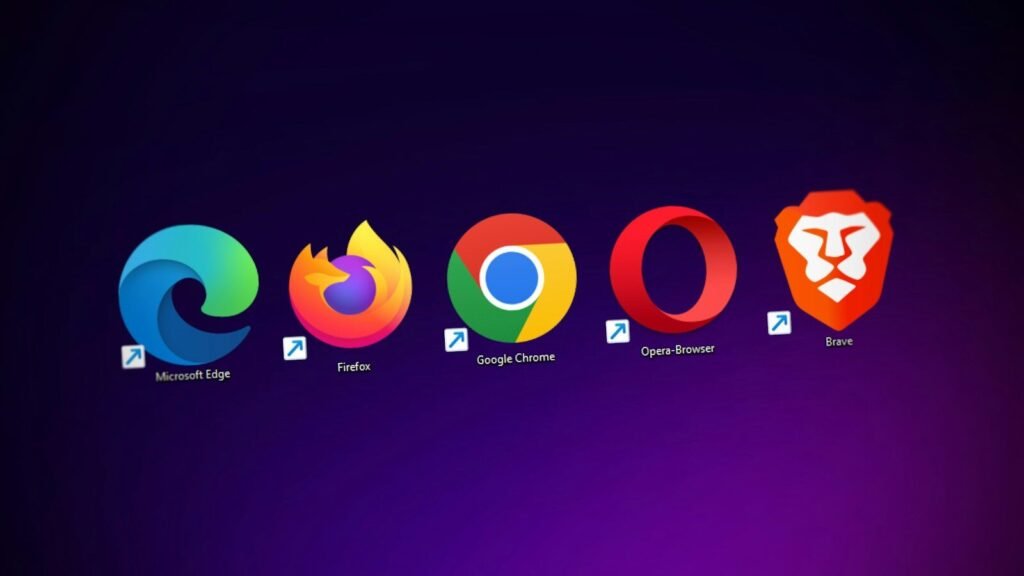
The hybrid in question, X25519MLKEM768, is not an exotic differentiator. It serves as the default key agreement in Chrome 131+, Edge 131+, Firefox 132+ and recent Chromium derivatives, including Brave and Opera. Any Chromium-based browser inherits it from upstream unless the developer switches it off.
The release confirms that Chromium extension management remains available, which points to a Chromium base. Krown is therefore presenting as a development achievement something its upstream engine already does by default — and doing it with narrower scope.
Web3 browsers with actual scale
Brave passed 100 million monthly active users in September 2025, with 42 million daily users, a built-in multi-chain wallet, token rewards and default ad blocking. Opera shipped its first built-in crypto wallet in 2018, ran a dedicated Crypto Browser from 2022, then folded those features into its flagship browsers in early 2024 because Web3 no longer needed a separate product.
Both browsers ship post-quantum TLS by default. Both have wallets that actually sign transactions. Qastle, by contrast, keeps keys on a paired phone, and browser-linked signing “remains disabled during testing”, per the release.
The sidebar itself is not new either. Edge and Opera have run sidebars for years. What is new is selling four slots with sector exclusivity before launch — a monetisation model closer to stadium naming rights than to browser design.
What the Data Shows About the KROWN Browser
The numbers around the company tell a sharper story than the release does.
The company behind the product
Krown Technologies started in 2024 in Monroe, Louisiana. Its own community page counts 4,600 members and 5,300 followers on X. Yet its Forbes Technology Council profile calls the Krown Network “the world’s largest and most rewarding Layer-1 blockchain ecosystem”. Those two facts sit awkwardly together.
CEO James Stephens lists credentials from the McAfee Institute and the International Blockchain Council, plus membership in the Forbes Technology Council — a paid professional community, not editorial recognition. His founder’s letter describes a team of “over 60 brilliant minds”; outside listings count eight to eleven employees.
The pattern repeats across the portfolio. KrownBook was announced as a union of “Krown Technologies, Intel, Shenzhen Technologies and Microsoft”. The laptop runs a 12th-generation Core i5-12450H, a budget chip released in 2022, under Windows 11. Buying Intel processors and Windows licences is not what “unite to launch” usually implies.
The security claims, examined
The release deserves credit for unusual candour. It states plainly that the work “does not make website certificates, wallet transactions or blockchain signatures post-quantum”. The document discloses that the Qastle pairing protocol is not post-quantum. And it warns that a clean link-inspector result “is not a guarantee of safety”.
The KROWN browser’s public validation record is thin. The Windows build has “completed compilation and five targeted native socket tests”. No independent audit, bug bounty or published test methodology appears anywhere in the release. For a company marketing itself around quantum security, that gap is the story.
The sidebar sale
Four positions. Long-term placement. Sector exclusivity “to be defined in each final agreement”. No pricing, no audience numbers, no refund terms. A buyer must propose its sector, term and commercial offer, sight unseen, into a browser with zero users and an 8 October launch date.
What’s New vs. What’s Repackaged
Against that record, sorting new from old is quick work.
New: the sidebar sale itself — pre-launch monetisation with sector exclusivity. No major browser sells permanent interface real estate this way, as far as public records show. Also new, and welcome: the release’s own limitation statements, which read more honestly than most crypto-adjacent marketing.
Repackaged: everything else. Post-quantum TLS has been a default setting in Chrome, Edge and Firefox since late 2024. Ad and tracker blocking ships in Brave and Opera by default. Link inspectors exist as standalone tools and built-in browser features. Workspaces — Work, Personal, Banking, Crypto — are profiles with a different name, and QR-paired mobile wallets date back to WalletConnect.
The Question the Press Release Doesn’t Answer
One question sits above the rest: why sell the sidebar before the browser exists? A company confident in its launch would monetise after users arrive, when placements carry measurable value. Selling four sector-exclusive slots now transfers risk from Krown to its partners — they fund the launch, on undisclosed terms. Buyers should also ask what happens to a “long-term placement” if the 8 October date slips the way KrownBook’s pricing and the Watch’s launch timing have, both still unannounced.
What the KROWN Browser Means for You
Different readers should take different lessons from this release.
If a sidebar slot has been pitched to you, treat it as seed-stage advertising, not media buying. Ask for user-number commitments in the contract, refund triggers if the launch slips, and the exact scope of sector exclusivity. Ask, too, who has audited the security claims — the public record contains five socket tests and a press release.
If you hold or are considering KROWN Coin, this release changes nothing about the token’s fundamentals. It adds a possible distribution surface and a possible revenue story, and never connects the two. Presale proceeds, market-cap claims and roadmap promises from an eight-person company carry risks that a browser cannot wash away.
If you follow quantum-security narratives, note the pattern. Real post-quantum migration is happening silently, in browser defaults and TLS libraries, led by Google, Cloudflare and Mozilla. “Quantum-secured” marketing from a startup shipping less PQ coverage than Chrome is the quantum equivalent of AI-washing. The tell is always scope: platform-wide defaults versus “explicitly selected test workspaces”.
Editor’s Note
This article draws on the company’s 22 September 2026 release distributed; Krown’s website, wiki, tokenomics pages and founder’s letter; company data from LinkedIn and Tracxn; Chrome, Cloudflare and browser-platform documentation on X25519MLKEM768; Brave’s and Opera’s published product and user figures; and the company’s December 2025 presale announcement. Company claims — user figures, market capitalisation, partnership characterisations — remain self-reported and unverified. KROWN is a cryptocurrency; nothing here is investment advice.