
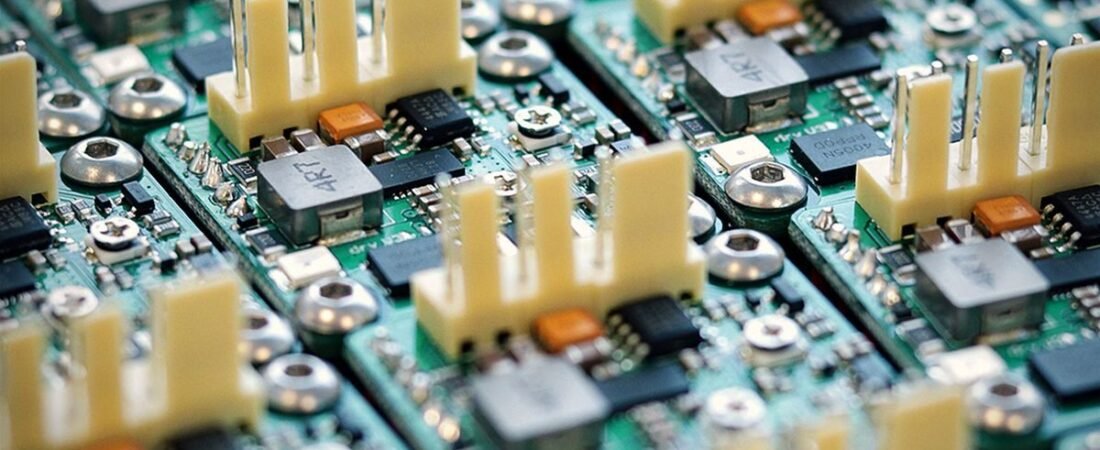
Sitharaman Names AI, Semiconductors, and Quantum as India’s Next Infrastructure Frontier
Finance Minister Nirmala Sitharaman has signalled where India’s next infrastructure money should go. The next wave of large investment, she said, should flow into artificial intelligence (AI), semiconductor chips, and quantum computing. She spoke at a fireside chat on September 26 at Sangam 2026 in Bengaluru, the IIT Madras Alumni Association’s annual conference.
“So the next large investment in infrastructure would, I think, be AI, semiconductor chips, and building on them quantum,” Sitharaman said, according to PTI. For her, the open question is the scale and stage of investment, not whether India should pursue AI. She asked academia and industry to help define the level.
The Parts the Headlines Missed
Two details from the session carry more practical weight than the headline quote. One concerns patient capital. A startup founder raised the lack of it, and Sitharaman asked founders to submit suggestions within ten days. The topic: what should count as “early” and “enough” funding for long-gestation hardware companies. She said she would work on them, the New Indian Express reported.
She also pushed back on the narrative that India has missed the AI bus. In her view, the perception stems partly from listing statistics. Few Indian AI companies trade on stock exchanges, and listing is not a measure of sector activity. Deep-tech hardware startups can take five to seven years to reach revenue, she noted. MSMEs producing everything from basic components to aircraft parts need AI tools to compete globally.
What Is Already Funded
The signal lands on top of three existing missions. Rhetoric and outlay still sit far apart, and that gap is the story beneath the story.
The IndiaAI Mission, approved in March 2024, carries a total outlay of ₹10,371.92 crore over five years. Its budgetary allocation for 2026-27 is ₹1,000 crore. A government reply in Parliament says a next phase was announced at the India-AI Impact Summit 2026, but no roadmap or financial outlay exists yet.
The India Semiconductor Mission operates on a ₹76,000 crore incentive framework. Twelve manufacturing projects stand approved as of June 2026, with a pipeline of roughly ₹1.64 lakh crore. The Union Budget 2026-27 also launched ISM 2.0, with ₹1,000 crore for the year. The National Quantum Mission, running to 2030-31, has a total cost of ₹6,003.65 crore.
India’s gross research expenditure stands at 0.84 percent of GDP as of 2023-24. That is well short of advanced-economy levels.
The Other Speakers
Education Minister Pralhad Joshi cited India’s electricity generation capacity: 249 GW in 2014, now 552 GW. Around 310 GW of that is non-fossil capacity. The grid recently handled a 281 GW peak, he said. He credited IIT Madras with 560 startups, a collective valuation of ₹80,000 crore, 472 patents and ₹950 crore in alumni contributions.
IIT Madras Director V. Kamakoti cited different figures at the same event: 583 startups incubated, a combined valuation of ₹83,000 crore. He also noted more than 400 patents filed in the last three financial years.
The UPI Comparison
Zoho co-founder Sridhar Vembu argued that foreign dependencies can become weapons. He contrasted foreign card networks’ fees of 3.5 to 4 percent with UPI’s near-zero processing cost. His figure of “over 25 billion monthly UPI transactions” runs ahead of the official record. NPCI data shows 24.51 billion transactions in August 2026, the highest monthly volume yet. Those were worth ₹29.82 lakh crore.
The event also expanded IITMAA’s alumni mentorship programme, which aims to pair every IIT Madras student with a mentor. It closed with an awards ceremony and a performance by guitarist Prasanna.
Editor’s Note: This article draws on a press release distributed for the IIT Madras Alumni Association. TechRecast cross-verified it against independent reporting from PTI, IANS, The Times of India, the New Indian Express and Deccan Herald, all from September 26-27, 2026. Official data came from the Press Information Bureau, NPCI and replies tabled in Parliament.
Two corrections to the release are noted here. It carries a September 28 dateline saying the event concluded “today,” though the conference was held on September 26. An unrelated paragraph from a solar energy company also appears in the middle of the release, an apparent paste error, and has been excluded.
Statistics attributed to Joshi, Kamakoti and Vembu are speaker claims from the event. The two IIT Madras startup and patent counts were not reconciled by the organisers. TechRecast contacted no parties for comment before publication.