The Record $5.7 Billion Patent Verdict Against Apple Is a Headline, Not a Payment
A federal jury in San Diego has ordered Apple to pay Taction Technology $5.72 billion for infringing two haptics patents. Reuters described it as the largest patent verdict in US history. The figure roughly doubles the previous record.
Both things are true, and the gap between them is the story. The award is enormous. Its path to Apple actually paying anything is long, uncertain, and strewn with earlier billion-dollar verdicts that shrank or vanished on appeal.
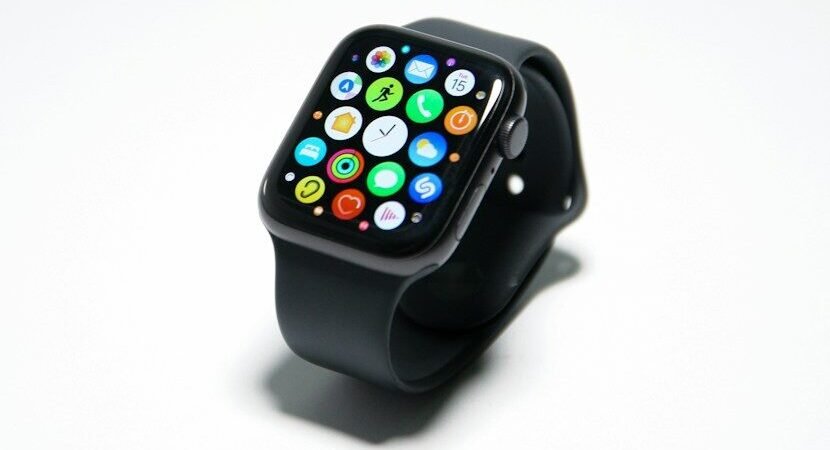
Start with what the jury actually said. It found that Apple’s Taptic Engine — the component behind every tap and vibration in an iPhone and Apple Watch — infringed two claims of one Taction patent and one claim of another. It rejected Apple’s invalidity defenses. And it wrote a single number into the verdict form: $5,721,961,750.
The jury also said something the early coverage largely skipped. It found Apple’s infringement was not willful.
Why the Not-Willful Finding Matters
Federal law lets judges multiply damages up to three times when infringement is deliberate. A copier pays treble; a careless engineer does not. This jury put Apple in the second category after nine days of trial.
That finding undercuts the popular narrative of Apple coldly stealing a small company’s invention. Taction had accused Apple of buying two Kannon gaming headsets and reverse-engineering their haptic actuators. The jurors heard that story and still declined to find knowing infringement.
It also caps Taction’s realistic recovery at the headline number, minus whatever post-trial motions remove.
What the Patents Actually Cover
Both patents share a title: “Systems and Methods for Generating Damped Electromagnetically Actuated Planar Motion for Audio-Frequency Vibrations.” They name inventor Silmon James Biggs and claim priority to a September 2014 provisional filing. Both issued in 2020.
In plain terms, they cover tactile transducers — devices producing bass-frequency vibrations you can feel, damped by ferrofluid, operating in roughly the 40–200 Hz range. Ferrofluid is a magnetic liquid that settles the moving mass and absorbs energy, giving crisp, controlled haptic pulses instead of loose buzz.
That is the technology inside a Taptic Engine. Apple introduced it with the Apple Watch in 2014 as a linear resonant actuator replacing vibratory motors. Earlier versions used coil springs; later designs use flexures with ferrofluid. Taction’s theory at trial: Apple’s closed-loop controller plus its ferrofluid produces the “highly damped output” the patents require. For products with a single magnet rather than a plurality, Taction leaned on the doctrine of equivalents — infringement by substantial similarity, not literal match.
How a $5.7 Billion Number Gets Made
Here the record turns interesting. The verdict form is one figure, with no breakdown by patent, product, or period. Case analysis of Apple’s mid-trial motion notes the jury heard no expert reasonable-royalty opinion.
A reasonable royalty is the standard damages framework in patent cases: an expert models what a willing licensor and licensee would have negotiated, per unit, over the sales base. A lump sum without that structure invites exactly the challenge Apple has promised to make. Expect damages to be the center of the post-trial motions before Judge Todd W. Robinson, and of the appeal after that.
Some rough arithmetic explains the scale. Apple has shipped well over two billion Taptic Engine devices since 2015, by industry estimates — TechRecast’s analysis, since Apple stopped reporting unit sales in 2018. Spread across that base, the award implies roughly $2 to $3 per device.
For scale, $5.7 billion is under two percent of Apple’s last fiscal year’s revenue. Apple can afford to lose this case. Its incentive, therefore, is to fight the principle, not the check.
The Litigation Funding Layer
Bloomberg Law’s headline called Taction a “litigation-funded firm.” Court proceedings identified two outside funders: Gronostaj Investments LLC and Kenosha Investments LP. Kenosha has been identified in separate litigation as an indirect subsidiary of Burford Capital, one of the largest litigation finance companies.
Funding does not make a claim wrong; Taction won in front of a jury after five years of litigation. It does explain the economics of refusing to settle a case Apple had already won once at summary judgment. Quinn Emanuel’s Tigran Guledjian led the trial team for Taction.
Apple’s Track Record on Appeal
The procedural history matters for what comes next. Taction sued in April 2021. The Patent Trial and Appeal Board refused to institute any of Apple’s four inter partes review challenges in 2022. A San Diego judge granted Apple summary judgment of non-infringement in August 2023. He denied Apple’s fee motion that October, calling the case “a heavily litigated but ultimately run-of-the-mill patent case.”
Then the Federal Circuit revived the suit in August 2025. It held the trial court had abused its discretion by striking Taction’s expert opinions under an unwritten local-rule requirement, and had construed the claims too narrowly. Trial followed in September 2026. Verdict: Taction.
Apple’s record in this exact arena, though, is formidable. An Optis $506 million verdict was retried down to $300 million, and the Federal Circuit threw that out in June 2025 — the second time it overturned the verdict. The Supreme Court declined to disturb Apple’s win against a separate $503 million award in 2024. VirnetX litigation dragged roughly a decade before Apple paid a reduced figure. The same court that revived Taction’s case will now hear Apple’s appeal of the verdict it enabled.
What Happens Next
Post-trial motions come first, with damages the obvious target, followed by any judgment, bond, and appeal. Apple’s statement was pointed: the Taptic Engine is “fundamentally different from Taction’s technology,” and the damages are “entirely unsupported by the facts.”
Two questions will shape the real stakes. Will Taction seek an injunction or ongoing royalties against future products — the move that turns a damages case into a supply-chain problem? Nothing public says so yet. And will Apple redesign around the claims in next year’s actuators, which is cheap insurance regardless of the appeal’s outcome?
What This Means for Buyers and Builders
For Apple watchers, the honest read is a wide error bar. Outcomes range from zero, if the verdict is reversed, to the full award plus interest, if it is affirmed, with a post-trial reduction the most likely middle. For the industry, the verdict continues a run of record hardware-patent awards — VLSI’s $2.18 billion against Intel, Centripetal’s $2.75 billion against Cisco — that rarely survive review intact. For engineers, the lesson is blunt: ferrofluid-damped actuation is now contested intellectual property, and anyone building premium haptics should read the two Biggs patents before shipping.
The number in the headline is the first word in this case, not the last. Today Apple owes Taction a legal fight, not $5.7 billion. On current form, that is a fight Apple has historically won.
Editor’s Note
This article draws on an American Bazaar report of September 26, 2026, and on independent reporting. Verdict details — the court, judge, case number, claims, damages figure, and not-willful finding — come from Reuters, Bloomberg Law and Patent Litigator’s verdict-form analysis. Procedural history comes from Patent Litigator and Law Commentary, which also documented the litigation funders.
Taptic Engine history comes from AppleInsider. Prior-record verdict figures come from ABA Journal, Banner Witcoff and Reuters reporting on VLSI v. Intel and Centripetal v. Cisco; Apple’s appellate record comes from Reuters and FindLaw.
Company statements are quoted from Bloomberg Law and Reuters coverage. Per-unit royalty arithmetic is TechRecast’s own analysis from public shipment estimates, clearly labeled; Apple has not reported unit sales since 2018. TechRecast could not determine the damages evidence the jury actually weighed, Taction’s injunction or licensing plans, or Apple’s post-trial strategy beyond its public statement.