
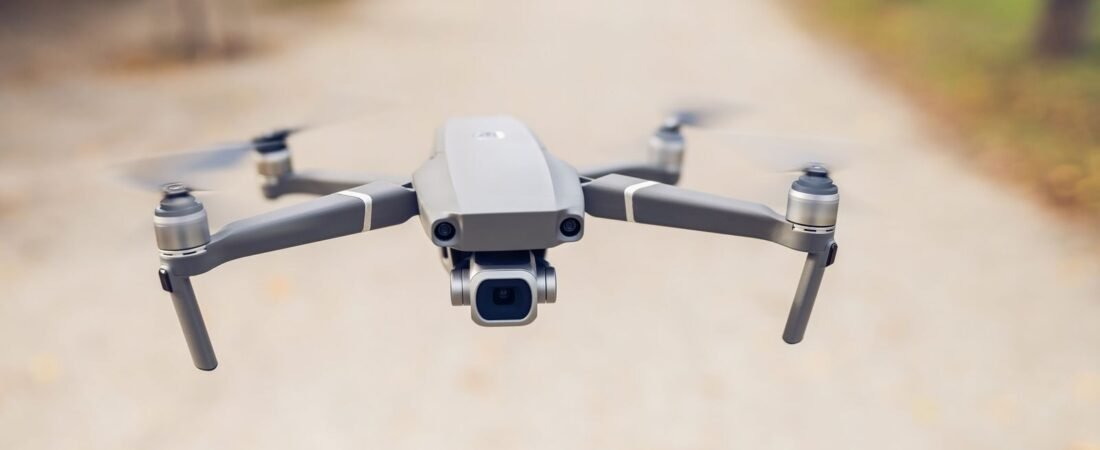
Flying Wedge Defence & Aerospace has completed 100 cumulative hours of flight testing on its Kaal Bhairava Lite autonomous aircraft. September’s release also lists an armed-forces demonstration in Jammu and Kashmir and flights through 25-30 knot gusts over the Bay of Bengal. This is about indigenous loitering munition.
The stated numbers read well: a 1,200-km-class range, 8-10 hours of endurance, take-off and landing within 120 metres, and a 7-8 m/s climb rate. FWDA puts the aircraft’s indigenisation rate at 80 percent.
The timing explains the announcement. In August, the Indian Navy issued a request for information for a medium-range loitering munition — a ship-launched weapon with over 1,000 km of range and nine-plus hours of endurance. FWDA says it is “evaluating the Kaal Bhairava architecture for potential adaptation” to that requirement.
Here is the catch. Those are two different aircraft. The Lite takes off on a 120-metre ground roll; the Navy wants a weapon that fits inside a canister barely 2.5 metres long and dives onto targets at 200 knots. “Architecture adaptation” in this case means designing a new machine.
The company’s arc deserves attention anyway. Two years ago, observers publicly asked whether its first bomber UAV was a scam. Today the startup claims export orders, a Portugal manufacturing node, and armed-forces demonstrations. The trajectory is unusual — and so is the gap between the claims and the verifiable.
The Competitive Picture for an Indigenous Loitering Munition
To see why FWDA is positioning now, look at what the Navy actually asked for — and who else is chasing it.
The Navy’s demanding brief
The August RFI describes a “universal strike system” launched from ships or shore. Beyond the 1,000-km range and nine hours of endurance, it demands a 75-knot loiter speed, a 200-knot terminal dive, operation at 15,000 feet, and navigation that survives GNSS jamming. Each mission-control station must manage up to ten munitions at once, with control hand-offs between ships and shore.
The physical envelope is the hard part. The weapon must stay within 2.5 metres of length and 3 metres of wingspan. Analysts place that specification in the same size class as Iran’s Shahed-136. India currently fields no indigenous loitering munition anywhere near that reach; its Harop systems, built locally by Adani, are far shorter-legged.
Why the urgency? Naval analysts point to the war in Ukraine, where cheap loitering munitions reshaped naval warfare. They also point to the cost and limited magazine depth of the Navy’s current strike mainstay, the BrahMos cruise missile. A cheap weapon, stocked in numbers, fills a gap missiles leave open. Pakistan’s Navy, meanwhile, demonstrated its own Mudmair loitering munitions in 2026 drills.
The contenders
Several Indian firms are already further along the canister-launched path the Navy’s indigenous loitering munition brief rewards. NewSpace Research has flight-tested its Sheshnaag 150. CSIR-NAL and Solar Industries are working on a system built around an indigenous Wankel engine. Cingularity Aerospace, IG Drones, and VEM Technologies round out the field the naval trade press names.
FWDA’s Kaal Bhairava line is larger and more aircraft-like — closer to a miniaturised MALE drone than a Shahed-class munition. That makes the Navy brief a poor fit on paper, which the company’s careful “evaluating for adaptation” language concedes. A pneumatic-assisted launch version, still in development, would at least remove the runway dependency.
The export race runs in parallel
While the domestic requirement matures, FWDA is pushing abroad. It announced a Portugal manufacturing node in May with SKETCHPIXEL, a maker of F-16 simulation systems, under an expansion plan it calls Operation 777. The company says a South Asian nation has placed a $25 million export order for the Kaal Bhairava programme. Neither the customer nor delivery status is public.
What the Data Shows
One hundred cumulative flight hours is a real milestone for a four-year-old startup — and a modest one by military aviation standards. The figure is cumulative across the programme, not a single aircraft, and the underlying performance claims all come from the company. No independent body has verified the range, endurance, or indigenisation figures.
The company’s scale makes the ambition striking. Tracxn records about $3.4 million raised across eight seed and angel rounds, with founder Suhas Tejaskanda holding roughly 61 percent. A 2024 profile reported around 52 employees and a claimed ₹106 crore order book. Predator-class comparisons — “ten Kaal Bhairavas can match a single Predator” — sit uneasily beside that balance sheet.
The platform history also warrants caution. FWDA unveiled the FWD-200B bomber in 2024 with a claimed 100 kg payload; by the time it flew, reported figures had shrunk to 30 kg. The flagship Kaal Bhairava E2A2, announced with 3,000-km range and 30-hour endurance, has no publicly demonstrated flight. The Lite is the variant actually accumulating hours — at exactly half the E2A2’s claimed range.
What is verifiable: the company holds India’s first DGCA type certification for an indigenous UAV, the FWD-200B did fly in September 2024, and the armed-forces demonstration in Jammu and Kashmir represents genuine engagement with military evaluators.
What’s New vs. What’s Repackaged in This Indigenous Loitering Munition Pitch
Genuinely new
The 100-hour total and the Jammu & Kashmir demonstration are new facts. So is the short-field performance: 120-metre take-offs and landings, tested rather than rendered, matter for austere operations. Bay of Bengal testing in 25-30 knot gusts adds credibility to the control-systems story.
Improved
Ship-launchability is the honest improvement — though for now it exists only as an objective. A pneumatic-assisted launch configuration would address the Navy’s runway-independence requirement, if it matures.
Repackaged
The “1,200-km-class” positioning recycles the Kaal Bhairava E2A2’s headline numbers at half scale, and the Predator-cost rhetoric carries over from earlier launches. The export order and Portugal node, both previously announced, reappear here as momentum.
Unclear
Almost everything the Navy actually cares about. Can the aircraft shrink to 2.5 metres? Will cruise speed rise from 100-120 km/h to the required loiter speed? Does endurance stretch past nine hours? The release answers none of this — because the adaptation has not happened yet.
The Question That Wasn’t Answered
Can a runway aircraft become a canister munition? Every other number in this story is a detail next to that one. A 120-metre ground roll, a 3-metre-plus airframe, and a 54-65 knot cruise describe a small drone, not the ship-launched strike weapon the RFI specifies. If FWDA wants the naval requirement, it is starting a new airframe programme and borrowing a brand name.
Three smaller questions also go unaddressed. Which South Asian nation bought the Kaal Bhairava, and has anything been delivered? What constitutes the non-indigenous 20 percent? And what has the Portugal node physically produced since its May announcement?
What This Indigenous Loitering Munition Race Means for You
If you follow Indian defence procurement, treat this as positioning, not procurement. RFI responses are paper exercises; the Navy has no obligation to shortlist anyone, and contenders with flight-tested canister systems are ahead on the specific brief. Watch the actual tender stage before assigning favourites.
If you build in Indian defence tech, the lesson is the market’s shape. The Navy is signalling demand for a 1,000-km-class indigenous loitering munition that nobody currently fields — a rare open requirement. FWDA’s move shows how quickly startups re-aim existing platforms at new RFIs, and how much the wording of “evaluation” has to carry.
If you watch the export story, the Portugal node is the more interesting bet than the Navy chase. NATO-adjacent manufacturing is an unusual play for an Indian drone startup, and SKETCHPIXEL’s simulation pedigree is real. Whether it produces aircraft — or announcements — will tell you the most about this company.
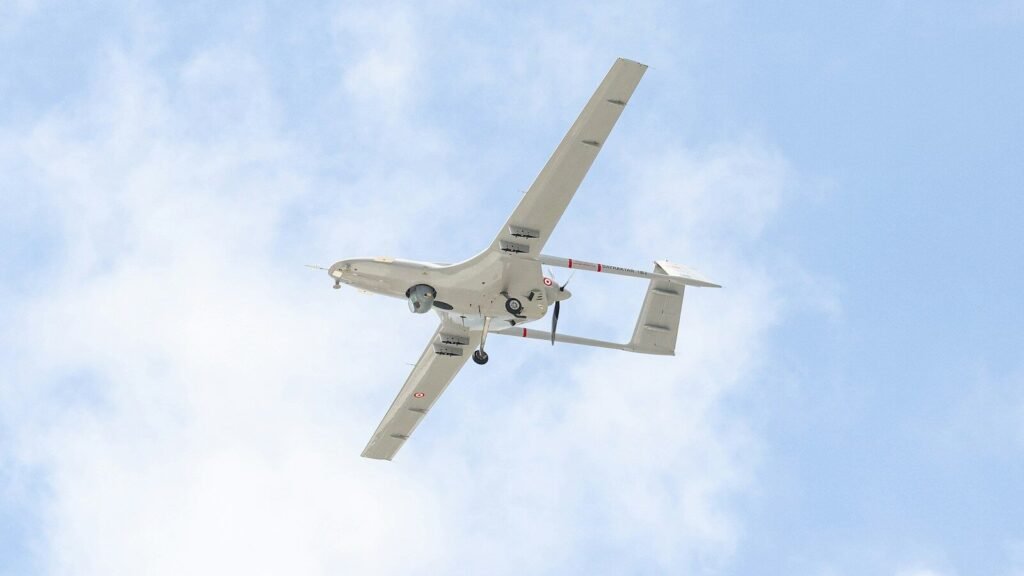
Editor’s Note
This article draws on Flying Wedge Defence & Aerospace‘s September 2026 release, reporting on the Indian Navy’s August 2026 RFI from naval trade press, and coverage from The Hindu BusinessLine, NDTV, ET Manufacturing, DefenceXP, and idrw.org. All performance specifications, funding details, and order values are company– or database-reported and not independently verified. No aircraft was inspected or flight-tested by TechRecast.