
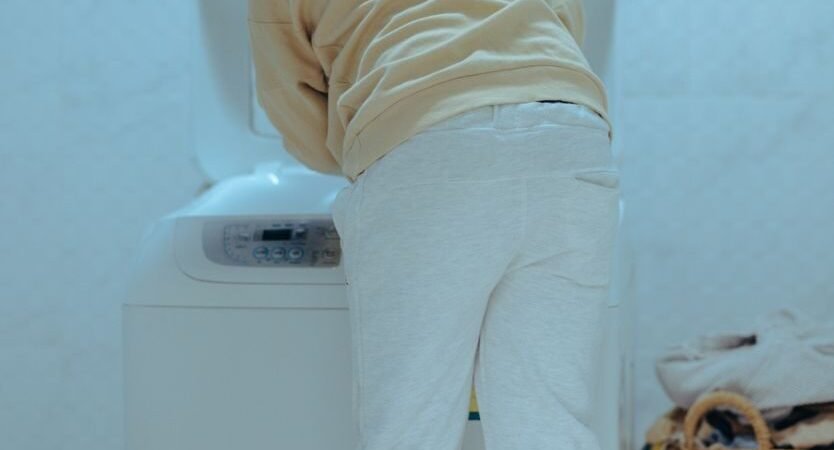
AKAI India has launched a new range of 5-star semi-automatic washing machines priced from ₹12,590. The lineup spans 7 kg to 14 kg. Its centrepiece is a “Magic Wash” cycle that finishes in 35 minutes with a built-in soak. The theme is “The Spa for Your Clothes”. Its marketing leans on Japanese precision and the Mottainai philosophy of respecting resources.
These machines may well be solid. The brand story deserves a closer look. Behind the Japanese framing sits a defunct Tokyo company, a Hong Kong brand owner with a turbulent past, and a Chandigarh licensee. The press release never mentions that chain.
Why AKAI India Launched This Range Now
Three factors drive the timing.
Festive-season economics
September is appliance-launch season in India. Onam demand has passed and Navratri-Diwali buying is weeks away, when washing machine sales peak. A budget semi-automatic range landing on 22 September targets the festive price fight in tier-2 and tier-3 towns.
A segment worth defending, not conquering
The industry is migrating away from the category AKAI just entered. Fully automatic machines held about 55% of India’s washing machine market by value in 2025, per Mordor Intelligence. They are growing at roughly 9% a year. Semi-automatics still serve a real market of water-scarce towns, unreliable power and tight budgets. But analysts call the segment structurally disadvantaged.
Price competition is brutal, and local brands crowd the economy tiers. AKAI is fighting for a shrinking-but-large pie.
A brand rebuilding its innings
This is Akai’s fourth stint in India. It first arrived in 1995 with ₹9,999 colour televisions, took share, then faded against LG and Samsung. A 2010 relaunch collapsed when its local partner hit a financial crisis.
The current innings began in July 2016. Paras Group’s Hometech Digital took a ten-year brand licence and promised to make Akai a top-five consumer electronics brand. The LinkedIn presence shows a company of roughly 47 employees in Chandigarh. A wide appliance launch in 2026 reads as an attempt to make the licence pay.
The Competitive Picture AKAI India Walks Into
Giants lead India’s home laundry market. Euromonitor puts LG at 22% retail volume share for 2025. Samsung follows at 18%, then Voltas Beko at 11% and Whirlpool at 10%. The category sold about 11.6 million units in 2025, up 6% year on year. LG and Samsung alone take roughly 40% of the market.
In semi-automatics specifically, the value brands hold entrenched ground. Whirlpool and Godrej defend deep rural distribution. Samsung refreshes its value lines with soft-closing lids and toughened glass lids. Those are the same features AKAI lists as its own selling points.
Every major brand offers rat protection, collar scrubbers and lint filters; LG markets its version as “Rat Away”. AKAI’s feature list is the segment’s standard vocabulary, not a departure from it.
AKAI’s differentiation is therefore a story, not a spec: Japanese heritage and Mottainai sustainability, with durability as the promise. The five pulsator technologies and the 14 kg top-end capacity genuinely extend its own lineup. Against LG and Samsung, they are table stakes.
What the Data Shows About the AKAI India Launch
The claims reward a careful read.
The brand’s true lineage
Akai Electric began in Tokyo in 1929 and built its fame on tape recorders. The company filed for insolvency in November 2000, owing creditors about US$1.1 billion. The brand passed to Hong Kong’s Grande Holdings, founded by Akai’s own chairman, James Ting. Ting was later imprisoned for false accounting; auditors paid US$200 million to settle related claims. Since bankruptcy, Akai products have been made by third parties under licence — the brand itself manufactures nothing.
In India, the licensee is Hometech Digital of the Paras Group, operating since 2016 from Chandigarh. Akai’s own Indian website admits as much. It describes “a century-old Japanese obsession with precision”, now “wired into Indian homes” by Hometech’s ambition. The press release’s “leading Japanese consumer electronics brand” compresses that history considerably.
The licence question
Contemporaneous reporting put the 2016 licence at ten years, taking it to roughly 2026 — now. Whether Hometech has renewed it, and on what terms, appears in no public material reviewed. Buyers of a five-year-warranty product should ask who stands behind the brand in year six.
The claims that check out, and those that don’t
A 5-star BEE rating across the range is plausible; verify it on the label at purchase. That 35-minute Magic Wash is a company claim with no independent test data cited.
Those 1,200+ service centres across 28 states make a strong number for a brand this size. Coverage quality in small towns lacks verification. The five-year motor warranty matches what larger rivals offer on comparable models.
What’s New vs. What’s Repackaged
New: the 14 kg capacity at the top of the range, the stainless-steel tub on the 11 kg model (a first for AKAI’s semi-automatic line), and the Magic Wash 35-minute cycle. Repackaged: nearly everything else. Anti-rat mesh, rust-proof bodies, collar scrubbers, magic filters and soft-closing lids are the semi-automatic segment’s standard equipment, offered by every competitor. The “Spa for Your Clothes” theme and the Mottainai framing are new words for the durability-and-economy pitch semi-automatics have always made. The Japanese-heritage storyline itself dates to the 2016 relaunch.
The Question the Press Release Doesn’t Answer
Who actually makes these machines, and who stands behind them in five years? The release credits “Japanese precision” without naming a factory, a design centre or an engineering partner. It does not disclose where the machines come from, what the OEM arrangement is, or whether the brand licence extends beyond 2026. For a pitch built on longevity — “built to last, not to be thrown out” — the silence on the brand’s own continuity is the loudest gap. A ₹12,590 purchase deserves to know.
What the AKAI India Launch Means for You
If you are buying a budget semi-automatic, this range is worth a look on price and warranty. Verify the BEE label on the specific model, ask the dealer about real service turnaround in your town, and weigh a five-year motor warranty against brands with longer India track records.
If you follow India’s appliance market, note what this launch signals: licensed heritage brands are still viable in the value tier, even as the market premiumises. The action — and the margins — are moving to fully automatic front-load machines. AKAI is competing where the giants keep only a defensive line.
If you are a competitor or retailer, the threat level is moderate. Hometech is a small operator with a licensed brand and a service-network claim that outpaces its headcount. But festive-season shelf space is won on price and margin, and a challenger with 14 kg at semi-automatic pricing will force a response in exactly the SKUs that carry the thinnest margins.
Editor’s Note
This article draws on AKAI India’s press release of 22 September 2026, the company’s website and LinkedIn disclosures, contemporaneous reporting on Akai’s India licensing history, Wikipedia’s coverage of Akai’s bankruptcy and brand ownership, and market data from Euromonitor, Mordor Intelligence and Digit Research. Financial and market-share figures are analyst estimates. Nothing here is investment advice.