
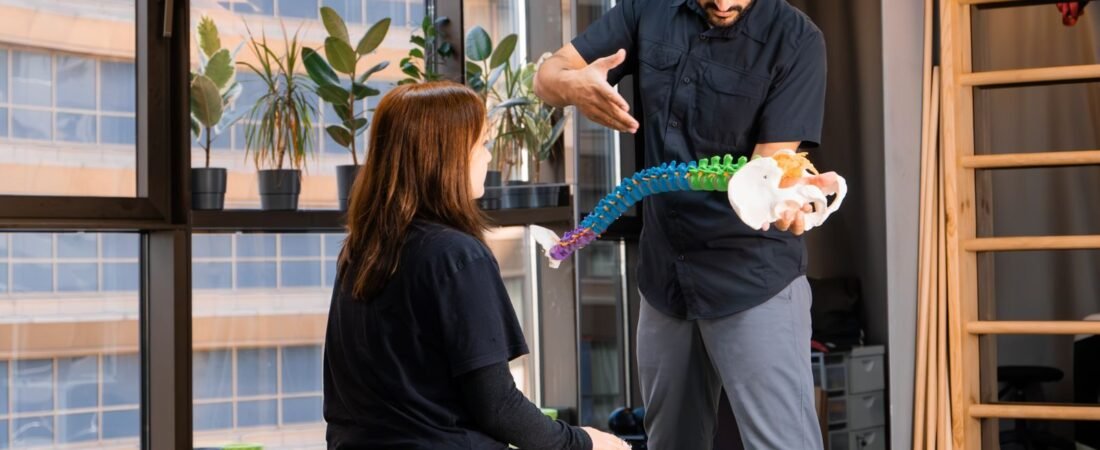
A Singapore osteopathy and manual therapy clinic has announced its first satellite location. The move adds a corporate wellness arm and what the company calls a broader “healthcare ecosystem.” The Muscle Remedy Pte Ltd says the Bukit Timah clinic, set inside a sports and performance gym, opens a partnership-led expansion phase. Founder Salman Fitri, the release says, is moving the business “beyond one practitioner.”
The release cites more than 10,000 patients served, a supplement line, a nursing-care affiliation and four SME awards. It reads as the story of a growing healthcare group. The public record tells a more textured story. It shows a very small business, an unregulated profession, and numbers that keep growing.
Why The Muscle Remedy Is Expanding Now
Three forces shape the timing.
A genuinely attractive market
Singapore’s rehabilitation and physiotherapy services market was worth about S$1.2 billion in 2023, according to industry estimates. Corporate wellness is growing too. Roughly 40% of Singapore companies offered wellness programmes in 2023. Analysts put the national market at several hundred million US dollars and rising.
A trend toward gym-embedded care helps as well. Industry research found about a quarter of Singapore fitness centres had partnered with healthcare providers by 2023 to offer rehabilitation and preventive services. A clinic inside a Bukit Timah gym rides exactly that wave.
The founder-dependency problem
The release describes a shift “from a practice dependent on a single practitioner” to a team-based group. That admission is the whole point. The company’s own LinkedIn page lists one employee. Its booking system sells the founder’s own sessions at a premium. Seeing him personally costs a $55-to-$85 top-up on top of a paid session.
A clinic like that has one rational growth path. Put the brand — and other practitioners — into more rooms. The satellite model does precisely that.
A story worth telling before something asks for one
September 2026 marks five years since the clinic’s sole proprietorship went on the register in April 2020. The company has also just added new ventures: a supplement launched in 2025, a corporate wellness arm, a nursing-care directorship. Announcing a “group” and an “ecosystem” packages those moves into one narrative. It is the kind of framing that precedes fundraising, franchising or regional expansion. A 2025 trade-profile article already forecast Malaysian expansion “within the next year”; this release does not mention it.
The Competitive Picture Around The Muscle Remedy
The clinic competes in a market where its main rivals are state-registered, and it is not.
The regulation gap
Osteopathy is not a regulated profession in Singapore. The Ministry of Health confirmed in 2022 that osteopathy counts as complementary medicine, with “no plans to register and regulate osteopaths.” The Allied Health Professions Council registers only five professions, and osteopathy is not among them. Physiotherapists, by contrast, need registration and a valid practising certificate. MOH also noted that evidence for osteopathic medicine needs higher-quality trials. The clinic’s own website is equally candid: it holds no registration with the Singapore Medical Council or the Allied Health Professions Council.
Registered rivals at similar prices
Singapore’s established physiotherapy players are AHPC-registered and price close to the clinic. Movement Mechanics, co-located with its own gym, charges $200 to $280 per physiotherapy session with hospital-trained therapists. Edge Healthcare and Prohealth Asia offer sports physiotherapy, gait analysis and post-surgical rehab with credentialed teams. The clinic’s osteopathy session runs around $300, with other sessions at $179 to $275. Consumers pay near-hospital-clinic prices for unregulated care — a trade the release never surfaces.
The wellness arm faces bigger fish
In corporate wellness, rivals operate at platform scale. MantraCare serves over 1,000 companies. Intellect is Asia’s largest mental-health tech company with four million users. AIA Vitality ties wellness to insurance benefits across five million members. A one-clinic operator’s Healthy Work Hub competes against platforms with apps, data dashboards and insurer integrations.
What the Data Shows About The Muscle Remedy
The public record fills in the gaps the release leaves.
Incorporation dates, corrected
The release says Salman Fitri established his centre in 2019 and incorporated the company in 2021. ACRA records tell it slightly differently. A sole proprietorship under the same name went on the register on 6 April 2020 — not 2019. It ceased when the Pte Ltd was incorporated on 24 September 2021.
The company’s LinkedIn also dates operations to April 2020. Small gaps, but they are the kind the release rounds in the company’s favour.
The patient count keeps growing
The 10,000-patient figure is the company’s own, and its history is instructive. A 2023 award profile cited “over 5,500 patients” with a “95% recovery rate.” The founder’s LinkedIn says “nearly 6,000 individuals” and a 90% rate. The company page said “nearly 7,000” in one period. A September 2025 profile said “over 8,000.” Now it is 10,000.
No audited figure, definition or method appears anywhere. Recovery rates of 90% or 95% have no published substantiation at all.
The credentials, checked
Salman Fitri is an “Associate Osteopath” with an Associate Certificate from the London College of Osteopathic Medicine. He also holds a diploma in osteopathic articulation and chiropractic care. In the UK, practising osteopathy requires a recognised degree plus General Osteopathic Council registration. An associate certificate is a short-course credential. Nothing in the record suggests equivalent standing in Singapore — where, in any case, no register exists to check against.
The awards, weighted
The four cited honours vary in kind. Spirit of Enterprise is a respected non-profit that promotes Singapore entrepreneurship. Golden Bull is a regional commercial recognition programme. The “Top Service & Quality & Business Excellence” honour belongs to the class of commercial SME awards — the sort that Singapore’s SME-500 administrator now publicly warns about, citing a surge of “marketing packages disguised as Business Awards.” None of the four is a clinical or healthcare-standard accreditation.
What’s New vs. What’s Repackaged
Genuinely new: the Bukit Timah satellite clinic itself, and the explicit strategy of embedding inside partner gyms rather than opening standalone sites.
Repackaged: almost everything else in the release. The services list, the consultation-first philosophy and the team ambitions restate material already on the clinic’s website. The gym-partnership strategy predates the announcement — a 2023 award profile already listed six partners, including a HIIT gym. Healthy Work Hub, the TurmoRelief supplement (launched 2025) and the AnistarCare directorship are existing side ventures now woven into one “ecosystem” story. Even the awards are 2023 and 2024 recognitions, presented as current momentum.
The Question the Press Release Doesn’t Answer
Who, exactly, is the team? A release about becoming “team-based” names only one person — the founder — and no practitioners, credentials or headcount.
If insurance covers the care, that matters too. The clinic’s own site directs patients to check their policies, which suggests coverage is inconsistent at best.
The supplement raises its own question. HSA rules prohibit health supplements from claiming to treat or prevent disease, and bar “clinically proven” language outright. TurmoRelief’s marketing should be read against those rules. The release addresses none of it.
What The Muscle Remedy’s Expansion Means for You
If you are choosing musculoskeletal care in Singapore, check the register first. The AHPC’s public register verifies physiotherapists in seconds; osteopathy has no equivalent. Ask any clinic — this one included — who will treat you, what their qualification is, and whether your insurer recognises it.
If wellness vendors pitch your HR team, the same logic applies. Ask for practitioner credentials, liability coverage and outcome measures before signing a programme. A polished press release is not a quality standard.
If you are a solo practitioner watching this story, the gym-embedded clinic model is the genuinely interesting idea here. Low fixed costs, built-in footfall, and a referral network inside a partner gym — that part transfers to any practice, regulated or not.
Editor’s Note
This article draws on The Muscle Remedy’s press release of 21 September 2026, its clinic website and booking system, ACRA business registration records, the company’s and founder’s LinkedIn profiles, its 2023 Golden Bull Award profile, and a September 2025 trade profile. Regulatory context comes from Singapore’s Ministry of Health, the Allied Health Professions Council and the Health Sciences Authority; market context from published industry estimates of Singapore’s rehabilitation, fitness and corporate wellness markets, which vary by methodology. Patient numbers, recovery rates and treatment outcomes are company claims and are not independently verifiable. Nothing here is medical advice.