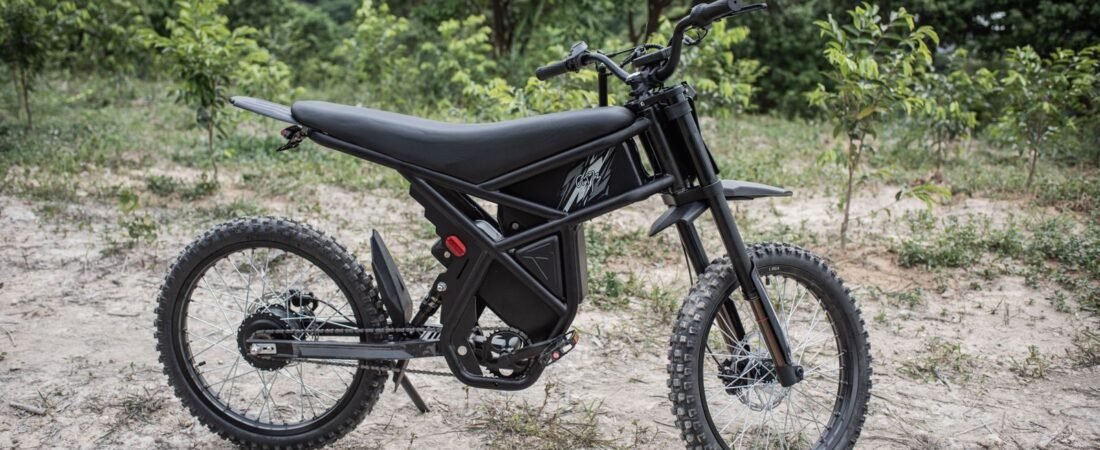
The Raptee.HV EV Centre of Excellence launched on September 9, 2026, at Rajalakshmi Engineering College (REC) in Chennai. Backed by an investment of Rs 50 lakh, the 3,000 sq. ft. facility gives engineering students hands-on access to a Raptee.HV T30 motorcycle, core EV components, a digital-twin-enabled motorcycle, and interactive learning modules.
The Raptee.HV EV Centre of Excellence is one of the first initiatives under Raptee.HV Academy, the company’s broader programme to bring hands-on EV engineering into educational institutions. The announcement comes on World EV Day and coincides with the signing of an MoU between Raptee.HV and REC.
But the announcement raises a question that the press release does not address: is this a genuine talent development initiative, or is it a brand-building exercise by a startup that has just begun delivering its first product?
Layer 1 — Why Now: India’s EV Talent Gap and the World EV Day Timing
The EV Two-Wheeler Boom
India’s electric two-wheeler market crossed 2 lakh monthly units for the first time in July 2026, with 2,04,266 units retailed according to VAHAN portal data. The calendar year 2026 has totalled 11.7 lakh units through July, up 56% year-over-year. FY26 saw 1.4 million electric two-wheelers sold, commanding 57% share of India’s EV market.
TVS Motor overtook Ola Electric to lead the EV two-wheeler market in FY26. Bajaj Auto, Ather Energy, and Hero MotoCorp’s Vida brand all posted double- and triple-digit growth. Ola Electric was the only major brand to post a year-over-year decline.
This growth creates a talent problem. The EV industry requires engineers skilled in battery packs, electric motors, power electronics, charging infrastructure, vehicle communication, and real-time diagnostics — skills that traditional engineering curricula do not teach at scale. India’s EV transition is outpacing its engineering education system’s ability to produce graduates with relevant hands-on experience.
The World EV Day Lens
Launching on World EV Day is a deliberate timing choice. It positions Raptee.HV alongside the global EV community and gives the announcement a news hook that extends beyond the company’s own ecosystem. But World EV Day also sees a flood of EV-related announcements, making it harder for any single initiative to stand out.
The choice of REC as partner is strategic. Chennai is India’s automotive manufacturing hub, home to Ola Electric’s factory, Ather Energy’s operations, and a dense ecosystem of auto component suppliers. REC came into existence in 1997. It has an Anna University affiliation. The institution has NAAC A++ accreditation, 18,000+ students, 560+ faculty, and 260+ PhD holders. It already hosts 15 other Centres of Excellence in AI, Medical Imaging, Machine Vision, MEMS, Renewable Energy, Data Science, Digital Manufacturing, IoT, CFD, and more.
The Industry-Academia Partnership Trend
Raptee.HV is not alone in partnering with academic institutions. Hyundai Motor Group expanded its Center of Excellence in India to a seven-university consortium in May 2026, adding IIT Kanpur, IIT Hyderabad, VNIT Nagpur, and Tezpur University, with 39 joint projects spanning battery cells, BMS, energy density, and diagnostics. VIT partnered with Bajaj Auto Foundation to establish a Rs 15 crore BEST Centre for Advanced Engineering. SRM Institute partnered with Ather Energy. L&T EduTech and Galgotias University launched an Advanced EV Centre of Excellence.
These partnerships vary enormously in scale. Hyundai’s CoE spans seven universities with 39 research projects. Bajaj’s VIT partnership involves Rs 15 crore. Raptee.HV’s REC partnership involves Rs 50 lakh — 3.3% of Bajaj’s investment and 0.3% of Hyundai’s consortium scope.
The Raptee.HV EV Centre of Excellence in Competitive Context
The EV Motorcycle Landscape
Raptee.HV operates in a niche within the broader electric two-wheeler market. Most EV two-wheeler sales in India are scooters — led by TVS iQube, Ola S1, Ather 450, Bajaj Chetak, and Hero Vida. Electric motorcycles remain a smaller segment.
Ultraviolette Automotive sells the F77, priced at approximately Rs 3.8 lakh. Revolt Motors sells the RV400 at approximately Rs 1.2 lakh. Tork Motors has faced significant delays. Ola Electric has announced electric motorcycles but has not launched them at scale. Hero MotoCorp has announced partnerships for electric motorcycles but has not launched a product.
Raptee.HV’s T30, priced at Rs 2.39 lakh, sits between Revolt’s budget offering and Ultraviolette’s premium positioning. The T30 began customer deliveries in Chennai in February 2026, with plans to expand to Bengaluru from April 2026 and other south Indian markets by end of 2026.
The HV-TEC Platform Differentiation
Raptee.HV’s core differentiator is its HV-TEC platform, which applies electric car technology to two-wheelers. The T30 is compatible with the CCS2 public charging standard — the same standard used by electric cars. This means T30 owners can charge at public CCS2 charging stations, not just proprietary or two-wheeler-specific chargers.
This is a genuine technical differentiator. Most electric two-wheelers in India use slower charging standards. The T30’s high-voltage architecture enables faster charging and integrates car-grade power electronics into a motorcycle form factor.
But the press release does not mention T30 sales numbers, production volumes, or market share. The company’s commercial traction is undisclosed. For a startup that began deliveries in February 2026, seven months before this announcement, the absence of sales data is notable.
Competitor Academy Initiatives
No major EV two-wheeler competitor in India has launched a comparable academy initiative. Ather Energy partnered with SRM Institute for talent pipeline development. Ola Electric has its own training programs at its Futurefactory. Hyundai’s CoE is focused on battery research, not EV assembly education. Bajaj’s VIT partnership is focused on advanced engineering, not motorcycle-specific training.
Raptee.HV’s Centre of Excellence is distinctive in focusing specifically on electric motorcycle engineering education. But the scale of investment — Rs 50 lakh — suggests this is a pilot or branding initiative rather than a comprehensive talent development programme.
Layer 3 — Public-Data Sweep: Raptee.HV’s Profile and Investment Scale
Company Background
Raptee.HV is a Chennai-based full-stack electric motorcycle company founded by engineers with experience across Tesla, Wipro, and global mobility companies. CEO and Co-founder Dinesh Arjun led the T30’s development over seven years before commercial deliveries began in February 2026.
The company’s LinkedIn presence shows a small organization. The press release does not disclose funding raised, valuation, revenue, or production capacity. No venture capital rounds have been publicly reported in the research available.
For context, Ultraviolette Automotive has raised over $20 million across multiple rounds. Ather Energy has raised over $200 million. Ola Electric raised over $500 million before its IPO. Raptee.HV’s funding profile appears to be significantly smaller than these competitors.
The Rs 50 Lakh Investment in Context
Rs 50 lakh (approximately $60,000) is a modest investment for a Centre of Excellence. For comparison:
Bajaj Auto Foundation invested Rs 15 crore in VIT’s BEST Centre — 30x Raptee.HV’s investment. Hyundai Motor Group’s CoE spans seven universities with 39 research projects. And L&T EduTech’s EV CoE with Galgotias University involves a broader curriculum integration.
Rs 50 lakh covers the cost of a T30 motorcycle (Rs 2.39 lakh), a digital-twin-enabled motorcycle, core EV components, interactive learning modules, and dedicated lab space setup. It is a real investment, but it is a single-lab, single-institution initiative — not a systemic talent development programme.
The T30 in the Market
The T30 is priced at Rs 2.39 lakh and began deliveries in Chennai in February 2026. A phased expansion was planned to Bengaluru from April 2026 and other south Indian markets by end of 2026.
But the press release does not mention sales figures, production volumes, or order book size.
Without sales data, it is difficult to assess Raptee.HV’s commercial traction. The EV two-wheeler market is growing rapidly — 1.4 million units in FY26 — but electric motorcycles remain a small fraction of that total. Raptee.HV is competing in a niche segment with limited disclosed commercial performance.
Rajalakshmi Engineering College’s CoE Portfolio
REC already hosts 15 Centres of Excellence in AI, Medical Imaging, Machine Vision, MEMS and Microfluidics, Renewable Energy, Biofilms, Data Science, Digital Manufacturing, IoT, CFD, TANCAM Design Centre, and TANSAM Spoke Centre. The Raptee.HV CoE is the 16th addition.
This context matters. REC is an institution with an established CoE model, 100+ industry partnerships, and a multidisciplinary research ecosystem. Raptee.HV is benefiting from REC’s existing infrastructure and partnership framework more than it is creating new educational capacity from scratch.
Layer 4 — The Unasked Question: What the Press Release Does Not Address
How Many Students Benefit?
The press release describes the facility as tailored for students across Electrical, Electronics, and Automotive Engineering. But it does not specify how many students will use the facility annually, whether the lab is integrated into the formal curriculum, or whether it serves as an elective or extracurricular resource.
A 3,000 sq. ft. lab with one T30 motorcycle, one digital-twin motorcycle, and core EV components can realistically serve a limited number of students at a time. Without enrollment numbers or curriculum integration details, the initiative’s actual reach is unclear.
T30 Sales and Commercial Traction
The press release does not mention T30 sales numbers, production volumes, or market presence. This is a significant omission for a company that began deliveries seven months ago. Are sales on track? Has the company expanded beyond Chennai as planned? What is the order book size?
The absence of commercial data creates an information gap. The Centre of Excellence announcement may serve to generate positive coverage in the absence of sales milestones to announce.
Raptee.HV Academy’s Broader Plans
The press release mentions that this is “one of the first initiatives under Raptee.HV Academy.” But it does not describe the academy’s broader programme. How many institutions does Raptee.HV plan to partner with? What is the total investment envisioned? Is there a curriculum development component, or is the academy primarily a lab-setup model?
Faculty Development and IP Creation
The press release states that the lab will “drive faculty development, industry-linked projects, collaborative research, and intellectual property creation.” These are ambitious claims for a Rs 50 lakh investment. How many faculty development programmes are planned? What research projects are already scoped? What IP creation is expected?
Long-Term Commitment
Industry-academia partnerships often suffer from uneven commitment. Companies launch CoEs with fanfare, then reduce engagement as business priorities shift. The press release does not specify the duration of the MoU, the financial commitment beyond the initial Rs 50 lakh, or the metrics by which the partnership’s success will be measured.
Layer 5 — Honest Translation: What the Announcement Means
“India’s 1st EV Motorcycle with Electric Car DNA”
This positioning is technically accurate. The T30 uses a high-voltage architecture derived from electric car technology, compatible with CCS2 public charging. This is a genuine differentiator in a market where most electric two-wheelers use lower-voltage systems. But “electric car DNA” is a marketing phrase, not a technical specification. The T30 is an electric motorcycle with car-grade charging compatibility — not a car on two wheels.
“Rs 50 Lakh Investment”
This is a real investment, but its scale is modest. It covers lab setup, equipment, and a motorcycle. It does not represent a systemic talent development investment. For context, India’s automotive industry spends significantly more on training and development — Maruti Suzuki’s training programmes, Tata Motors’ academic partnerships, and Mahindra’s skill development initiatives operate at much larger scales.
The Rs 50 lakh figure should be read as a pilot investment, not a transformational commitment.
“Building the Next Generation of EV Engineers”
This is aspirational. A single 3,000 sq. ft. lab at one engineering college cannot build a generation of EV engineers. It can provide hands-on experience to a subset of students at one institution. The impact is real for those students, but the scale is limited.
The press release’s language — “the next generation of EV engineers” — overstates what a single-lab, single-institution initiative can achieve. A more accurate framing would be: “providing hands-on EV engineering experience to REC students.”
“Digital Twin Technology”
The lab includes a naked motorcycle equipped with digital twin technology. Digital twins — virtual replicas of physical systems — are a legitimate training tool. They allow students to simulate scenarios, diagnose faults, and understand system behaviour without risking physical equipment. But the press release does not describe the digital twin’s capabilities, the software platform used, or how it integrates with the curriculum.
The MoU and Industry-Academia Collaboration
The MoU between Raptee.HV and REC formalises a long-term collaboration covering industrial training, site visits, guest lectures, internships, industry-oriented courses, and joint research. This is a standard industry-academia MoU structure. Its value depends entirely on execution — how many internships are created, how many guest lectures are delivered, and whether joint research produces publishable output.
Layer 6 — Decision-Maker Framing: Who Should Care
For EV Sector Professionals
The Raptee.HV EV Centre of Excellence is a small but genuine initiative. If you work in the EV two-wheeler space, the T30’s high-voltage architecture and CCS2 compatibility are worth understanding. The talent gap in EV engineering is real, and industry-academia partnerships are a practical response. But this specific initiative is modest in scale.
For Engineering Educators
REC’s approach — partnering with a startup to give students hands-on access to a real EV product — is a model worth considering. The integration of a production motorcycle, digital twin technology, and core EV components into a lab environment provides practical learning that textbooks cannot replicate. But the investment scale required for a meaningful programme is significantly higher than Rs 50 lakh.
For EV Investors
Raptee.HV remains an early-stage startup with limited disclosed commercial traction. The T30 began deliveries in February 2026, but no sales numbers have been published. Raptee.HV’s funding profile is not publicly documented.
Its Centre of Excellence announcement is a positive signal of long-term thinking, but it does not substitute for commercial performance data.
For Students and Job Seekers
If you are an engineering student at REC, the HV Lab provides genuine value — hands-on access to a real electric motorcycle, EV components, and digital twin technology. For students elsewhere, this announcement is a signal that EV-specific lab experience is becoming a differentiator in the job market. Seek out institutions with similar industry partnerships.
What Is Genuinely New vs. What Is Established
Genuinely New
The Raptee.HV EV Centre of Excellence is the first industry-academia partnership focused specifically on electric motorcycle engineering education in India. Other EV CoEs focus on scooters, batteries, or general EV technology. The motorcycle-specific focus, combined with access to a production T30 and its high-voltage architecture, is distinctive.
The Raptee.HV Academy as a broader programme is new, though its scope and plans are undisclosed.
Established
Industry-academia partnerships in EV education are well established in India. Hyundai, Bajaj, Ather, L&T EduTech, and others have created CoEs with universities. REC itself already hosts 15 CoEs. The model of pairing a company’s product with academic infrastructure is proven.
India’s EV two-wheeler market growth — 1.4 million units in FY26, 2 lakh+ monthly units — is an established trend. The talent gap in EV engineering is a known challenge.
Unclear
T30 sales numbers and commercial traction. Raptee.HV’s funding profile and valuation.
The number of students who will use the HV Lab annually. Whether the lab is integrated into REC’s formal curriculum.
The duration and terms of the MoU. Raptee.HV Academy’s broader plans and total investment. What research projects and IP creation are expected from the partnership.
The Bigger Picture
The Raptee.HV EV Centre of Excellence announcement sits at the intersection of two genuine trends: India’s accelerating EV transition and the growing industry-academia collaboration in EV education.
India’s market crossed 2 lakh monthly units in July 2026. Its talent gap is real. Companies that invest in building the engineering pipeline will benefit from a workforce that understands electric vehicle systems from the cell to the software.
But the scale of this specific initiative does not match the scale of the challenge. Rs 50 lakh at one institution is a pilot, not a programme. Hyundai’s seven-university consortium, Bajaj’s Rs 15 crore investment, and Ather’s SRM partnership represent more substantial commitments. Raptee.HV’s investment is real but modest — and it comes from a startup that has not disclosed its commercial traction.
Next Great EV Technology
CEO Dinesh Arjun’s quote is compelling: “If even a few students walk out of this lab wanting to build the next great EV technology, we have done our job.” This is an honest framing. A single lab at one college cannot build a generation of engineers. But it can inspire a few students to pursue EV engineering careers, and that has value.
The question is whether Raptee.HV can sustain and expand this commitment. The press release describes the academy as a “broader programme” — but without details on how many institutions, how much total investment, and what curriculum development is planned, the academy remains a concept rather than a strategy.
For a startup that began deliveries seven months ago, the initiative signals long-term thinking. It positions Raptee.HV as a company that cares about talent development, not just product sales. But in the absence of disclosed sales numbers, funding details, and expansion plans, the Centre of Excellence announcement reads as much as a brand-building exercise as a talent development initiative.
Both can be true simultaneously. Raptee.HV can be genuinely investing in EV education while also generating positive coverage that compensates for the absence of commercial milestones.
Its initiative is real. The investment is modest. Impact will have limits unless it scales. And the company’s commercial traction remains the more important story that this announcement does not tell.
Editor’s Note
This article is based on the press release issued by Raptee.HV on September 9, 2026, The Hindu BusinessLine coverage of Raptee.HV T30 deliveries (February 2026), Autocar India and CarAndBike T30 reviews, AutoEV Times CEO interview, BikeWale delivery coverage, Raptee.HV LinkedIn company page, VAHAN portal EV two-wheeler sales data reported by TechyTrends and Rushlane (July-August 2026), Autocar Professional FY26 EV two-wheeler market analysis, Hyundai Motor Group CoE expansion announcement (May 2026), VIT-Bajaj Auto Foundation BEST Centre announcement, SRM-Ather Energy partnership announcement, L&T EduTech-Galgotias University EV CoE announcement, and Rajalakshmi Engineering College institutional information.
Raptee.HV: Chennai-based full-stack electric motorcycle company. Co-founder and CEO: Dinesh Arjun. Product: T30 electric motorcycle, Rs 2.39 lakh.
Platform: HV-TEC (high-voltage, CCS2 compatible). Deliveries began: February 2026, Chennai. Expansion: Bengaluru from April 2026, south India by end 2026. Funding: undisclosed. Sales: undisclosed.
Centre of Excellence: 3,000 sq. ft. facility at Rajalakshmi Engineering College, Chennai. Investment: Rs 50 lakh. Equipment: T30 motorcycle, digital-twin-enabled motorcycle, core EV components, interactive learning modules. Inaugurated: September 9, 2026 (World EV Day).
Rajalakshmi Engineering College: Established 1997, Chennai. Anna University affiliated. NAAC A++. 18,000+ students, 560+ faculty, 260+ PhD holders. 16 Centres of Excellence. 100+ industry partnerships.
India EV two-wheeler market: 1.4 million units FY26 (57% of India EV market). 2,04,266 units July 2026 (first 2L+ month). CY2026 through July: 11.7 lakh units, +56% YoY. Leaders: TVS Motor, Bajaj Auto, Ather Energy, Hero Vida. Ola Electric declining.
Competitor CoEs: Hyundai Motor Group (7 universities, 39 projects, battery/BMS research). Bajaj Auto Foundation-VIT (Rs 15 crore, BEST Centre). SRM-Ather Energy (talent pipeline). L&T EduTech-Galgotias University (Advanced EV CoE).
EV motorcycle competitors: Ultraviolette F77 (~Rs 3.8 lakh, $20M+ funding), Revolt RV400 (~Rs 1.2 lakh), Tork Motors (delayed), Ola Electric (announced, not launched), Hero MotoCorp (announced partnerships).
Contact: techrecasteditor@gmail.com