
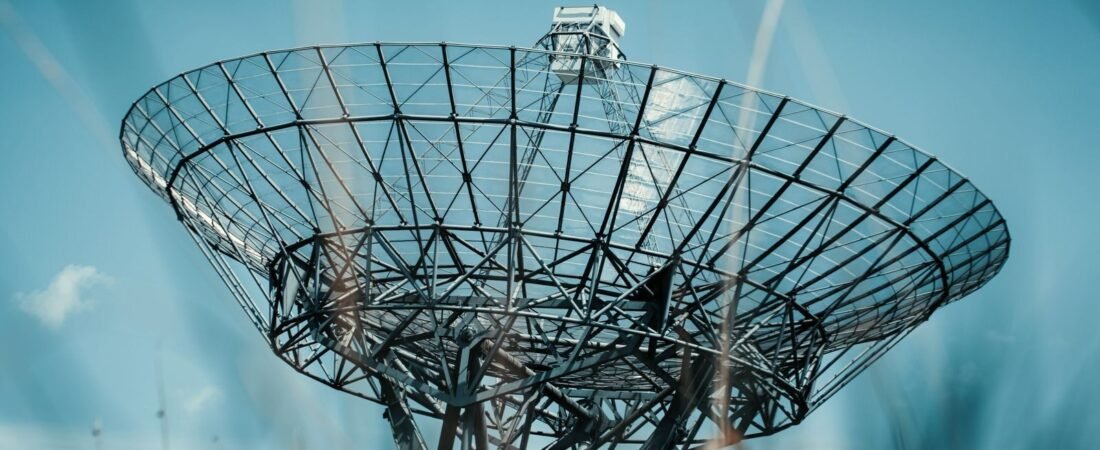
Astrogate Labs OISL development marks a critical leap for India’s space ambitions. The Bengaluru-based deep-tech startup is building India’s first indigenous Optical Inter-Satellite Link terminal, targeting flight readiness in 2027, and has already delivered a space-to-ground laser communication terminal to ISRO.
Astrogate’s OISL announcement, made at Bengaluru Space Expo 2026 on September 8, positions a 26-person startup against a global market where SpaceX operates over 13,000 bidirectional laser links in orbit. German giant Tesat-Spacecom holds 22.4% market share. Astrogate also demonstrated AstroLink Micro, its 10 Gbps space-to-ground laser communication terminal, live at the event.
What does this press release not say? The gap between the announcement and the underlying reality reveals a more complex story.
What the Astrogate Labs OISL Announcement Actually Covers
Astrogate Labs, founded in 2017 and headquartered in Bengaluru, develops Free Space Optical Communication systems for space and defense applications. The company has supplied an indigenously developed satellite-to-ground lasercomm terminal to ISRO, making it the only Indian company to deliver this technology to the national space agency.
The space-to-ground terminals have reached TRL 8 — complete and qualified for flight. Cross-compatibility testing with the University of Western Australia’s TeraNet mobile optical ground station confirms interoperability with international ground infrastructure.
The Astrogate Labs OISL terminal, by contrast, is still under development. The press release targets flight readiness in 2027 but does not specify the current TRL for the inter-satellite link system. CEO Nitish Singh said the core building blocks — the Pointing, Acquisition and Tracking system, the optical modem, stabilized coarse tracking gimbals, and system-level integration — carry over from the space-to-ground terminals.
Layer 1 — Why Now: The LEO Constellation Boom and India’s Space Opening
Three forces converge behind this announcement.
The Megaconstellation Surge
SpaceX’s Starlink network has deployed over 9,000 satellites, each carrying 3 to 4 optical terminals, creating an optical mesh of more than 13,000 bidirectional laser links in orbit. Amazon’s Project Kuiper plans 3,236 satellites with laser crosslinks. Telesat’s Lightspeed constellation of 198 LEO satellites relies entirely on OISL for inter-satellite routing. The US Space Development Agency has committed to procuring over 700 OISL-equipped satellites under its Transport Layer program by 2028.
Each satellite in these constellations requires between one and four laser communication terminals. Cumulative terminal demand runs into the tens of thousands over the next decade, according to Novaspace’s Optical Communications Market report.
The RF Bottleneck
Conventional radio frequency links face growing spectrum and bandwidth constraints as satellite constellations generate increasing volumes of data. Astrogate’s own data points to the gap: RF terminals for CubeSats and small satellites deliver around 200 Mbps. Astrogate’s laser terminals already deliver 10 Gbps — a 50x improvement.
Subhajit Chakraborty, Co-founder of Astrogate Labs, told Business Outreach that laser communication is the future of space communication, but acknowledged it complements RF rather than replacing it entirely.
India’s Space Sector Reforms
India’s space economy stands at approximately $9 billion in 2026, with a stated target of $44 billion by 2033. Private investment has crossed $618.5 million as of March 2026, up nearly six-fold from $100.5 million in FY 2021-22. The country has over 440 registered space startups, up from just one in 2014.
IN-SPACe, the single-window regulatory body, has granted 113 authorisations to 52 non-government entities. The government has approved a ₹1,000 crore venture capital fund for space startups and liberalized FDI rules — allowing 74% automatic investment in satellite manufacturing and 100% in component manufacturing.
ISRO plans to add 100-150 satellites in the next three years under Chairman V. Narayanan, creating domestic demand for satellite communication infrastructure.
Layer 2 — Competitive Positioning: Who Else Builds OISL Terminals
The Astrogate Labs OISL terminal enters a market led by established aerospace players with decades of flight heritage.
TESAT-Spacecom: The Market Leader
Tesat-Spacecom, a German subsidiary of Airbus Defence and Space, holds 22.4% of the global OISL market. The company has delivered over 100 laser communication terminals across 30+ space missions, including the European Data Relay System. Its Backnang production facility, opened in August 2024, has a capacity of approximately 100 units per month. Tesat’s SCOT80 terminal delivers 10 Gbps for LEO mesh networks at a unit mass of roughly 12 kg. The company employs 1,250 people.
Mynaric AG: Acquired by Rocket Lab
Mynaric, the second-largest dedicated OISL terminal supplier, held approximately 20% market share with $120.5 million in 2024 revenue and 480 employees. Its CONDOR Mk3 terminal, designed for high-volume LEO constellation deployment, was selected for multiple SDA Transport Layer programs. Mynaric delivered its 100th terminal in late 2025.
Rocket Lab acquired Mynaric in April 2026 for $155.3 million after the German company entered restructuring. Prior shareholders received nothing. The acquisition consolidated the OISL supply base to four SDA-qualified suppliers: Rocket Lab (formerly Mynaric), Tesat-Spacecom US, Skyloom, and CACI International.
SpaceX: The In-House Giant
SpaceX builds its own optical inter-satellite link terminals in-house for Starlink. With approximately 9,000 satellites in orbit, each carrying 3 to 4 terminals, SpaceX operates the largest optical mesh network in history. The company recently began offering its “Plug and Plaser” terminals to external customers, including a partnership with Muon Space to integrate Starlink mini-laser terminals into third-party satellite platforms.
CACI International and Other US Players
CACI International’s CrossBeam terminal has operated on orbit since June 2021, making it the longest-flown American-made OISL terminal. Together with SpaceX, CACI, demonstrated the first successful cross-vendor laser communication link in 2025. General Atomics EMS, Ball Aerospace (part of BAE Systems), and Honeywell Aerospace round out the US defense-centric supply chain.
Where Astrogate Labs Fits Globally
Astrogate Labs has 26 employees and ₹1.2 crore (approximately $145,000) in FY25 revenue. Tesat-Spacecom employs 1,250 people. Mynaric, even after its collapse, employed 480. The scale gap is not a gap — it is a chasm.
Astrogate’s advantage is not scale. Its advantage is that no Indian company has delivered a lasercomm terminal to ISRO before, and no Indian company is building an indigenous OISL terminal except Astrogate and one direct competitor.
Layer 3 — Public-Data Sweep: The Companies and Market Behind the Headline
Astrogate Labs: $1.3 Million Raised, 26 Employees, TRL 8 Achieved
Astrogate Labs was founded in 2017 by Nitish Singh, Jayaraman Yogeshwaran, and Subhajit Chakraborty. The company operates from Bengaluru with an office in Durham, England, and a US presence in Orlando, Florida.
Total funding raised: $1.3 million across multiple rounds. The most recent round, in February 2025, was a $1.3 million pre-Series funding led by Piper Serica Angel Fund. Earlier investors include Speciale Invest, Anicut Angel Fund, SuprValue.vc, and FirstCheque.Vc. Tracxn lists the company’s valuation at approximately ₹59.7 crore (roughly $7.2 million).
FY25 revenue reached ₹1.2 crore, up 51.2% from ₹77.5 lakh in FY24. The company posted a net loss of ₹1.4 crore in FY25. Employee count varies across sources: LinkedIn lists 26, Tracxn lists 19, and Inc42 lists 22-24.
The company won the SIA India Space Excellence Award for “Excellence in Space Technology and Innovation (Pioneer category).” CEO Nitish Singh was part of the business delegation accompanying Commerce Minister Piyush Goyal to the UK for India-UK CETA discussions, where space-tech cooperation featured prominently.
The OISL Market: $612 Million in 2025, Growing at 19.2% CAGR
The global optical inter-satellite link systems market was valued at $612.2 million in 2025, according to GM Insights. The market is projected to reach $752 million in 2026 and $3.7 billion by 2035, growing at a CAGR of 19.2%.
Novaspace forecasts cumulative global revenues for space-based Laser Communication Terminals at $12.9 billion through 2035, with 118,000 terminals projected to be in orbit by 2035. Closed markets — where operators like SpaceX build terminals in-house — represent 74% of total market value. The open merchant market accounts for the remaining 26%.
The average unit cost of a flight-qualified laser communication terminal fell approximately 28% between 2021 and 2025. Terminal prices currently range from $700,000 to $1,000,000 per unit, according to QY Research. The high data rate segment (above 10 Gbps) is expected to grow at a CAGR of 23.7% through 2035.
India’s Space Ecosystem: 440 Startups, $618 Million Invested
India’s private space sector has expanded from one registered startup in 2014 to over 440 by August 2026. Cumulative private investment reached $618.5 million by March 2026, with $187 million deployed in 2026 alone. NSIL, ISRO’s commercial arm, saw revenue grow from ₹321.77 crore in FY22 to over ₹3,000 crore in FY25.
IN-SPACe has facilitated 118 technology transfer agreements and signed 189 partnership agreements. The ₹1,000 crore venture capital fund, approved in October 2024, will deploy ₹100-250 crore annually across approximately 40 space startups over five years.
Layer 4 — The Unasked Question: What Is the Press Release Not Telling You?
The “First” Claim Contention
The press release claims Astrogate is developing “India’s first indigenous Optical Inter-Satellite Link terminal.” In June 2026, QOSMIC and TakeMe2Space announced a partnership to develop what they called “India’s first indigenous OISL network,” with the first terminal planned for launch in Q2 2027.
Both companies target the same 2027 flight readiness window. Astrogate claims the OISL terminal. QOSMIC claims the OISL network. The distinction matters — a terminal is a hardware component, a network is an integrated system. But both cannot be “first” in the same category.
QOSMIC, founded in 2025 and backed by Accel and Prosus with $3.33 million in seed funding, has validated its optical communication stack at TRL 6. Astrogate’s space-to-ground terminals are at TRL 8, but the press release does not state the current TRL for the OISL terminal specifically.
The TRL Gap
The press release states that space-to-ground terminals have reached TRL 8. It does not specify the TRL for the OISL terminal. CTO Jayaraman Yogeshwaran says the core building blocks “carry over” from the space-to-ground system, but carries over does not mean flight-qualified.
Space-to-ground and inter-satellite links face fundamentally different challenges. Inter-satellite links require both terminals to track each other while moving at orbital velocities, maintaining sub-microradian alignment over thousands of kilometers. The PAT (Pointing, Acquisition and Tracking) system complexity is significantly higher for OISL than for space-to-ground links.
The Revenue and Scale Reality
Astrogate Labs reported ₹1.2 crore in FY25 revenue. A single flight-qualified OISL terminal costs between $700,000 and $1,000,000 globally. The company has raised $1.3 million in total funding — less than the price of two OISL terminals at market rates.
Developing, qualifying, and manufacturing OISL terminals requires capital far beyond what Astrogate has raised. Mynaric, which employed 480 people and generated $120.5 million in revenue, collapsed financially despite delivering 100+ terminals to the SDA. Rocket Lab acquired it for $155.3 million after shareholders were wiped out.
The Manufacturing Question
The press release describes Astrogate as designing and manufacturing indigenous FSOC terminals. The company’s satsearch listing claims capabilities up to 100 Gbps. But the press release does not describe manufacturing capacity, production timelines, or unit economics.
Mynaric’s failure provides a cautionary parallel. The company’s photonics worked, but unit economics did not — each terminal took longer and cost more to align than bids assumed. Public-market pressure, capital intensity, and single-customer concentration created a structural risk that wiped out shareholders.
The Customer Concentration Risk
Astrogate has one named customer: ISRO. The press release does not mention any other contracted customers for either the space-to-ground terminals or the OISL system. The three target markets — satellite backhaul, sovereign defence constellations, and orbital compute — are described as targets, not as contracted revenue streams.
Layer 5 — Honest Translation: What the Claims Mean
“India’s First Indigenous Optical Inter-Satellite Link”
The claim is bold but contested. QOSMIC and TakeMe2Space announced their OISL network in June 2026, three months before Astrogate’s announcement. QOSMIC’s terminal is scheduled for Q2 2027 launch. Astrogate targets flight readiness in 2027. The race to “first” depends on whether “first” means first announced, first flown, or first delivered.
“Only Indian Company to Deliver This Strategic Technology to ISRO”
This claim refers to the space-to-ground lasercomm terminal, not the OISL. The distinction is critical. Delivering a space-to-ground terminal to ISRO is a genuine achievement. But it is not the same as delivering an inter-satellite link terminal, which involves fundamentally different pointing, tracking, and acquisition challenges.
“Technology Owned End to End in India”
Astrogate develops its PAT system, optical modem, and subsystems in-house. But co-founder Chakraborty acknowledged in an interview that most optics still come in as imports, and lead times plus customs represent a real schedule risk for a hardware startup in India. “Indigenous” refers to system design and integration, not full component-level self-sufficiency.
“OISL Is the Harder Problem”
CEO Singh’s statement that OISL “is the one that decides who builds the connectivity layer for future LEO constellations” is strategically accurate. Inter-satellite links determine whether a constellation can route data in space or must rely on ground stations. But accuracy of strategic framing does not equal capability to execute.
“Orbital Compute” as a Target Market
Astrogate lists orbital compute as one of three target markets. Orbital compute — processing data in space rather than on Earth — is an emerging concept. Pixxel and Sarvam announced India’s first orbital data centre satellite in May 2026, powered by Sarvam’s AI models. The market is real but nascent, and Astrogate’s specific role in it is not defined in the press release.
Layer 6 — Decision-Maker Framing: Who Should Care
For Satellite Operators and Constellation Developers
If you are building a LEO constellation and need inter-satellite connectivity, Astrogate’s OISL terminal is not yet flight-ready. The 2027 target means you cannot contract for delivery today. But the space-to-ground terminal is at TRL 8 and has been delivered to ISRO. If you need space-to-ground laser communication for small satellites, Astrogate has a flight-qualified product.
For ISRO and Indian Government Agencies
Astrogate represents a strategic capability for India’s space sovereignty. If India plans to deploy 100-150 satellites in the next three years, domestic OISL capability reduces dependence on foreign suppliers like Tesat-Spacecom or SpaceX’s “Plug and Plaser” terminals. The question is whether Astrogate can scale from 26 employees and $1.3 million in funding to a production-capable manufacturer.
For Investors
The global OISL market is growing at 19.2% CAGR, projected to reach $3.7 billion by 2035. Astrogate has raised $1.3 million — a fraction of what Mynaric consumed before its collapse. The company’s valuation of approximately $7.2 million suggests significant room for growth if the OISL terminal reaches flight readiness. The risk profile is high: deep-tech hardware, long development cycles, capital-intensive qualification, and a market where a 480-person company with $120 million in revenue still failed.
For Global OISL Terminal Manufacturers
Tesat-Spacecom, CACI, Rocket Lab (Mynaric), and Skyloom should note that India’s space sector is developing indigenous OISL capability. India’s FDI rules allow 100% automatic investment in component manufacturing and 74% in satellite manufacturing. Partnerships with Indian companies could provide manufacturing cost advantages and access to the Indian government’s satellite procurement pipeline.
For Indian Space Startups
Astrogate’s announcement validates laser communication as a strategic priority for India’s space ecosystem. QOSMIC, TakeMe2Space, Pixxel, and Bellatrix are building adjacent capabilities — orbital data centres, hyperspectral imaging, in-space propulsion. The convergence of these technologies will determine whether India builds an end-to-end sovereign space communication infrastructure or remains dependent on foreign suppliers.
What Is Genuinely New vs. What Is Established
Genuinely New
An Indian company is developing an indigenous OISL terminal with technology carried over from a flight-qualified space-to-ground system. The 2027 flight readiness target, if met, would make Astrogate the first Indian company to field an inter-satellite laser link.
Established
Free space optical communication technology. Space-to-ground laser terminals at TRL 8. ISRO as a customer for indigenous space technology. The global OISL market, led by Tesat-Spacecom and SpaceX, with thousands of terminals already in orbit.
Unclear
The current TRL of the OISL terminal specifically. Whether Astrogate or QOSMIC reaches orbit first. Can Astrogate secure the capital needed to move from development to production? Does the “indigenous” claim extend to critical optical components that are currently imported? Have ISRO or other customers committed to purchasing OISL terminals?
What specific automotive programs the combined entity will pursue also remains unknown.
The Bigger Picture
The Astrogate Labs OISL announcement is a visibility play at Bengaluru Space Expo 2026, not a product launch. The OISL terminal is under development. Flight readiness is a year away. The company has 26 employees and $1.3 million in funding.
But the strategic significance is real. India is building a domestic space communication infrastructure from the ground up. The country plans to add 100-150 satellites in three years. Its private space sector has grown from one startup to 440 in six years. The $44 billion space economy target by 2033 requires domestic capability across the entire value chain — including the optical layer that carries data between satellites.
SpaceX has 13,000+ laser links in orbit. Tesat-Spacecom produces 100 terminals per month. Astrogate Labs has delivered one terminal to ISRO. The scale gap is enormous.
But every major space capability started somewhere. SpaceX began with a single Falcon 1 launch. ISRO began with a sounding rocket from Thumba. Astrogate’s achievement — delivering an indigenous lasercomm terminal to ISRO and reaching TRL 8 on space-to-ground systems — is a genuine foundation.
Whether the company can build on that foundation to deliver a flight-ready OISL terminal by 2027, scale manufacturing, and compete in a market where far better-funded players have struggled, will determine whether this announcement is the beginning of India’s optical communication industry or a footnote in it.
The press release does not answer this question. The next 18 months will.
Editor’s Note
This article is based on the press release issued by Astrogate Labs via PR Newswire on September 8, 2026, and additional publicly available information including Astrogate Labs’ LinkedIn company page, Inc42 company profile and financials, Tracxn company profile, CB Insights company profile, Preqin asset profile, Business Outreach interview with co-founder Subhajit Chakraborty, satsearch supplier listing, GM Insights OISL Systems Market Report June 2026, DataIntelo OISL Market Research Report, Novaspace Optical Communications Market Report April 2026, MarketsandMarkets Optical Satellite Communication Market Report January 2026, Market Research Future Optical Satellite Communication Market Report,
QY Research Inter-Satellite Laser Communication Terminal Market Report, Growth Market Reports OISL Terminal Market Report, ReportPrime LCT Market Company Rankings, Space Ambition Substack analysis “Optical Satellite Communication: Who Builds the Terminals” June 2026, Ex Terra JSC analysis “The OISL Market After Mynaric” May 2026, The Volt Post reporting on TakeMe2Space and QOSMIC partnership June 2026, Analytics India Magazine QOSMIC feature, Rural Voice reporting July 2026, Press Information Bureau Government of India statements, The Times of India reporting July 2026, Carnegie Endowment for International Peace analysis May 2026, GetSpaceBrief reporting August 2026, New Space Economy reporting April 2026, The Policy Edge reporting August 2026, and SpaceOdysseyHub IN-SPACe analysis July 2026.
Astrogate Labs
Astrogate Labs is a privately held company headquartered in Bengaluru, India, founded in 2017. Total funding of $1.3 million is based on Inc42 and Tracxn data. LinkedIn lists total funding at $5.3 million, which may include undisclosed rounds or grants. FY25 revenue of ₹1.2 crore and net loss of ₹1.4 crore are based on Inc42 financials data.
Employee count varies across sources: LinkedIn (26), Tracxn (19), Inc42 (22-24). The company’s valuation of approximately ₹59.7 crore is based on Tracxn data.
QOSMIC’s claim of developing “India’s first indigenous OISL network” was announced on June 30, 2026, in partnership with TakeMe2Space. Astrogate’s claim of developing “India’s first indigenous OISL terminal” was announced on September 8, 2026. Both target 2027 for first terminal launch. Neither claim has been independently adjudicated.
Mynaric AG’s acquisition by Rocket Lab was completed on April 14, 2026, for $155.3 million. Prior Mynaric shareholders received no compensation. This acquisition and Mynaric’s financial collapse are documented in Ex Terra JSC and Space Ambition analyses.
Contact: techrecasteditor@gmail.com