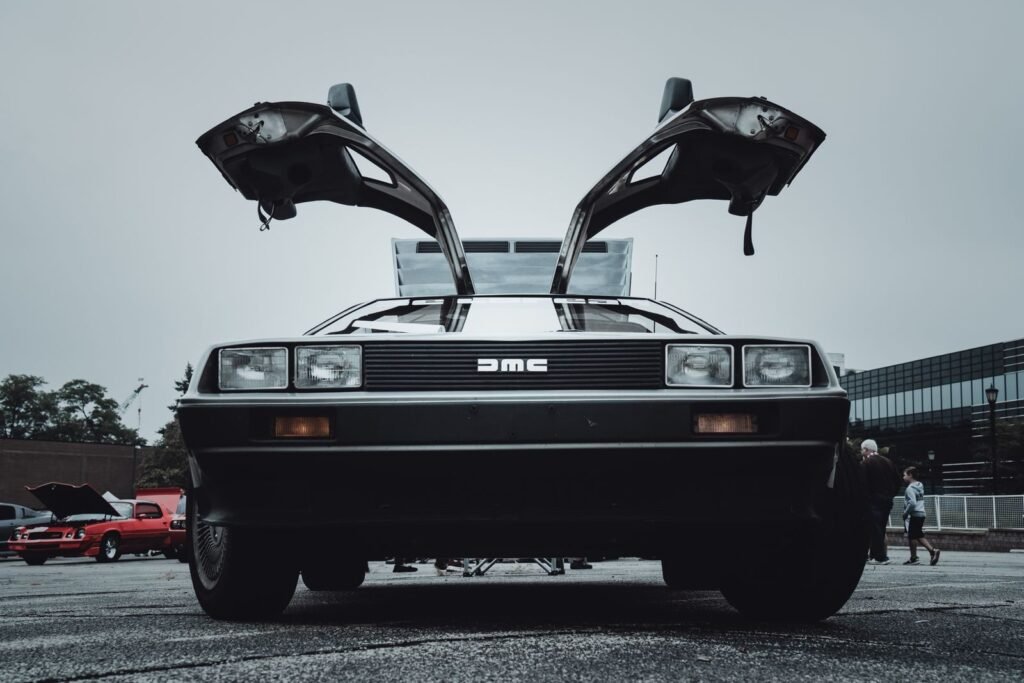
UST, a California-based AI and technology transformation company, completed the acquisition of a majority stake in Italdesign from the Audi Group on September 7, 2026. The UST Italdesign AI mobility acquisition brings together a 30,000-person IT services firm with a 58-year-old Italian automotive design house that shaped the Volkswagen Golf, the DMC DeLorean, and the BMW M1.
The press release frames the deal as uniting Italdesign’s design heritage with UST’s expertise in AI, software-defined vehicles, and digital ecosystem design. Italdesign will continue operating under its own name. Lamborghini, which held Italdesign within the Audi Group, retains a significant stake. Audi remains a strategic partner and client.
No financial terms were disclosed. The acquisition price, revenue projections, and integration cost estimates are absent. The deal was signed in December 2025 and took nine months to clear regulatory approvals.
What follows is what the press release does not say.
What the UST Italdesign AI Mobility Acquisition Involves
UST acquires majority control of Italdesign Giugiaro S.p.A. from Automobili Lamborghini, part of the Audi Group. Italdesign employs 1,330 people across 10 international locations, including Italy, Germany, Spain, China, and a US subsidiary in Bloomfield Hills, Michigan opened in January 2024. Its 2025 turnover was €311.9 million, according to Audi Group factsheets.
The press release emphasizes design heritage and AI convergence. UST employs roughly 23 times as many people as Italdesign — a fact the release does not mention. The buyer has no prior automotive design capability. The acquiring company is a systems integrator, not a carmaker or a design studio.
Layer 1 — Why Now: The SDV Race and Audi’s Divestment
Two forces drive the timing of this acquisition: the automotive industry’s shift toward software-defined vehicles and Volkswagen Group’s broader restructuring.
The Software-Defined Vehicle Race
AlixPartners’ 2026 SDV survey of 500 automakers, 149 tier-1 suppliers, and 358 technology companies found that Western OEMs are outsourcing software control to external partners while Chinese competitors build in-house capability. 41% of Chinese OEMs source SDVs primarily in-house, versus 25-27% in the West. Traditional tier-1 suppliers face what AlixPartners calls an “existential threat” as hyperscalers and platform providers emerge as new “Tier-0.5” partners.
OEMs are investing billions in SDV features, yet subscription returns remain limited. The survey concludes that this is not just a technology race but “an operating-model and lifecycle-economics reset race.” UST’s acquisition of Italdesign positions the combined entity as a partner that can bridge design, engineering, software, and AI — the exact convergence the survey identifies as critical.
Volkswagen Group’s Restructuring
Volkswagen Group is restructuring aggressively. VW announced plans for factory closures and tens of thousands of job cuts across its German operations. The group’s software subsidiary Cariad has absorbed billions in losses. VW’s joint venture with Rivian for software development is worth up to $5.8 billion.
Reuters reported in May 2025 that Volkswagen was weighing whether to sell or find a partner for Italdesign. Six months later, UST signed the agreement. The sale fits VW’s pattern of shedding non-core assets to focus capital on software and electrification.
Audi’s Chinese Dependency
Audi leaned on Chinese development partners for its e5 and e7x models, reflecting a broader Western OEM trend of outsourcing software capability to Chinese partners. Selling Italdesign to a US-based technology firm — rather than a Chinese or European automotive company — aligns with Audi’s need to strengthen Western software relationships while monetizing a non-core asset.
Layer 2 — Competitive Positioning: Who Else Designs and Engineers Cars
The UST Italdesign AI mobility acquisition enters a consolidated market of independent automotive design and engineering firms.
Pininfarina: The Indian-Owned Rival
Pininfarina, founded in 1930, employs approximately 380 people and generates €91.1 million in annual revenue. Tech Mahindra and Mahindra & Mahindra own 76.06% of the company, acquired in 2016. Pininfarina competes directly with Italdesign in automotive design, with clients including Ferrari, Maserati, and Alfa Romeo.
The Pininfarina precedent is instructive. An Indian technology conglomerate acquired an Italian design house to gain automotive credibility. UST’s acquisition of Italdesign follows a similar logic — a technology company buying design heritage to enter the automotive engineering market.
EDAG Group: The Publicly Listed Competitor
EDAG Group, founded in 1969 and headquartered in Wiesbaden, Germany, employs approximately 8,000 people across 70 locations. The company generated €714 million in revenue in 2025 and trades on the stock exchange. EDAG offers 360-degree vehicle development services and has developed its own AI toolchain for engineering applications.
EDAG partnered with Bosch Engineering in February 2024 to offer complete vehicle engineering from a single source. This partnership model — combining independent engineering firms with electronics and software specialists — mirrors what UST and Italdesign aim to deliver.
Magna Steyr: The Contract Manufacturing Giant
Magna Steyr, part of Magna International, has produced over 4 million vehicles across 40 different models for 14 OEMs. Its capabilities span complete vehicle development, engineering, and contract manufacturing. Magna’s scale dwarfs both Italdesign and UST’s automotive operations.
Bosch Engineering: The Tier-1 Software Player
Bosch Engineering, a wholly owned subsidiary of Robert Bosch GmbH, employs 3,300+ associates. The Bosch Group generated €91 billion in sales in 2025 with 413,000 employees and 82,000 in R&D. Bosch brings electronics, software, and systems integration expertise that directly overlaps with UST’s stated ambition in software-defined vehicles.
Where UST and Italdesign Fit
The combined UST-Italdesign entity has 30,000+ UST employees plus 1,330 Italdesign employees. Revenue, based on available data, would total approximately $2 billion plus €312 million. This places the combined entity ahead of Pininfarina but behind EDAG and far behind Magna or Bosch in automotive-specific scale.
Layer 3 — Public-Data Sweep: The Companies Behind the Deal
UST: Temasek-Backed, $2 Billion Revenue, No Prior Automotive Design
UST was founded in 1998 and operates from Aliso Viejo, California. The company employs 30,000+ people across 30+ countries, with major workforce concentrations in India, the United States, and Malaysia. Annual revenue reached approximately $2 billion in 2025, according to the Orange County Business Journal.
Temasek Holdings, Singapore’s sovereign wealth fund, invested $250 million in UST in June 2018. UST’s parent company is Tricase Investment Holdings Inc. The company has used acquisitions to strengthen vertical capabilities, as noted by ION Analytics reporting on Temasek-backed UST’s M&A strategy.
UST has no prior automotive design capability. Its strengths lie in digital engineering, AI, and technology transformation for industries including healthcare, finance, and retail. The Italdesign acquisition represents a vertical expansion into automotive, not a consolidation of existing automotive expertise.
Italdesign: €312 Million Revenue, 1,330 Employees, 60 Years of Heritage
Italdesign was founded in 1968 by Giorgetto Giugiaro, one of the most influential automotive designers of the 20th century. The company has delivered 1,000+ industrial design and transportation projects. Its portfolio includes the VW Golf, DMC DeLorean, Lotus Esprit, BMW M1, Fiat Panda, and Lancia Delta.
The company’s 2025 turnover was €311.9 million. Italdesign has been part of the Volkswagen Group since 2010, operating under Lamborghini’s corporate umbrella. CEO Antonio Casu leads the company. Italdesign opened a US subsidiary in Bloomfield Hills, Michigan in January 2024 to serve American OEMs.
During the sale process, approximately 60 engineers reportedly departed Italdesign amid uncertainty about the company’s future. UST has reportedly guaranteed no site closures and job protection for four years, per union statements.
The Price Silence
No acquisition price has been disclosed. Not when the deal was signed in December 2025. Not when it closed in September 2026.
Baker McKenzie advised UST on the transaction. Linklaters advised the Audi Group. The involvement of two top-tier law firms suggests a complex deal — but financial terms remain confidential.
For context, Tech Mahindra acquired 76.06% of Pininfarina in 2016 for approximately €110 million. Italdesign, with 3.5x the revenue and 3.5x the employees of Pininfarina, could command a proportionally higher price — but this is speculation, not fact.
Layer 4 — The Unasked Question: What Does This Deal Actually Deliver?
The Automotive Expertise Gap
UST employs 30,000+ people. Almost none of them design cars. The press release describes UST’s “strengths in automotive engineering, AI, software-defined vehicles, and digital ecosystem design.” But UST’s public portfolio focuses on digital transformation for healthcare, finance, retail, and manufacturing — not automotive design or vehicle engineering.
The acquisition gives UST instant automotive credibility through Italdesign’s 58-year heritage. But integrating a 1,330-person Italian design house into a 30,000-person IT services firm presents operational challenges the press release does not address.
The Culture Clash Risk
Italdesign operates as a creative design studio with a holistic, multidisciplinary approach. UST operates as a technology transformation company with an AI-driven, outcome-oriented culture. The press release says Italdesign will “continue to operate as Italdesign.” Similar promises accompanied the Pininfarina-Tech Mahindra acquisition in 2016.
Whether Italdesign’s creative culture survives within a systems integrator’s operational framework is an open question. The departure of 60 engineers during the sale process suggests retention risks are real.
The Client Conflict Question
Italdesign serves multiple global OEMs as an independent design and engineering partner. UST now owns majority control. Will Italdesign’s OEM clients view the company as truly independent, or as a subsidiary of a technology firm that may compete for the same OEMs’ software and AI budgets?
Audi will remain a strategic partner and client. But other OEMs — including VW Group competitors — may question whether proprietary designs shared with Italdesign could flow to UST’s broader technology practice.
The Revenue Synergy Silence
The press release does not project combined revenue. Cost synergies, cross-selling opportunities, and market expansion targets are absent. A timeline for integration does not appear. Performance milestones and KPIs remain undisclosed.
Layer 5 — Honest Translation: What the Claims Mean
“Shape the Future of Mobility”
The headline claim — shaping the future of mobility — is aspirational. Italdesign has shaped mobility for 58 years. UST has no track record in automotive design or vehicle engineering. The combined entity’s ability to “shape the future of mobility” depends on whether a systems integrator can effectively leverage a design studio’s heritage.
“AI, Engineering, and Transformation Capabilities”
UST’s AI capabilities are real but not automotive-specific. Its transformation expertise spans multiple industries. The press release does not describe specific AI applications for vehicle design, engineering, or production. No AI-powered design tools, generative design platforms, or autonomous driving capabilities are mentioned.
“Accelerating Innovation from Concept Through Production”
Italdesign already offers concept-to-production services. UST adds software and digital engineering. The combination theoretically creates an end-to-end mobility partner. But the press release does not name any specific vehicle program, OEM client, or production timeline that will benefit from this integration.
“Keeping Human Creativity at the Center of Innovation”
This phrase appears designed to reassure Italdesign’s creative staff and clients. A systems integrator claiming to keep human creativity at the center while pursuing AI-driven operational efficiency creates a tension the press release acknowledges but does not resolve.
“First Full Integrator of Hardware and Software Worldwide”
AutoNext reported that UST aspires to become “the first full integrator of hardware and software worldwide.” This claim is extraordinarily broad. Magna Steyr integrates hardware and software at production scale. Bosch integrates electronics, software, and systems across automotive and industrial sectors. Both operate at far greater scale than the combined UST-Italdesign entity.
Layer 6 — Decision-Maker Framing: Who Should Care
For Automotive OEMs
If you work with Italdesign for design or engineering services, your partner now has a new majority owner. Ask about data security, intellectual property protection, and whether UST will have access to your proprietary designs. Question the four-year job protection guarantee and how it affects key engineering talent. Clarify Lamborghini’s retained stake and how Audi’s ongoing partnership influences Italdesign’s independence.
For Technology Companies in Automotive
The UST Italdesign AI mobility acquisition signals that IT services firms view automotive design and engineering as an attractive vertical. Expect more technology companies to acquire automotive design and engineering firms. The Pininfarina-Tech Mahindra deal in 2016 set the precedent. UST’s acquisition of Italdesign in 2026 confirms the trend.
For Italdesign Employees
UST has reportedly guaranteed no site closures and job protection for four years. But the departure of 60 engineers during the sale process indicates uncertainty. The key question is whether UST invests in Italdesign’s capabilities or treats it as a client acquisition channel for its broader technology services.
For Competitors
EDAG, Magna Steyr, Bosch Engineering, and other integrated design and engineering firms should watch whether UST-Italdesign can deliver genuine end-to-end mobility solutions. If the combination succeeds, it creates a new competitor with global scale. If it fails, it validates the independent design house model.
For Investors
UST is privately held by Tricase Investment Holdings, with Temasek Holdings as a significant investor. Italdesign’s financials will fold into UST’s balance sheet. The acquisition price remains undisclosed. Returns depend on whether UST can cross-sell its AI and digital engineering services to Italdesign’s OEM clients — and whether Italdesign’s design capabilities open automotive doors for UST’s broader portfolio.
What Is Genuinely New vs. What Is Established
Genuinely New
UST’s entry into automotive design and vehicle engineering through acquisition. The combination of a 30,000-person IT services firm with a 1,330-person Italian design house. UST’s aspiration to become a full hardware-software integrator for the automotive industry.
Established
Italdesign’s design and engineering capabilities. The convergence of design, engineering, software, and AI in automotive development. The trend of technology companies acquiring Italian automotive design houses. Software-defined vehicles as a market force.
Unclear
The acquisition price. The integration plan and timeline. Can UST retain Italdesign’s creative talent? Will OEMs view Italdesign as independent under UST ownership? Can UST’s AI capabilities be effectively applied to vehicle design and engineering?
What specific automotive programs the combined entity will pursue also remains unknown.
The Bigger Picture
The UST Italdesign AI mobility acquisition is a technology company buying its way into the automotive industry. UST lacks automotive design heritage. Italdesign lacks software and AI depth. Together, they theoretically bridge the gap.
But the press release raises more questions than it answers. The acquisition price is undisclosed. The integration timeline is missing. Named clients are absent. Specific AI applications are not described.
Revenue projections and performance milestones do not appear either.
The automotive industry is executing the most significant technological transformation in its history. Software-defined vehicles, electrification, autonomous driving, and AI-driven design are reshaping how cars are conceived, engineered, and produced. Western OEMs are outsourcing software development. Chinese competitors are building in-house. Traditional tier-1 suppliers face existential pressure.
Into this ferment steps UST — a Temasek-backed IT services firm from Orange County — acquiring a 58-year-old Italian design house from Audi. The ambition is to become the first full integrator of hardware and software worldwide.
The real question is whether a systems integrator can effectively steward a creative design legacy. Tech Mahindra’s acquisition of Pininfarina in 2016 offers a cautionary data point. Pininfarina’s revenue has grown modestly, but the design house has not become a dominant force in automotive software or AI.
Can UST and Italdesign achieve what Tech Mahindra and Pininfarina have not — genuine integration of design heritage, engineering excellence, and AI-driven transformation? The answer will determine whether this acquisition shapes the future of mobility or simply reshuffles the ownership of a design legend.
The press release does not answer this question. Time will.
Note from the Editor’s Desk
This article is based on the press release issued by UST via PR Newswire on September 7, 2026, and additional publicly available information including the Audi Group Italdesign 2025 factsheet dated March 2026, Audi.com press release dated December 10, 2025, Reuters reporting from December 10, 2025, Automotive World reporting from September 7, 2026, The Hindu BusinessLine reporting from September 7, 2026, AutoNext.co reporting from August 31, 2026, Unite.AI reporting from September 7, 2026, Orange County Business Journal reporting, Baker McKenzie press release from December 2025, UST LinkedIn company page, Italdesign LinkedIn company page, AlixPartners SDV Survey 2026, Valuates Reports automotive design contracting services market analysis, and EDAG Group company data.
UST is a privately held company headquartered in Aliso Viejo, California, owned by Tricase Investment Holdings Inc., with Temasek Holdings as a significant investor. Italdesign Giugiaro, headquartered in Moncalieri, Italy, will see Lamborghini retain a significant stake. The acquisition price was not disclosed.
UST’s 2025 revenue figure of approximately $2 billion is based on Orange County Business Journal reporting and has not been independently confirmed by UST.
Approximately 60 engineers reportedly departed Italdesign during the sale process, according to ItalPassion reporting. UST’s job protection guarantee of four years is based on union statements.
Contact: techrecasteditor@gmail.com