Enterprise AI Technology Stack 2026 is no longer simply a foundation model connected to a vector database. The architecture is becoming a coordinated system of models, data, agents, tools, identity, infrastructure, observability and policy controls.
That change matters because enterprise AI is moving from generating answers to executing work.
The first wave of generative AI focused on chatbots, copilots and retrieval-augmented generation (RAG). The next wave is increasingly concerned with agents that can interpret goals, retrieve enterprise knowledge, invoke tools, interact with business applications and complete multi-step workflows.
Research from McKinsey found that 62% of surveyed organizations were already experimenting with AI agents in 2025, although most organizations had not yet scaled AI across the enterprise. Gartner separately forecasts that 40% of enterprise applications will incorporate task-specific AI agents by the end of 2026, compared with less than 5% in 2025.
The implication is significant: the model is becoming one component of an enterprise AI system rather than the system itself.
Enterprise AI Technology Stack: Why the Enterprise AI Stack Is Changing
The architecture of enterprise AI has evolved rapidly.
In 2023, many deployments could be represented simply:
Application → LLM → Prompt → Vector Database → Enterprise Documents
That architecture remains useful. It is no longer sufficient for many production workloads.
Modern enterprise systems increasingly require:
- Multiple models and model-routing strategies
- Structured and unstructured enterprise data
- Hybrid retrieval
- Knowledge graphs where relationships matter
- Tool and API access
- Agent memory and state
- Workflow orchestration
- Identity and authorization
- Observability and evaluation
- Security controls
- Human oversight
- Audit trails
- Cost controls
- Regulatory compliance
- Infrastructure optimized for inference
RIVER Group’s 2026 reference architecture describes five major layers: infrastructure, data, intelligence, orchestration and governance.
AWS similarly describes enterprise agentic architectures in terms of applications, agents, model access, tools and knowledge bases, with security, observability and discoverability spanning the architecture.
These models are not contradictory. They are different abstractions of essentially the same emerging architecture.
The Enterprise AI Technology Stack 2026: Six Functional Layers
There is no single universally accepted enterprise AI stack taxonomy.
A practical architecture for 2026 can therefore be expressed as six functional layers, with governance and security operating across all six.
| Layer | Primary responsibility |
|---|---|
| 1. Applications | User experiences and business workflows |
| 2. AI Engineering & Lifecycle | Development, evaluation, deployment and operations |
| 3. Models & Intelligence | Foundation models, specialized models and routing |
| 4. Agents & Orchestration | Planning, tool use, memory and workflow execution |
| 5. Data & Knowledge | Enterprise data, retrieval, search and knowledge representation |
| 6. Infrastructure | Compute, networking, storage and deployment environments |
| Cross-layer | Security, identity, governance, observability and compliance |
This is better understood as a reference architecture rather than a rigid technology stack.
Enterprises may combine several layers within one platform. They may also source different layers from different vendors.
Layer 1: AI Applications — Where Employees and Customers Experience AI
The application layer is the visible part of the stack.
It includes:
- AI assistants
- Customer-service applications
- Sales applications
- IT service management
- Developer tools
- Enterprise search
- Document intelligence
- Finance applications
- Industry-specific AI applications
- Agentic workflow interfaces
- AI-native user experiences
The major architectural change is that applications increasingly become action-oriented.
A conventional assistant might answer:
“What is our refund policy?”
An agentic application may instead:
- Find the relevant policy.
- Check the customer’s account.
- Determine eligibility.
- Calculate the permitted refund.
- Submit the request.
- Record the transaction.
- Notify the customer.
This distinction is crucial.
Gartner expects enterprises to increasingly shift from assistive intelligence toward outcome-focused workflows by 2028. Its definition of the emerging model centers on delegated authority, identity, permissions, policy enforcement, system-of-record access and auditability.
The application therefore becomes less of a screen and more of a business outcome interface.
Layer 2: AI Engineering and Lifecycle Management
The second layer contains the engineering machinery required to turn AI experiments into reliable production systems.
It includes:
- Prompt and instruction management
- Agent development frameworks
- Evaluation frameworks
- Model testing
- Dataset management
- Tracing
- Experiment tracking
- Deployment pipelines
- Version control
- Monitoring
- Regression testing
- Safety testing
- Red teaming
- Performance optimization
This layer is becoming increasingly important because an enterprise agent is not simply a prompt.
It is a software system.
OpenAI’s agent tooling, for example, combines agent development with tools, handoffs, guardrails and tracing. Its 2026 Agents SDK updates added controlled sandbox execution and infrastructure for agents that inspect files, run commands and perform longer tasks.
Microsoft Foundry similarly provides agent hosting, tools, model access, observability, identity and security capabilities within its platform.
The enterprise requirement is therefore moving from MLOps toward a broader AI engineering and agent lifecycle discipline.
Layer 3: Models and the Intelligence Plane
Foundation models remain fundamental.
But enterprises increasingly have reasons not to depend on a single model.
Different workloads may require different characteristics:
- High reasoning capability
- Low latency
- Low inference cost
- Long context
- Multimodal capability
- Strong coding performance
- Data-residency compatibility
- Private deployment
- Domain specialization
- Predictable throughput
The resulting architecture can include frontier models, smaller models, open-weight models and specialized models.
The important correction is that there is no reliable universal rule that enterprises use exactly three to seven models in production. Model portfolios vary considerably by organization, application and regulatory environment.
What is becoming more important is model routing.
A routing layer can decide which model should handle a request based on:
- Task complexity
- Required reasoning capability
- Latency
- Cost
- Privacy
- Geography
- Availability
- Data sensitivity
- Output requirements
The economics make this increasingly practical.
Stanford’s 2025 AI Index found that the inference cost of a system performing at approximately GPT-3.5 capability fell more than 280-fold between November 2022 and October 2024. It also reported annual hardware price-performance improvements of approximately 30%.
That does not validate a blanket claim that enterprise AI model costs fell 80–90% since 2024. The more defensible conclusion is that falling inference costs and increasingly capable smaller models make fit-for-purpose model selection economically attractive.
Layer 4: Agents and Orchestration Become the Control Center
This is arguably the most consequential architectural change.
The agent layer connects intelligence to action.
An enterprise agent typically needs:
- A model
- Instructions
- Context
- Memory
- Tools
- Enterprise data
- Identity
- Permissions
- Planning capability
- State management
- Error handling
- Observability
- Policy controls
Orchestration determines how these components interact.
A simple workflow may be:
User → Agent → Model → Tool → Result → User
A complex workflow may become:
User → Supervisor Agent → Specialist Agent → Knowledge Retrieval → Business API → Verification Agent → Human Approval → Transaction → Audit
Amazon Bedrock, for example, supports supervisor-and-collaborator multi-agent architectures in which a supervisor delegates tasks to specialized agents.
Microsoft Foundry supports both managed prompt agents and hosted agents, including agents built with external frameworks such as LangGraph and other agent SDKs.
OpenAI’s agent platform direction similarly emphasizes tools, orchestration, tracing, guardrails and controlled execution rather than model output alone.
The critical principle: bounded autonomy
Enterprise agents should not be treated as unrestricted autonomous employees.
A safer production pattern is:
Plan → Verify → Execute → Checkpoint → Record
For example, an agent may independently research a customer’s problem but require approval before issuing a financial credit above a defined threshold.
This creates graduated autonomy.
Low-risk actions can be automated.
Medium-risk actions can require additional verification.
High-risk actions can require human approval.
This distinction is becoming essential. Gartner predicts that by 2027, 40% of enterprises will demote or decommission autonomous AI agents because of governance failures. Gartner specifically warns against treating agent governance as binary and emphasizes the relationship between autonomy, scope and access.
Layer 5: Data and Knowledge — The Foundation Beneath Every Agent
AI agents cannot become enterprise systems without enterprise data.
The data layer includes:
- Data warehouses
- Data lakes and lakehouses
- Operational databases
- Document repositories
- Search indexes
- Vector databases
- Knowledge graphs
- Metadata catalogs
- Data pipelines
- Event streams
- APIs
- Enterprise knowledge bases
RAG remains important, but RAG itself is becoming more sophisticated.
A production retrieval system may combine:
Keyword search + semantic/vector search + metadata filtering + reranking + structured data + graph relationships
This is generally more useful than treating vector search as the entire knowledge architecture.
Where knowledge graphs fit
Knowledge graphs are valuable when relationships matter.
Examples include:
- Customer → Account → Product → Contract
- Employee → Department → Role → Permission
- Supplier → Contract → Product → Geography
- Patient → Condition → Treatment → Provider
- Company → Subsidiary → Executive → Regulatory filing
A vector database answers questions about semantic similarity.
A graph can represent explicit relationships.
These approaches can complement each other.
However, the statement that knowledge graphs have universally become the new enterprise standard is too broad. Their adoption depends on the complexity of the domain, data maturity and business requirements.
The stronger conclusion is:
Hybrid retrieval is becoming an important enterprise pattern, while graph-enhanced retrieval is particularly valuable for relationship-heavy workloads.
AWS explicitly describes enterprise knowledge bases that can use vector stores and graph storage, with role-based access to enforce least-privilege and need-to-know principles.
From RAG to Context Engineering
Another major shift is from simply retrieving documents to engineering the right context for each decision.
Context can include:
- User identity
- Role
- Conversation history
- Enterprise policies
- Retrieved documents
- Structured records
- Current system state
- Tool results
- Previous actions
- Organizational relationships
- Real-time events
This makes context management an architectural discipline.
The question is no longer merely:
“Which documents should the LLM retrieve?”
It becomes:
“What information, permissions, state and tools should this agent have at this precise point in the workflow?”
That is a much more demanding systems problem.
MCP, APIs and the Emerging Tool Layer
Agents need tools.
Those tools can include:
- CRM systems
- ERP platforms
- Databases
- Search engines
- Payment systems
- Ticketing platforms
- Collaboration applications
- Developer environments
- Internal APIs
- External services
The Model Context Protocol, or MCP, is one important development in this area.
Anthropic introduced MCP in 2024 as an open protocol designed to standardize connections between AI systems and external data sources and business tools.
OpenAI subsequently added support for remote MCP servers in its Responses API.
This points toward an emerging tool interoperability layer.
However, MCP should not be treated as a replacement for enterprise API management, identity management or security architecture.
A tool protocol solves connectivity.
It does not automatically solve authorization.
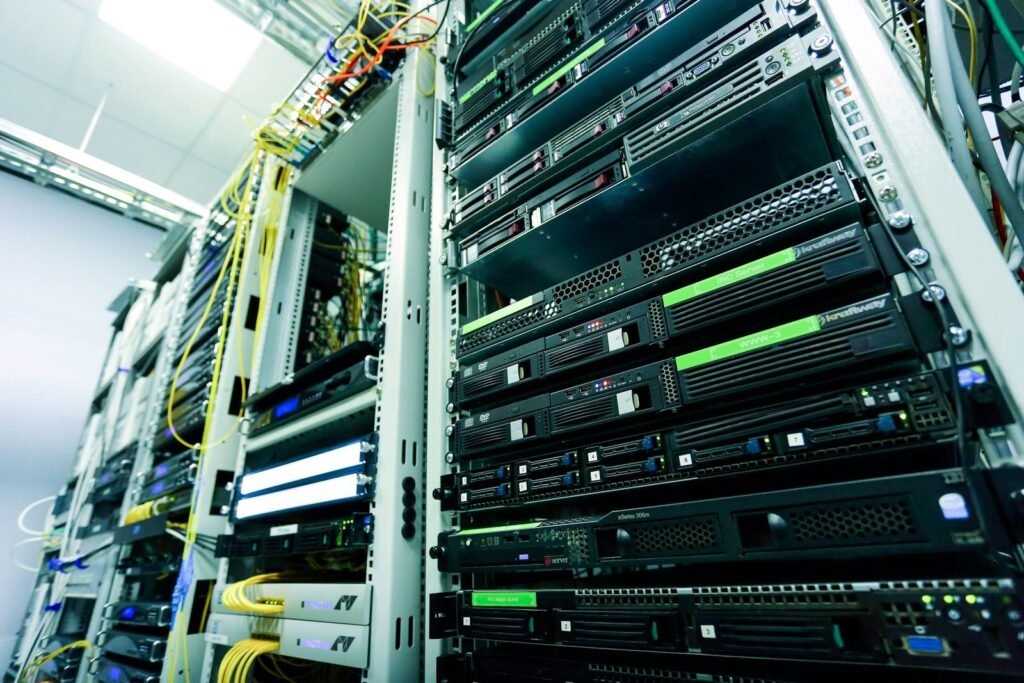
Layer 6: Infrastructure — From Training-Centric to Inference-Centric
The infrastructure layer includes:
- CPUs
- GPUs
- AI accelerators
- Memory
- Storage
- Networking
- Containers
- Kubernetes
- Cloud platforms
- Private data centers
- Edge infrastructure
- Model-serving infrastructure
Training large foundation models receives enormous attention.
For most enterprises, however, the immediate infrastructure challenge is inference.
The infrastructure must support:
- High request volumes
- Low latency
- Long-running agent workflows
- Concurrent tool calls
- Model switching
- Data locality
- Security isolation
- Cost optimization
- Reliability
- Disaster recovery
The architecture is therefore becoming hybrid.
An enterprise may use public cloud for some workloads, private infrastructure for sensitive workloads and edge infrastructure for latency-sensitive applications.
The choice increasingly depends on:
Cost + latency + sovereignty + security + workload characteristics.
Governance Is Not a Layer: It Is the Enterprise AI Control Plane
One of the most important architectural corrections is to stop thinking of governance as a document that sits above the technology.
Governance must operate inside the system.
The Enterprise AI Technology Stack 2026 therefore requires a cross-layer control plane covering:
- Identity
- Access control
- Policy enforcement
- Data permissions
- Model permissions
- Tool permissions
- Human approvals
- Audit logs
- Risk classification
- Content safety
- Privacy
- Security
- Monitoring
- Evaluation
- Incident response
- Cost controls
Microsoft’s current Foundry architecture illustrates this direction with identity, RBAC, content filters, network isolation, observability and centralized control capabilities.
IBM is also describing a move from periodic AI governance toward continuous AI assurance, connecting AI assets, controls, risks, accountability and business outcomes.
The architectural principle is simple:
Governance must travel with the AI action.
Enterprise AI Technology Stack: Governance-as-Code Becomes Governance-at-Runtime
The phrase “governance-as-code” captures an important shift.
Instead of relying entirely on policies such as:
“Employees must not expose confidential information to external AI systems.”
The system should technically enforce the policy.
For example:
If data classification = confidential → external model call = blocked.
Or:
If transaction value > threshold → human approval required.
Or:
If agent lacks permission for system X → tool call denied.
This is the difference between policy documentation and policy enforcement.
The control system can include:
| Control | Enterprise function |
|---|---|
| Identity | Establish who or what is acting |
| RBAC/ABAC | Determine permitted actions |
| Policy engine | Enforce organizational rules |
| Guardrails | Control inputs and outputs |
| Tool authorization | Restrict agent actions |
| Audit trail | Record decisions and actions |
| Observability | Monitor system behavior |
| Evaluation | Measure quality and reliability |
| Kill switch | Stop unsafe systems |
| Human approval | Control high-risk decisions |
NIST’s Generative AI Profile provides a framework for identifying and managing generative-AI-specific risks across the AI lifecycle.
ISO/IEC 42001 provides an international management-system standard for establishing, implementing, maintaining and continually improving an AI management system.
These frameworks complement technical controls. They do not replace them.
Enterprise AI Technology Stack: Identity Becomes More Important as Agents Gain Authority
Traditional enterprise identity systems were designed primarily around:
- Employees
- Customers
- Devices
- Applications
- Services
Agentic architectures introduce another actor:
The AI agent.
An agent may initiate API calls, access documents, modify records or trigger workflows.
That creates difficult questions:
- Which agent performed the action?
- On whose authority?
- With which credentials?
- What data could it access?
- Which policy authorized the action?
- What model made the decision?
- What tool was invoked?
- What happened afterward?
Microsoft’s current agent infrastructure explicitly provides agent identities and administrative controls.
This suggests a broader architectural evolution toward machine identity and agent identity as first-class enterprise security concerns.
Enterprise AI Technology Stack: Observability Moves From Infrastructure to AI Behavior
Traditional application monitoring measures:
- CPU
- Memory
- Latency
- Errors
- Availability
AI systems need more.
Enterprise AI observability must increasingly track:
- Prompt and context
- Model selected
- Retrieval quality
- Tool calls
- Agent decisions
- Token consumption
- Latency
- Failure rates
- Hallucination indicators
- Policy violations
- Human interventions
- Cost per workflow
- Business outcome
This is especially important because an agent can technically remain “available” while producing increasingly poor decisions.
The enterprise therefore needs behavioral observability, not just infrastructure observability.
Security Changes When AI Can Act
A chatbot that produces an incorrect answer is problematic.
An agent that produces an incorrect answer and then executes an irreversible transaction is considerably more dangerous.
The attack surface consequently expands to include:
- Prompt injection
- Indirect prompt injection
- Data poisoning
- Malicious tools
- Excessive permissions
- Credential theft
- Insecure agent-to-agent communication
- Data leakage
- Model manipulation
- Supply-chain attacks
- Unsafe computer-use actions
This is why least privilege becomes central to agent architecture.
An agent should receive only the permissions required for the task.
It should also have explicit boundaries around:
- Which data it can see
- Which tools it can invoke
- Which systems it can modify
- Which actions require approval
- How long credentials remain valid
Regulation Is Becoming an Architectural Requirement
Regulation can no longer be treated solely as a legal department issue.
The EU AI Act is an important example.
Its requirements include risk-management obligations for high-risk AI systems, human oversight and logging requirements for deployers.
That means architecture must increasingly support:
- Risk classification
- Documentation
- Logging
- Human oversight
- Traceability
- Data governance
- Monitoring
- Incident management
Enterprises operating across jurisdictions must also account for privacy, cybersecurity, sector-specific regulation and data-residency requirements.
The architecture therefore needs to be compliance-aware by design.
The Emerging Enterprise AI Vendor Landscape
No single vendor currently owns the entire stack.
The ecosystem is fragmented across several categories.
Infrastructure
Representative providers include:
- AWS
- Microsoft Azure
- Google Cloud
- NVIDIA
- Dell
- HPE
Foundation models
The market includes:
- OpenAI
- Anthropic
- Meta
- Mistral
- DeepSeek
- Alibaba/Qwen
- Other open-weight and specialized model providers
AI platforms
Major cloud AI platforms increasingly combine:
- Model catalogs
- Agent runtimes
- Retrieval
- Tools
- Security
- Evaluation
- Observability
- Governance
Microsoft Foundry, for example, currently provides access to a large model catalog and integrates agents, tools, observability and governance capabilities.
Agent frameworks
The developer ecosystem includes frameworks such as:
- LangGraph
- CrewAI
- Microsoft Agent Framework
- OpenAI Agents SDK
- Other open-source and commercial frameworks
Data and retrieval
Representative technologies include:
- Databricks
- Snowflake
- Elasticsearch
- Pinecone
- Weaviate
- Qdrant
- pgvector
- Neo4j
Enterprise applications
Agentic functionality is increasingly embedded into:
- CRM
- ERP
- ITSM
- HR
- Customer service
- Marketing
- Development
- Security
- Finance
The critical lesson is that enterprises should select architectures, not simply products.
How Enterprises Should Evaluate an AI Stack
The Enterprise AI Technology Stack 2026 should be evaluated against six fundamental criteria.
1. Business value
Does the system improve:
- Revenue?
- Cost?
- Speed?
- Quality?
- Customer experience?
- Employee productivity?
- Risk management?
A technically impressive agent without measurable business value should not reach production.
2. Reliability
Evaluate:
- Failure rates
- Recovery
- Latency
- Tool-call reliability
- Model fallback
- Human escalation
- Disaster recovery
3. Security and governance
Ask:
- Can permissions be enforced at runtime?
- Can every action be audited?
- Can sensitive data be restricted?
- Can unsafe agents be stopped?
- Can controls be centrally managed?
4. Integration
The AI system must connect with the enterprise systems where work actually happens.
API maturity and tool interoperability can matter more than model benchmarks.
5. Portability
Avoid unnecessary dependence on:
- One model
- One cloud
- One vector database
- One agent framework
- One proprietary tool protocol
Portability is increasingly a strategic capability.
6. Total cost of ownership
Measure the complete workflow cost.
That includes:
Model inference + retrieval + tool calls + orchestration + infrastructure + observability + governance + human intervention.
The cheapest model is not necessarily the cheapest system.
What the 2023-Era AI Stack Needs to Change
Organizations still running early RAG architectures should not automatically rebuild everything.
Instead, modernization can occur incrementally.
Step 1: Inventory the AI estate
Identify:
- Models
- Applications
- Agents
- Prompts
- Data sources
- Vector databases
- APIs
- Tools
- Vendors
- Permissions
Step 2: Establish identity and governance
Implement:
- Agent identities
- Least-privilege access
- Audit logging
- Risk classification
- Human approval points
Step 3: Improve retrieval
Start with:
Keyword + semantic retrieval + metadata filtering + reranking.
Add graph-based retrieval where relationships materially improve results.
Step 4: Introduce model routing
Use different models when the economics or technical requirements justify it.
Step 5: Introduce agents selectively
Do not convert every workflow into an agent.
Use assistants for information retrieval.
Use automation for predictable workflows.
In addition, use agents when dynamic decision-making and tool use create measurable value.
Step 6: Measure business outcomes
Track:
- Resolution time
- Cost per transaction
- Revenue impact
- Error rate
- Customer satisfaction
- Human intervention
- AI operating cost
What New AI Programs Should Build in 2026
A greenfield enterprise should resist the temptation to buy every new AI technology.
A more disciplined sequence is:
Business process → Data → Identity → Model → Retrieval → Tools → Orchestration → Governance → Observability → Optimization
Not:
Model → chatbot → experiment → governance later.
The second approach creates technical debt quickly.
The 2027–2030 Outlook
The next phase will not simply involve better models.
It will involve better systems around models.
AI-native enterprises
AI will increasingly become embedded in operating models rather than isolated applications.
The question will shift from:
“Where can we use AI?”
to:
“How should this business process operate when intelligent systems can participate continuously?”
Agent ecosystems
Gartner expects collaborative agents to become increasingly important, with one-third of agentic implementations projected to involve multiple agents with different skills by 2027. It also forecasts agent ecosystems operating across applications by 2028.
Outcome-based enterprise software
Agentic systems could change the economics of SaaS.
Gartner estimates that up to $234 billion of enterprise application software spending could be exposed to “agentic arbitrage” through 2030 because agents can perform tasks across multiple applications without requiring users to interact with every underlying interface.
This could fundamentally change the traditional seat-based software model.
Agent identity and governance
As agents become more numerous, organizations will need:
- Agent registries
- Agent identities
- Permission frameworks
- Risk scores
- Runtime policies
- Agent inventories
- Lifecycle management
- Kill mechanisms
The enterprise will increasingly need something resembling AI fleet management.
Smaller and specialized models
As inference economics improve, enterprises will increasingly combine large reasoning models with smaller models optimized for:
- Classification
- Extraction
- Routing
- Summarization
- Translation
- Domain-specific tasks
This will create a more heterogeneous model environment.
Synthetic testing environments
Complex agents will increasingly require simulated environments where organizations can test behavior before granting production permissions.
This will be especially important for:
- Financial transactions
- Cybersecurity
- Supply chains
- IT operations
- Healthcare
- Industrial systems
AI becomes a sensing layer
AI will increasingly monitor enterprise activity continuously.
Instead of waiting for a quarterly report to reveal a problem, intelligent systems can detect:
- Unusual customer behavior
- Operational anomalies
- Cost increases
- Security threats
- Workflow bottlenecks
- Employee friction
- Emerging demand
AI therefore becomes not just an execution layer but an enterprise sensing layer.
The Strategic Architecture: Intelligence, Action and Control
The future enterprise AI architecture can ultimately be reduced to three interacting planes.
Intelligence plane
Contains:
- Foundation models
- Specialized models
- Reasoning
- Embeddings
- Knowledge
- Retrieval
Action plane
Contains:
- Agents
- Tools
- APIs
- Workflows
- Applications
- Automation
Control plane
Contains:
- Identity
- Security
- Governance
- Policy
- Observability
- Evaluation
- Audit
- Cost management
The control plane is what makes the other two usable at enterprise scale.
Without intelligence, there is no AI capability.
Without action, intelligence remains largely informational.
Finally, without control, action creates unacceptable operational risk.
The Most Important Architectural Principle
The Enterprise AI Technology Stack 2026 should not be designed around the question:
“Which is the best AI model?”
The more important questions are:
What should the AI be allowed to know?
What should it be allowed to do?
Which systems can it access?
Under whose authority can it act?
When must a human intervene?
How do we know whether its decision was correct?
How much does each completed workflow cost?
Can we replace the model, vendor or platform later?
These questions move AI architecture from experimentation into enterprise engineering.
The Bottom Line
The Enterprise AI Technology Stack 2026 is not one product and not one architecture.
It is a modular operating architecture connecting intelligence, enterprise knowledge, agents, tools, applications and infrastructure under continuous security and governance controls.
The most important changes are not simply larger models.
They are:
- Multi-model intelligence rather than single-model dependence
- Hybrid retrieval rather than vector search alone
- Agents and orchestration rather than prompt-and-response
- Tool interoperability rather than isolated AI
- Agent identity rather than human-only IAM
- Runtime governance rather than policy documents
- AI observability rather than conventional infrastructure monitoring
- Inference economics rather than training economics alone
- Outcome measurement rather than AI feature counts
The market is still evolving. There is no single “correct” six-layer or five-layer architecture. Vendors are increasingly combining layers, while enterprises are building heterogeneous stacks.
That is precisely why modularity, interoperability, governance and portability may prove more valuable than choosing today’s highest-performing model.
The winning enterprise AI architecture through 2030 will probably not be the one with the most sophisticated model.
It will be the one that can reason reliably, access the right information, take the right action, operate within clearly defined authority, prove what happened and continuously improve at an economically sustainable cost.
In other words, the future of enterprise AI is less about building a smarter model.
It is about building a smarter, safer and measurable enterprise system around intelligence.