
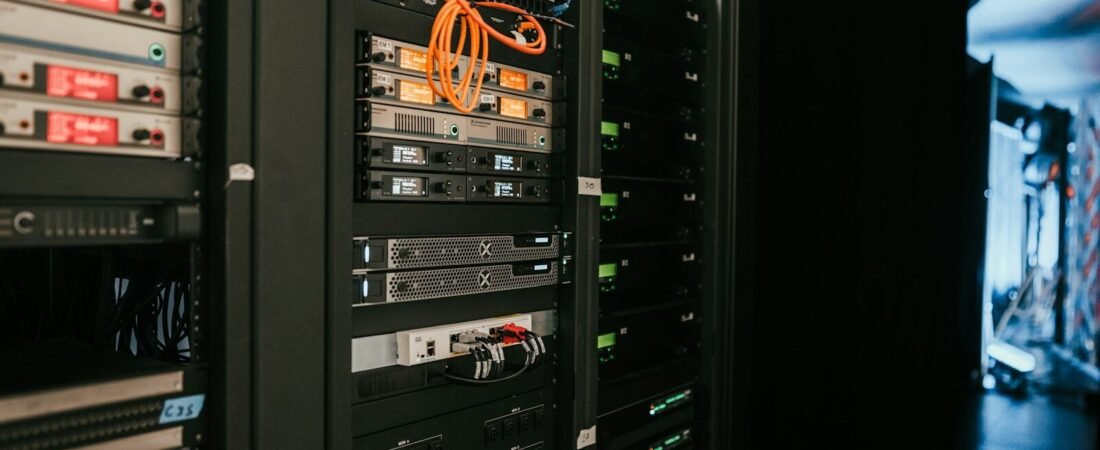
Nexsan Packs Nearly 3 Petabytes of All-Flash Storage Into 2U
Nexsan has announced the Unity NV12000, a unified storage platform that puts nearly three petabytes of raw all-flash capacity into a 2U head unit using 122.88 terabyte QLC NVMe drives, and scales to roughly 15 petabytes in 10U with a companion NVMe JBOF expansion enclosure. The platform supports block, file and S3 object protocols, carries immutable snapshots and object locking, and runs Unity OS 7.4 across the NV-Series family. The density figures are the announcement. What the release does not contain is a single performance number.
What the density actually means
Storage density is a compound claim and worth unpacking. A 2U chassis holding nearly three petabytes requires drives of 122.88 terabytes, a capacity point QLC NAND has only recently reached. Twenty-four such drives in a 2U enclosure gives roughly 2.88 petabytes raw, which matches the claim.
The arithmetic matters because density is not one specification but a relationship between drive capacity, drive count and chassis size. Doubling drive capacity halves the number of drives needed for the same total, and that halves the controllers, the power, the cabling and the failure surface. It also halves the write endurance per unit of capacity, because QLC trades endurance for density, and that trade is the one the release does not discuss.
The 10U figure follows the same logic. Reaching 15 petabytes in 10U means an average of three petabytes per 2U, which suggests the JBOF adds capacity without adding head units. That is the configuration a large data lake would actually buy, and it is the one where the density advantage compounds.
The consolidation argument
The consolidation argument deserves examination on its own terms because it is the commercial case rather than the technical one. A 2U array holding nearly three petabytes of all-flash storage replaces a far larger quantity of lower-density flash, and the saving is not only in rack units. Every drive removed removes a controller channel, a cable, a power draw and a heat load, and every enclosure removed removes a support contract and a firmware update cycle.
For a data centre where power and cooling are the binding constraint, that is the argument that matters. Density in rack units is a convenience; density per watt is an economic limit, and all-flash storage competes for the same power budget as the compute it serves.
The QLC trade-off
QLC NAND stores four bits per cell, which is how a 122.88 terabyte drive fits in a standard form factor. The cost is endurance: writing four bits per cell requires finer voltage control and more error correction than storing one, two or three, and the drive tolerates fewer program-erase cycles as a result.
For a read-heavy data lake or a training dataset written once and read many times, that trade is straightforward. For a write-heavy pipeline, an inference log or a media ingest target, it is the specification that decides the purchase. The release gives no endurance rating in drive writes per day, so a buyer cannot make that judgement from the document.
The workload demands
The workload demands the release names differ from each other, and that difference is the point. A training dataset is written once and read repeatedly in large sequential passes, which suits high-capacity QLC flash well. A vector database serves random lookups at low latency and high volume, which stresses IOPS rather than capacity. Retrieval-augmented generation combines the two, reading embeddings and then fetching source documents.
An inference pipeline adds a third pattern: sustained streaming writes of logs and outputs alongside reads. A platform optimised for one pattern may not serve the others, and the release treats all-flash storage as a single answer to all three.
The missing performance numbers
A storage platform announcement without IOPS, throughput or latency is unusual, and this one has none of the three.
That matters more than it might appear. The applications named are exactly the ones where performance determines whether a platform is usable. Training datasets and vector databases need high random-read throughput. Retrieval-augmented generation needs low-latency access to embeddings. Inference pipelines need sustained bandwidth. GPU-intensive workloads need storage that keeps accelerators fed, because an idle GPU is the most expensive component in the rack.
Density without performance is a capacity story, and capacity is the cheaper half of the problem. A platform that holds three petabytes and cannot feed them to a GPU cluster at the required rate is a very large archive rather than an AI storage tier.
Unified protocols and why they matter
The platform supports block storage through iSCSI and Fibre Channel, file storage through NFS and SMB, and S3 object storage through NexObject. That combination is the substantive part of the unified claim.
Most enterprises run separate infrastructure for each protocol. A block array serves databases and virtual machines, a NAS serves file shares, and an object store serves the data lake and backup target. Consolidating those onto one platform reduces the number of systems a team operates, and it lets a dataset be accessed through whichever protocol the application expects without being copied between tiers.
The object support is the newer and more consequential element. Vector databases and retrieval pipelines typically address storage through S3 APIs, so an array that speaks both block and object can hold training data and serve embeddings from the same pool rather than requiring a separate object tier.
The protection stack
Four protection mechanisms appear, and they address different threats.
Unity Immutable Snapshots prevent retention settings from being changed after they are applied, which closes the specific gap ransomware exploits: an attacker with administrative credentials who can delete or shorten snapshot retention has defeated the backup. Making retention immutable at the platform level removes that capability from the attacker.
NexObject S3 object locking does the same for object data using the standard write-once retention mechanism. AES-256 encryption covers data at rest, and Kerberos-secured NFS covers authentication on file shares. Optional Assureon integration adds Nexsan’s archival and compliance platform for retention-driven workloads.
Together those describe a defence that assumes an attacker will obtain credentials, which is the correct assumption to design against and a more honest position than treating the perimeter as intact.
The market context
The market context is that dense all-flash storage has become a crowded category. Established array vendors, server manufacturers selling software-defined storage, and cloud providers offering local flash tiers all compete on some combination of density, performance and price. Nexsan’s position is density at a stated cost advantage, which is a defensible niche rather than a unique one.
What the release does not do is compare. No competing array is named, no price per terabyte is given, and no benchmark places the platform against an alternative. For a buyer choosing between systems, that absence separates a product announcement from a purchasing document.
The licensing model
All-inclusive software licensing is a smaller point with real commercial weight. Storage vendors have historically charged separately for snapshots, replication, encryption and tiering, which makes the sticker price misleading and comparison between vendors difficult. A single licence covering the feature set makes total cost visible, and it removes the incentive for a buyer to decline a protection feature because it costs extra, which is a real effect in practice and one that shows up in how often protection features actually get deployed rather than licensed and left off.
The AI caveat
The AI framing deserves one caution. Storage rarely limits an AI workload; the accelerator does. What storage determines is whether the accelerator waits, and the difference between a well-matched and a poorly-matched tier shows up as GPU idle time rather than as a storage metric. That makes the absent performance figures more consequential here than they would be for a general-purpose array.
What is missing
No performance figures appear at all: no IOPS, no throughput, no latency and no endurance rating in drive writes per day. No pricing is given, and no capacity or configuration options beyond the top end. The release names no customer, no deployment and no reference configuration. The JBOF enclosure’s own specifications are absent beyond the 15-petabyte ceiling.
The release also carries an inconsistency worth flagging. The covering note refers to the Unity NV1200 while the body refers throughout to the NV12000. The body is consistent with the headline and the model number, so a reader should treat the covering note as containing a typographical error rather than describing two products.

What to watch
Whether Nexsan publishes performance and endurance figures, because those determine whether the platform suits the AI workloads it names. Whether QLC endurance proves adequate under write-heavy pipelines, since density and endurance trade against each other. And, whether the unified protocol support extends to consistent data services across block, file and object, because a platform speaking three protocols without shared snapshots and replication is three products in one chassis. Also, whether pricing makes the density advantage visible, because consolidation saves money only if the array costs less than the systems it replaces.
And whether Nexsan publishes a price per raw terabyte alongside a price per usable terabyte, since the gap between them, set by the RAID scheme and any reserved capacity, is where density claims often narrow considerably in practice, and the usable figure is the one a buyer actually pays for at the end of the day.