
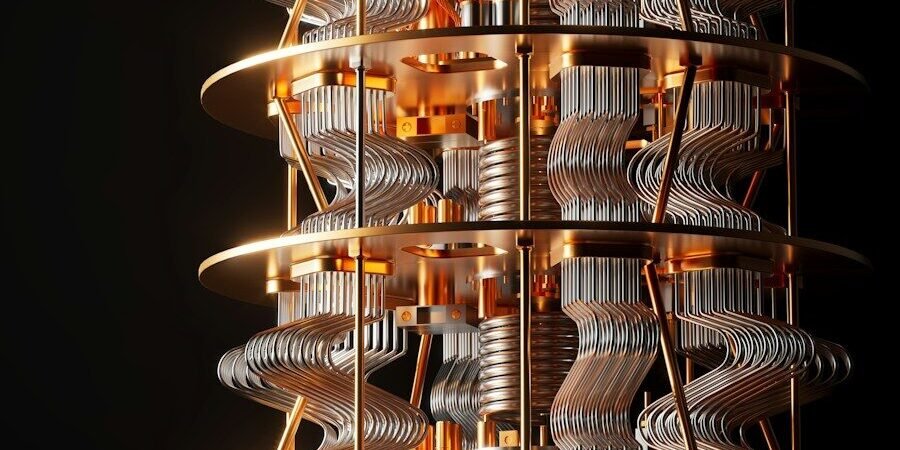
Manipal Institute of Technology, Bengaluru (MIT Bengaluru), part of Manipal Academy of Higher Education (MAHE), has inaugurated Quantum-Hub@MAHE — “Manipal House of Quantum” — a quantum facility at its Bengaluru campus, aligned with India’s National Quantum Mission. The hub begins operations with a 25-qubit open-architecture dilution refrigeration system built for advanced training and experimentation in quantum computing, under a roadmap that progresses from sub-50-qubit systems to 50–150-qubit proof-of-concept platforms and, eventually, to industrial-grade systems with more than 1,000 qubits. MAHE reports investing about ₹25 crore.
The facility exists for hands-on access, not just theory. It gives students, researchers and industry collaborators access to quantum hardware, cryogenic systems and control technologies, and supports experimentation, application development, deep-tech startup incubation, component innovation and testing. Ahead of the launch, faculty and students from the Bengaluru and Manipal campuses trained at MIT Bengaluru and at the QuantrolOx laboratory at QuTech, TU Delft, covering dilution-refrigerator assembly, cryogenics, quantum control and superconducting hardware.
The roadmap and partners
Agreements formalise the initiative with QuantrolOx of Finland, in association with Bluefors of Finland, Qblox of the Netherlands and ConScience of Sweden, alongside C-DAC under the Ministry of Electronics and Information Technology. QuantrolOx describes the arrangement as a seven-figure deal led by its open-architecture platform, with European partners supplying hardware and control expertise. The direction of travel is notable: the hardware stack comes from Europe, while India supplies the talent pipeline and access — the reverse of a fully indigenous build, even as the hub aims for indigenous component development.
The workforce target is concrete: the hub aims to train 100 quantum engineers by December 2026, and to run awareness programmes and camps for Class 10 and 12 students across rural India. It also serves as a national testing and measurement gateway, so startups and institutions can validate ideas on real hardware — a “democratising access” rationale its leadership has stressed, given how few organisations can afford such infrastructure.
Inside the National Quantum Mission
The hub sits inside a larger national effort. India’s National Quantum Mission, run by the Department of Science and Technology, has an outlay of ₹6,003.65 crore over eight years, organised through four Thematic Hubs — computing at IISc Bengaluru, communication at IIT Madras, sensing and metrology at IIT Bombay, and materials at IIT Delhi. Its qubit targets run from 20–50 physical qubits in three years to 50–1,000 in eight. The mission has produced real milestones, including a 1,000-km quantum key distribution network and a demonstrated 64-qubit processor, and has supported 17 startups and 23 Quantum Teaching Laboratories.
Independent evidence, however, locates India’s constraint. The Office of the Principal Scientific Adviser’s September 2026 assessment found a substantial research base — around 18,400 quantum and allied researchers, with India sixth globally in publications — but roughly 120 startups, mostly at ideation or validation stage, of which only about 8% hold or have filed a patent. Private-only financing was around US$11 million in 2025. The report concludes that India’s challenge is less about talent than about turning demonstrations into technology customers can buy and use.
That framing matters for reading the hub honestly. The 25-qubit system is a teaching and experimentation tool, not a research frontier; its value is in access and skills, exactly where the mission’s human-resource goals sit. The 1,000-qubit ambition is a long-term aspiration, not a near-term deliverable; phase one is the only part funded today.
What to watch
Three things will show whether the hub matters. First, whether it hits its December 2026 target of 100 trained engineers, and whether they stay in India’s quantum sector. Second, whether the facility produces research outputs and startup validation rather than training alone, since access without results does not close the commercialisation gap. Third, whether the roadmap advances past phase one, since the 150-qubit and 1,000-qubit phases need funding and hardware the launch does not yet secure.

What the launch does and doesn’t establish
It establishes a new facility, a 25-qubit training system, European supply partnerships, a workforce target and National Quantum Mission alignment. It does not establish research leadership, a commercial product, any publication record, or funding and schedules for the longer roadmap phases.
The honest summary: Quantum-Hub@MAHE is a workforce-and-access play, not a hardware milestone — and that is a reasonable thing to be. India’s quantum computing ecosystem has demonstrated capability — secure networks, a processor, a growing research base — but independent assessment finds its gap is turning those demonstrations into deployable technology and a broader commercial base. A university quantum computing hub that trains engineers, gives startups access to real hardware and builds a pipeline from rural schools into quantum engineering addresses the part of the gap India can most control. Whether it becomes a centre of quantum engineering or a well-equipped teaching lab depends on outputs the launch does not show.
Editor’s Note: This article draws on the MAHE release and the institution’s published materials, plus independent coverage by The Hindu, The Hindu BusinessLine and The Quantum Insider, QuantrolOx’s announcement, PIB/DST National Quantum Mission sources, and the Office of the Principal Scientific Adviser’s September 2026 assessment. The facility, roadmap and partnerships are as described by the organisers; the longer roadmap phases are aspirational and not independently verified, and no research output data was disclosed. No interview was conducted.