
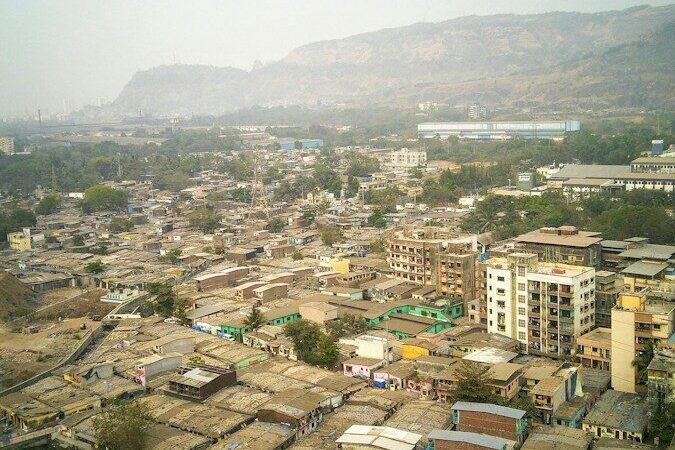
Colt Data Centre Services and RMZ have begun construction of Mumbai 3, an AI-ready data centre at the operator’s Navi Mumbai Campus that will deliver 64MW of contracted power on completion. The AI data centres facility is part of a joint venture the two companies announced in 2024, committing $1.7 billion to Indian data-centre capacity, and construction started after the venture signed the building’s first hyperscale client. On completion, it will raise the campus’s operational capacity to 86MW.
The details released are specific: 64MW of secured contracted power, a hybrid cooling architecture combining conventional air cooling with direct liquid-to-chip cooling, a 220kV gas-insulated substation on campus, carrier-neutral connectivity, and power sourced entirely from renewable energy. The company expects the project to create more than 700 jobs across construction and operations. The venture has committed 250MW of capacity across Mumbai and Chennai, and the Navi Mumbai campus — which already hosts Mumbai 1 and Mumbai 2 — has the potential to reach 148MW at full development.
The announcement is one of a series. India’s data-centre market has drawn a wave of capacity commitments as cloud and AI demand have grown, and Navi Mumbai — with its power availability, land and subsea cable connections — has become the country’s densest cluster. Mumbai 3 is a mid-sized addition to that pipeline, but its design reflects where the industry is heading rather than where it has been.
The density shift
The most consequential thing about the design is not its size but its cooling. Builders designed traditional data centres for storage-heavy workloads at roughly 8–10 kilowatts per rack. AI workloads have pushed that to 30 kilowatts and beyond, and some clusters now approach 200 kilowatts per rack, with projections far higher still. At those densities air cooling stops being practical: the fans required consume too much energy and space, and chips throttle if heat cannot leave fast enough.
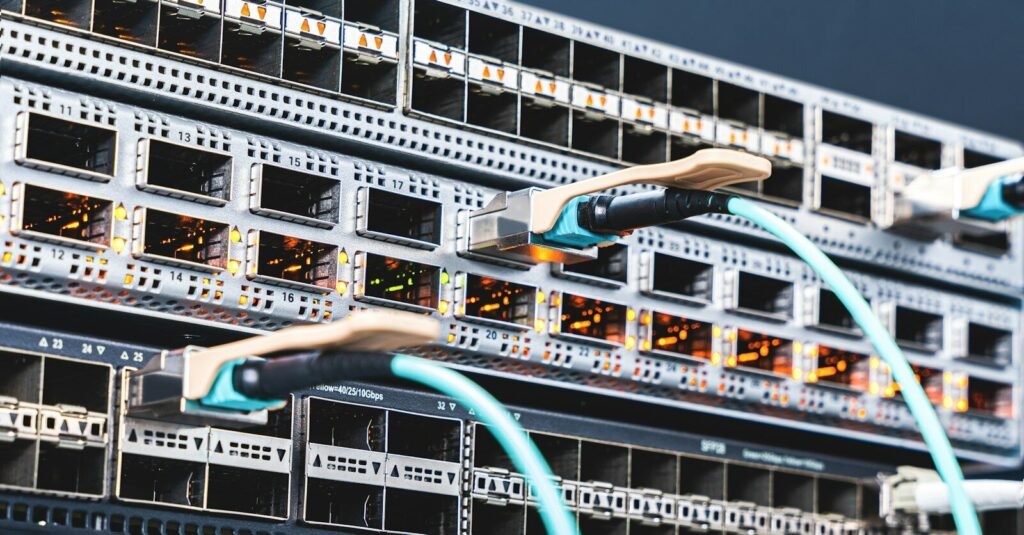
That is why direct-to-chip liquid cooling — cold plates that draw heat straight from GPUs and CPUs, with a coolant distribution unit circulating fluid through a closed loop — has become the default for high-end AI infrastructure. Industry analysis puts liquid-cooling penetration among AI chips at roughly 53% in 2026, heading toward 60% in 2027, driven by chip platforms that assume liquid cooling from the outset. Mumbai 3’s hybrid approach, blending air and direct liquid-to-chip, is the mainstream expression of that transition: the hottest components get liquid, the rest stay on air.
Operators Choose Hybrid Designs
The cooling detail also says something about who the facility is for. Operators choose hybrid designs when a building must serve a mix of workloads — some conventional, some AI-dense — rather than a single, uniformly hot floor. That is consistent with a campus that already hosts enterprise and cloud tenants and is now adding AI capacity, rather than a purpose-built ‘AI factory’ with nothing but liquid-cooled racks.
The power side matters as much as the cooling. A 64MW facility needs its own substation and a resilient feed, which is why the company highlights the campus substation. For AI data centres, power and thermal design are now inseparable — you cannot scale one without the other. That redesign is visible across the industry. AI data centres are being built around rack power densities that would have seemed extreme a few years ago, and the change is forcing operators to rethink power distribution, floor layouts and service access as much as cooling. In the densest halls, power and thermal design now intersect physically: busways, cabling and liquid manifolds all compete for the same space behind a rack.
India’s data-centre boom
The project lands in a market growing unusually fast. India’s operational data-centre capacity reached about 1.8GW in the first half of 2026, up from roughly 400MW in 2019, and researchers project about 6GW by 2030. Mumbai is the centre of gravity: it accounts for the largest share of national capacity and handles the bulk of India’s international subsea cable traffic, which is why operators and hyperscalers cluster in and around Navi Mumbai. The sector drew roughly $38 billion in investment commitments in H1 2026 alone, lifting cumulative commitments since 2021 to about $173 billion, with a growing share tied to AI.
The scale of the pipeline is unusual. India now has one of the largest under-construction and planned data-centre pipelines in the Asia-Pacific region, and a rising share of the capital committed to it is tied to AI rather than conventional cloud workloads. That has attracted not only hyperscalers building for themselves but also ‘neocloud’ providers specialising in GPU-as-a-service, for whom India’s cost base and engineering talent are the draw.
The demand profile has shifted with it. Hyperscalers now drive the majority of absorption, and they increasingly sign large, long-term pre-commitments that let developers build campuses with confidence — which is exactly the model Mumbai 3 describes, having been “fully pre-let” before construction. That pre-letting is also the project’s main risk: concentrating a facility on one anchor tenant makes the revenue dependable but narrow.
Sustainability and local claims
The release leans on environmental credentials. The facility will run on 100% renewable energy and uses a closed-loop cooling design intended to produce near-zero wastewater from the cooling process. Those are meaningful claims in a sector whose water and power consumption has drawn scrutiny as AI loads rise — but they are the company’s, stated rather than independently certified. The jobs figure, 700-plus across construction and operations, is likewise a projection. Water use is the harder question. AI facilities consume power in quantity, and cooling has historically consumed water too, which is why operators promote closed-loop designs and liquid-to-chip systems as reductions rather than absolutes. Near-zero wastewater is a claim about the cooling process specifically, not the facility’s total environmental footprint, and the two are easy to conflate in a press release.
There is also a local-capacity argument: building nearer to where the compute sits shortens the distance between demand and supply, and the campus is meant to support local suppliers and contractors. Colt DCS’s broader portfolio — 15 operational data centres and 12 more under development across nine cities — suggests the company reuses the design template internationally.
What to watch
Three things will show whether Mumbai 3 matters beyond its megawatts. First, whether the operator names its anchor client and sets a commissioning date, which would turn a construction start into a delivery. Second, whether the sustainability claims carry certification rather than assertion, given how much water and power AI facilities consume. Third, whether India’s capacity growth continues at its current pace: the pipeline is large, but power availability and land remain constraints across the major markets, and the market’s heavy reliance on a handful of hyperscaler tenants is a concentration risk the sector has not yet tested through a downturn.
That risk deserves attention as well. Pre-letting an entire building to one hyperscale client de-risks construction but leaves the operator exposed to a single tenant’s decisions, and India’s pipeline is built heavily on such commitments. Whether that model holds through a slower demand cycle — or whether multi-tenant and enterprise demand deepens to balance it — is one of the open questions for AI data centres in India over the next two years. The facility is also a test of execution: a 64MW build in a congested market, delivered to a single large tenant. How fast that pipeline becomes operating capacity is now the number to watch for AI data centres in India.
The broader question is whether AI data centres in India can be powered as cleanly as they are marketed. Operators increasingly sign renewable-energy contracts, but the grid’s own mix still matters, and the water and land constraints that have slowed projects elsewhere apply here too. For now, Mumbai 3 is a data point in a build-out that is expanding faster than any comparable market in the region — and its design shows how much the AI era has changed what a data centre has to be.
What the announcement does and doesn’t establish
It establishes that construction has begun on a 64MW AI-ready facility, that it is part of a $1.7 billion joint venture, that it uses hybrid liquid cooling and renewable power, and that the campus could reach 148MW. It does not establish the identity of the hyperscale client, a commissioning date, independent verification of the pre-let or sustainability claims, or any measured outcome.
The honest summary is that Mumbai 3 is a large, well-specified facility in a market that is expanding faster than almost any other in Asia — but its significance is less about this one building than about what it signals. AI is redesigning the data centre: higher rack densities, liquid cooling, heavier power infrastructure, and campuses pre-let to a single large tenant before ground breaks.
Those changes are reshaping the economics of digital infrastructure, and they are why a construction start in Navi Mumbai is worth more than the megawatt figure alone. For anyone tracking AI data centres, the design choices here are the ones to read. The open questions are the ones the release leaves unaddressed: who the anchor client is, when the facility goes live, and whether the environmental promises hold up to scrutiny.
Editor’s Note: This article draws on the Colt DCS/RMZ release, independent data-centre trade coverage, market research by JLL, Savills, CBRE and Cushman & Wakefield, and technical sources on liquid cooling. The project figures are as described by the companies; the anchor client, pre-let status and sustainability outcomes are company claims and are not independently verified.