
Sounding rocket: OculloSpace flies AZAD to 10 km — and what that does and doesn’t mean
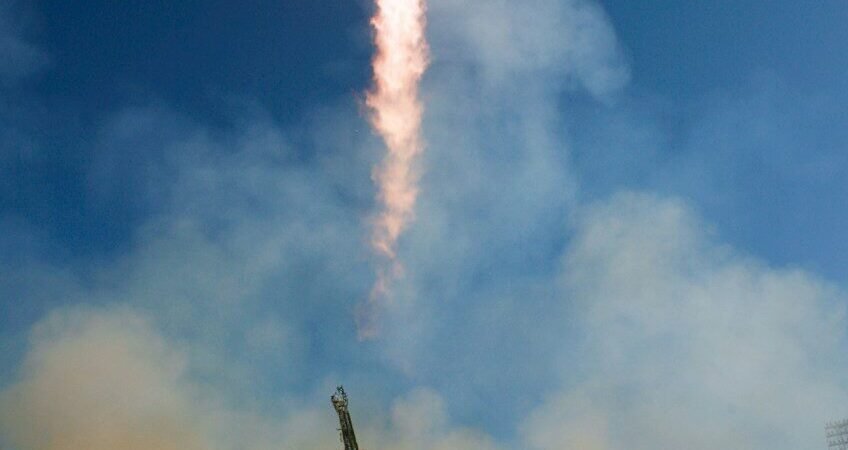
OculloSpace, a Singapore-based space technology company, has flown its first sounding rocket. The vehicle, named AZAD “The Dreamer”, lifted off from Etlaq Spaceport in Duqm, Oman, on 1 October 2026 and reached an apogee of 10 kilometres. The company calls the flight a milestone in building its launch capabilities, and it is the first of a planned series that it hopes will eventually reach the edge of space.
It is worth being precise about what happened, because the words “space” and “rocket” can suggest more than a 10-kilometre hop delivers. A sounding rocket is a suborbital vehicle that carries instruments on a short flight; the category typically reaches 50 to 150 kilometres, between the ceiling of weather balloons and the floor of satellites. Ten kilometres is well below that range — and below the cruising altitude of an airliner. The flight is a real first step for a young company, and the honest way to read it is as a step, not as a reach into space.
What was flown
AZAD “The Dreamer” is a two-stage solid rocket, 4.3 metres long and 26 kilograms in mass. On the Karman X1 mission, both stages completed their burns and the team received telemetry throughout the flight. One thing went wrong: the upper-stage parachute did not deploy. The launch operator, Oman-based Stellar Kinetics MCT, reported that the majority of the mission objectives were met and that the flight produced useful data for future development.
That is a fair description of a first flight. The purpose of a maiden launch is usually to prove the vehicle and gather data, not to break records, and the company’s own site says as much: “The goal was to prove the vehicle, not to reach space.” That candour is a point in the company’s favour; a first flight that over-claimed would be a warning sign, not a strength. The parachute failure is a normal kind of first-flight fault, and it is the sort of thing a second vehicle is built to fix.
What 10 km actually means
The 100-kilometre Kármán line, set by the FAI, marks the conventional boundary between aeronautics and astronautics. Suborbital flights that cross it count as spaceflights; those that do not, do not. At 10 kilometres, AZAD “The Dreamer” flew well inside the atmosphere — roughly at the altitude where commercial jets cruise — and nowhere near space.
That is not a criticism of the flight; it is the context the word “space” tends to obscure. A sounding rocket that reaches 10 km has demonstrated a working two-stage vehicle, separation, and telemetry, all of which are necessary before higher altitudes become possible. But it has not demonstrated the higher-energy flight, thermal loads or guidance that a 100-kilometre shot requires. Those are the hard parts still to come.
Sounding rockets exist because a gap needs filling. Weather balloons top out around 40 kilometres and satellites begin around 120, so the region in between — where much of the upper atmosphere and the ionosphere sit — is reachable only by a suborbital vehicle. Scientists use sounding rockets for atmospheric and ionospheric measurements, microgravity experiments near apogee and technology demonstrations, and they do so far more cheaply than with a satellite. That is the market a small operator can aim for: quick, low-cost flights for researchers and instrument-makers, not orbital launch.
The partners behind the flight
The mission was a collaboration across three countries. OculloSpace built and led the vehicle and owns the programme’s intellectual property. Stellar Kinetics MCT, an Omani company, served as engineering, manufacturing and launch operator. Orbit2Orbit, an Australian firm, supplied a one-kilogram experimental payload called “Snowball”, testing in-flight exposure, containment and launch vibration. WWG Engineering, from Singapore, contributed coated material samples for evaluation during the flight. Etlaq Spaceport provided launch infrastructure and range-safety support.
That division of labour is itself part of the story. For a small company, working with a launch operator and a spaceport is how a first flight becomes possible without owning a range or a full engineering workforce. The mission demonstrated the partnership model as much as the rocket.
Oman’s spaceport
The launch site is significant in its own right. Etlaq Spaceport, at Duqm on Oman’s coast, describes itself as the first commercial spaceport in the Middle East and North Africa, supported by the country’s National Space Programme. The Karman X1 mission was Etlaq’s second successful launch, after Duqm-1 in December 2024, and it was the first there to involve an Omani launch operator working with international partners. Etlaq has signed agreements with international launch firms and pitches Oman’s location and coastal range as advantages.
For Oman, each launch builds local operating experience and supports its ambition to host commercial launch services. Oman has worked to make that easier: the country’s regulator has published a spaceflight framework with a 45-day launch-approval process, and Etlaq positions itself as a fast, flexible gateway for rocket developers. For a company based in a city-state with no launch range, a foreign spaceport with a defined approval path is a practical necessity, not a choice. For OculloSpace, the spaceport offered a range and regulatory path that Singapore — a small, densely populated city-state — cannot provide at home.
The flight also fits a wider pattern. Countries and companies across Asia and the Gulf are building suborbital and small-launch capability, often through partnerships rather than national programmes. Oman supplies a range and a spaceport, Singapore supplies a vehicle and payload integration, and Australia supplies a payload. Each participant gains experience it could not easily buy alone. Whether that model produces a durable launch business, or a series of one-off demonstrations, is the open question for the region.
Singapore’s space SME
OculloSpace is a small enterprise, not a national programme. Singapore’s space sector is small but active, and it has no launch range of its own, so its rocket makers must fly abroad. That constraint shapes the sector: Singaporean firms tend to specialise in satellites, payloads and software, and partner for launch. Building a vehicle and flying it from Oman is, in that light, an attempt to move up the stack. It self-funded roughly two years of development of the AZADRocket programme, led by founder and chief executive Dr Franco Gan.
Six months before the rocket flight, the company’s DECIMALSAT-1 satellite reached orbit — though it is worth noting how: the PocketQube flew as a rideshare payload on SpaceX’s Transporter-16 mission, arranged through Alba Orbital. The company was a passenger on someone else’s rocket, not the operator. That is a common and sensible route for small satellites, but it is a different achievement from launching your own vehicle.
Taken together, the two events show a young firm assembling capability across satellites and suborbital rockets, and doing so with partners rather than alone. That is a plausible path for a small space company; it is also a long way from operating a launch service.
The next step: 100 km
OculloSpace is now developing AZAD-2, a next-generation sounding rocket it aims to fly to 100 kilometres — the Kármán line. It says it is exploring up to five kilograms of research payload capacity, subject to further engineering validation, testing and regulatory approvals, and it is seeking investors, research institutions and payload customers.
The jump from 10 km to 100 km is not linear. Reaching the Kármán line requires substantially more energy, a vehicle that survives higher aerodynamic and thermal loads, and a reliable recovery system — precisely the area where the first flight fell short. The company’s own language, “subject to further engineering validation, testing and regulatory approvals”, is the right caveat. The target is ambitious for a self-funded SME, and it is a target, not a plan with a disclosed date. Small suborbital programmes are not unusual: university teams, national agencies and startups fly sounding rockets worldwide, and several reach far higher than 10 kilometres, with one commercial vehicle crossing 120 kilometres in 2023.
Reaching the Kármán line would place OculloSpace among a small group of companies able to fly payloads to the edge of space, and would make it a candidate for research missions that need high-altitude access. What distinguishes a programme is not the first flight but whether it climbs the altitude ladder reliably and repeatedly.
What the flight does and doesn’t establish
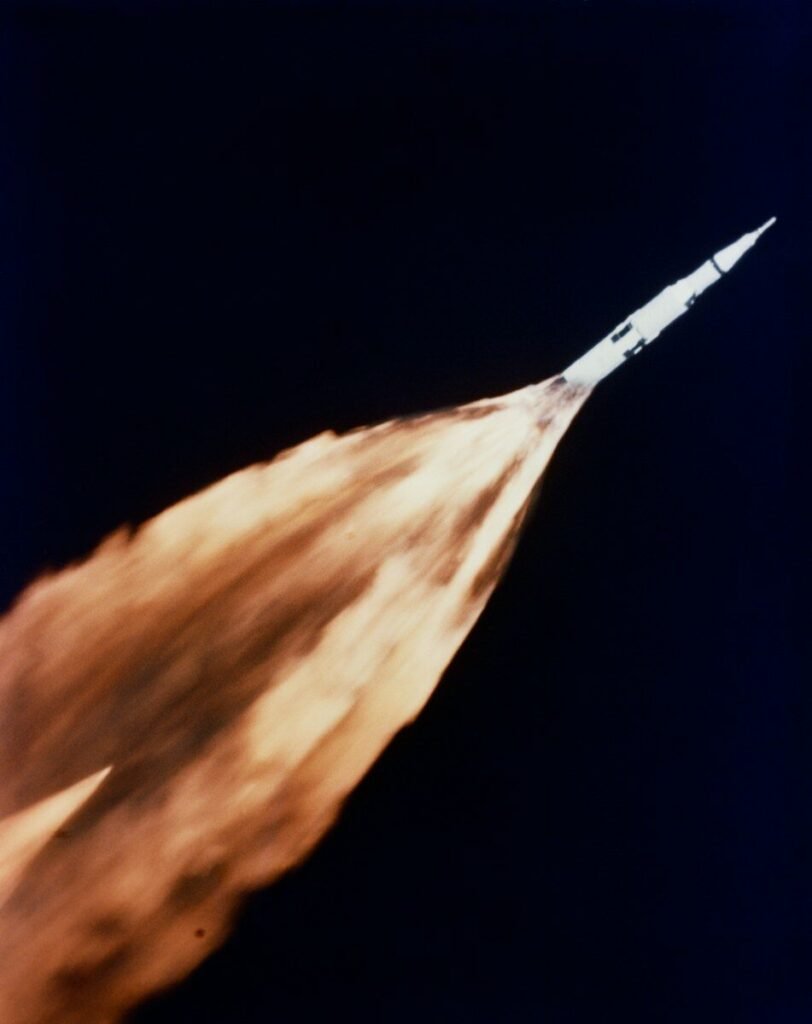
It establishes a genuine first: a working two-stage sounding rocket, a successful multi-country launch campaign from a new spaceport, and useful flight data. It does not establish that OculloSpace can reach space, carry commercial payloads, or operate a launch service. Moreover, it also does not change the fact that the satellite “milestone” was a rideshare.
None of that diminishes the achievement. A first flight that proves a vehicle and returns telemetry is exactly what a first flight should do, and doing it across three countries on a self-funded budget is a real accomplishment. But “space technology” covers a wide span, and a 10-kilometre hop sits at the low end of it. The distance from there to the Kármán line — and to a paying payload customer — is the story to watch.
Editor’s Note: This article draws on the company’s announcement and public materials, plus independent reporting and reference sources on sounding rockets and the Kármán line. OculloSpace‘s performance claims, including the apogee altitude, have not been independently verified, and no interview was conducted. See the source list in the publication package.