
Astrogate and Spacebeam sign an MoU to join the two halves of a space laser link
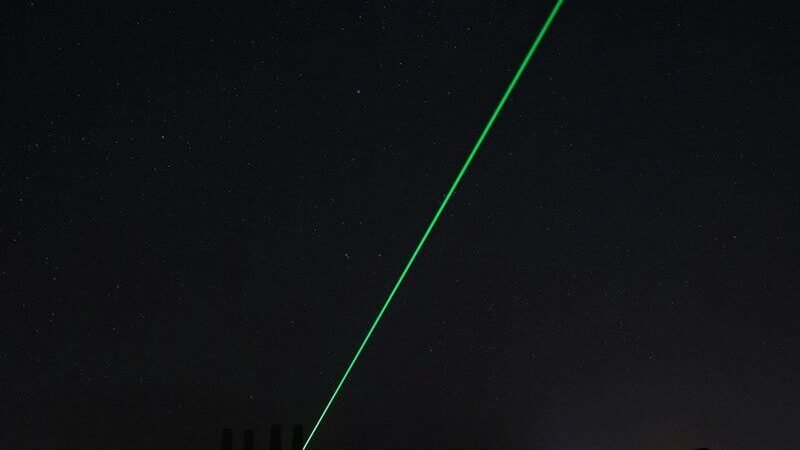
A space laser communication link needs two things that are usually built by different companies: a terminal on the satellite that fires a precisely aimed laser beam, and a station on the ground that catches it through the atmosphere. Astrogate Labs, a Bengaluru deep-tech company, builds the first. Spacebeam Inc., a South Korean company, operates the second — Korea’s first commercial optical ground station, at Osong.
On 9 October 2026, the two signed a Memorandum of Understanding (MoU) on a strategic partnership, executed at the International Astronautical Congress (IAC) 2026 in Antalya, Türkiye. The aim is to validate and demonstrate an end-to-end space-to-ground laser link and to explore selling ground-station access as a service.
It is worth being precise from the outset: an MoU is a statement of intent. The announcement commits the two companies to collaborate and explore; it does not disclose a contract, a value, a volume of work, a timeline or a customer. The interesting story is not the signature but what the two sides bring, and the question the partnership is trying to answer.
What the MoU actually commits to
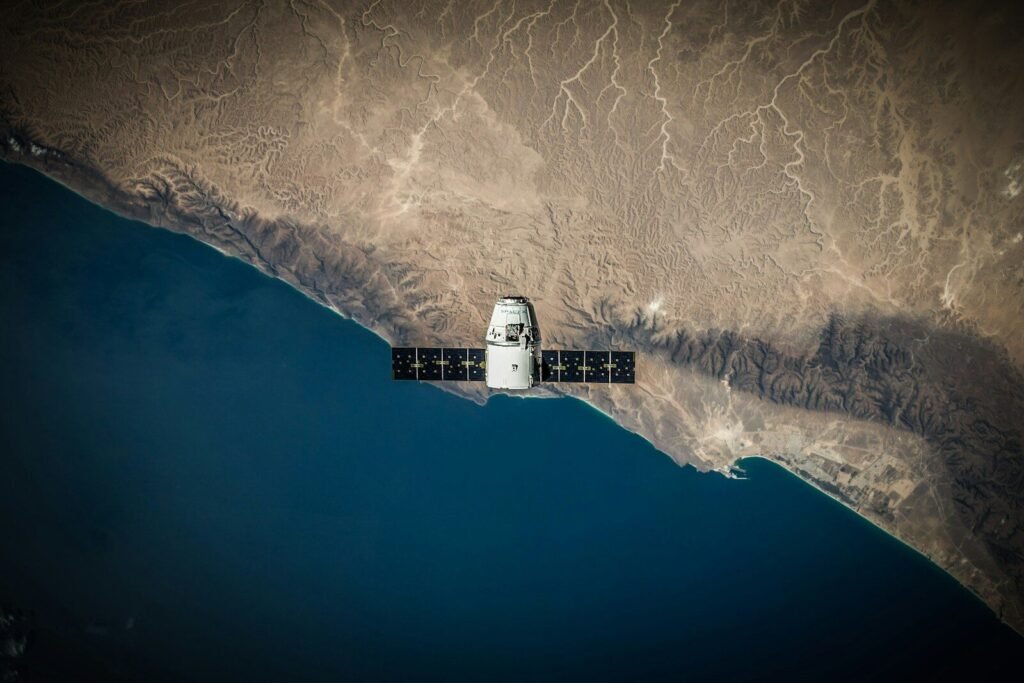
According to the release, the companies will work together on laser-link verification and demonstration testing. That work is described as progressing from terrestrial and air-to-ground testing to a space-to-ground demonstration, in which a satellite carrying Astrogate’s optical communication terminal would transmit to Spacebeam’s ground station. The partners will also explore an “Optical Ground Station-as-a-Service” (OGSaaS) model, under which satellite operators using Astrogate’s terminals could buy access to Spacebeam’s ground-station network to receive their data.
Both are exploratory. There is no disclosed schedule for the space-to-ground demonstration, no committed first mission, and no commercial terms. That is normal for an MoU, and readers should treat it as the start of a relationship rather than a result.
How a space laser link works
Optical, or laser, communication sends data by modulating a laser beam instead of a radio wave. It carries far more data in the same time and, because the beam is narrow, it is intrinsically harder to intercept or jam than radio. It is also licence-free in the sense that it does not require the spectrum allocations that radio links do.
The difficulty is in the aiming and the atmosphere. The terminal must acquire the ground station, lock onto it and hold the link while the satellite moves — a pointing, acquisition and tracking (PAT) problem measured in fractions of a degree. On the ground, the receiving telescope must track the satellite while compensating for atmospheric turbulence, which distorts and bends the beam; this is where adaptive optics — fast-steering mirrors for small telescopes and deformable mirrors for larger ones — comes in. And because clouds block laser light, ground stations have to be sited where skies are reliably clear and dry.
That last constraint is the reason optical ground stations are expensive and unevenly distributed, and the reason the “as a service” idea exists at all: if a station can serve many operators, its cost can be shared.
Two halves, two companies
Astrogate Labs, founded in 2017 by IIT alumni and former Team Indus engineers, designs and manufactures free-space optical terminals in Bengaluru, with an office in Durham, England. Its AstroLink terminals integrate in-house pointing, acquisition and tracking systems and optical modems. The company says it has supplied an indigenously developed satellite-to-ground laser communication terminal to ISRO — describing itself as the only Indian firm to have delivered this technology to the national space agency — and that its space-to-ground terminals have reached Technology Readiness Level 8, meaning flight-qualified. It has completed cross-compatibility testing with the University of Western Australia’s TeraNet mobile optical ground station, and in September 2026 unveiled an optical inter-satellite link (OISL) capability, targeting an on-orbit demonstration in 2027. Its business model is hybrid: sell the terminal, then charge a subscription for downlink through a ground network.
Spacebeam, founded by astronomers and based at Osong in Chungcheongbuk-do, inaugurated what it describes as Korea’s first commercial optical ground station in May 2025. The Osong station pairs a four-metre dome with a 50-centimetre main telescope and a 1550-nanometre infrared laser, and uses adaptive optics to stabilise the link. Spacebeam has demonstrated 10 Gbps free-space links over tens of kilometres and 4K video streaming terrestrially, and it offers ground-station, adaptive-optics and terminal products. Its strategy is explicitly to partner with existing satellite operators rather than build its own satellites.
Put together, the two sides cover the terminal and the ground station. The partnership is essentially an attempt to prove that the halves interoperate — which is precisely what the TeraNet testing was for Astrogate, and what the MoU extends to a second, commercial station.
The market they are entering
Optical communication is no longer speculative. SpaceX’s Starlink constellation uses optical inter-satellite links at scale; NASA has demonstrated very high-rate optical downlinks; and a specialist supplier base — including Mynaric, Tesat, Skyloom, Kepler Communications and CACI — competes for terminals and ground infrastructure. China has advanced its own satellite laser communication programmes. Earth-observation and constellation operators, generating ever more data, are the natural customers, because optical links ease the downlink bottleneck that radio struggles to clear.
Against that field, Astrogate is a small, early-stage company — its disclosed funding runs to roughly two million dollars across several rounds — competing with far larger incumbents. Its claim to distinction is indigenisation: building the terminal in India, for India’s space programme and export markets.
The driver is data volume. Earth-observation satellites and large constellations generate more imagery and telemetry than radio downlinks can move in the short windows when a satellite passes over a ground station. Optical links ease that bottleneck, which is why demand — and competition — is growing.
The India–Korea dimension
The partnership also fits both countries’ space ambitions. India’s Indian Space Policy 2023 opened the sector to private firms, with IN-SPACe as the single-window authorisation body; the 2024 FDI reform allowed up to 100% automatic foreign investment in satellite sub-systems and components, where Astrogate operates; and the government has backed the sector with a ₹1,000 crore venture fund and an ambition of a USD 44 billion space economy by 2033. South Korea, meanwhile, stood up its own space agency, KASA, and Spacebeam’s Osong station has drawn engagement from national research institutions.
For India, a partnership that pairs an indigenous terminal with an international ground station is a way to demonstrate that its hardware works with non-Indian infrastructure — a step towards export credibility. For Korea, it is a route to put its ground station to commercial use with a foreign terminal maker.
The service model and its open question
The OGSaaS idea is the commercial heart of the MoU. Instead of each satellite operator building its own ground stations, operators would buy reception as a service. If it works, it lowers the barrier to adopting optical downlinks, because the operator no longer has to finance a capital-intensive, geographically constrained asset.
But the model raises questions the announcement does not answer. Ground stations can only serve satellites that pass overhead, so a useful service needs a network, not a single site — and Astrogate has previously spoken of building a multi-station network. Pricing, availability guarantees and how a service handles a satellite whose onboard terminal is not Astrogate’s are all unresolved. As with much of the space-services industry, the physics is closer to solved than the business model.
Ground-station access as a service is not itself new. In the radio-frequency world, operators already buy time on shared ground stations — including commercial networks and cloud-hosted antenna services — rather than owning every dish. The optical version is harder, because the asset is a telescope with adaptive optics, sited for clear skies, and because optical passes are short and weather-dependent. If the model works, it extends a familiar commercial pattern into a more demanding physical domain; if it does not, optical ground stations may remain a cost each operator carries alone.
What to watch
For satellite operators and Earth-observation and defence buyers, the milestone to watch is the first space-to-ground demonstration between the two companies — and whether it comes with measured link performance. For investors, the question is whether Astrogate converts its ISRO delivery and TRL 8 status into commercial flight heritage. And, for policy watchers, the test is whether India–Korea space cooperation extends beyond a single MoU. And for anyone tracking the field, the OGSaaS model is worth watching because it will either prove that shared ground infrastructure can be sold at a price operators will pay — or show that ground stations remain a cost each operator carries alone.
What the MoU does and does not establish
It establishes an intent to combine a flight-qualified Indian terminal with a working Korean ground station and to test a service model around them. It does not establish a commercial deal, a completed demonstration, a customer, or a timeline.
Both companies bring something real: Astrogate has delivered hardware to ISRO and qualified a 10 Gbps terminal; Spacebeam runs an operating commercial ground station. What they have not yet shown, together, is an end-to-end link — or that anyone will pay for ground-station access as a service. The MoU is the beginning of that test, not its result.
Editor’s Note: This article draws on the companies’ announcement and publicly available documentation, plus independent reporting and public policy documents. The companies’ technical and delivery claims have not been independently verified, and no demonstration was witnessed. No interview was conducted for this article. See the source list in the publication package.