
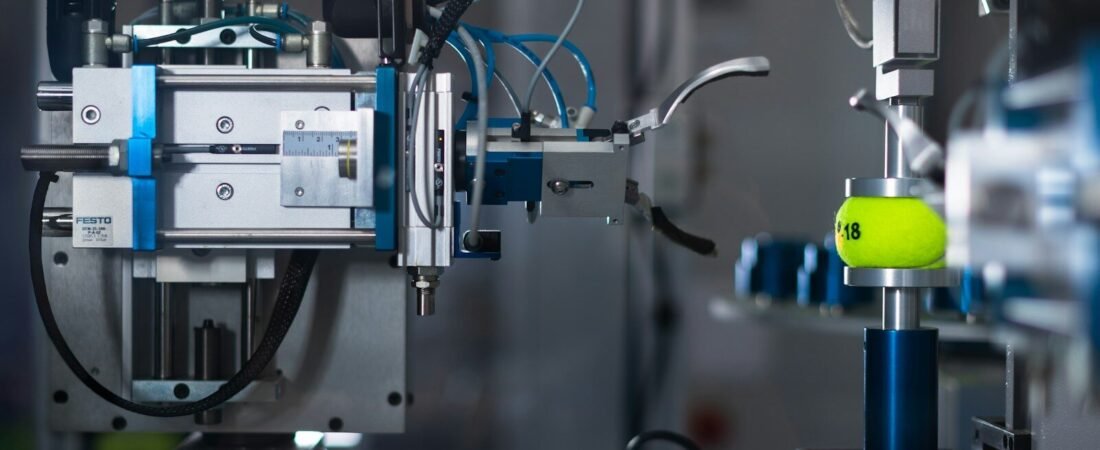
E&R Engineering will open a new plant in Malaysia’s Melaka Free Trade Zone on 13 October. The Taiwanese company makes semiconductor packaging equipment and materials, and its new subsidiary — E&R Semiconductor (Malaysia) — will produce embossed carrier tapes and cover tapes for chip handling and automated assembly.
The facility is small. It will create about 50 jobs, and mass production starts early next year. Yet it is a clean example of a larger shift. As chipmakers diversify away from China, Taiwan’s packaging and materials suppliers are following their customers into Southeast Asia.
What E&R Engineering is building
Carrier tapes and cover tapes are unglamorous but essential. An embossed carrier tape holds individual chips in precisely shaped pockets. A cover tape seals them in. Together they protect components from moisture, contamination and electrostatic discharge as they move between fabrication, testing, shipping and the pick-and-place machines that solder them onto boards.
As chips shrink and advanced packaging packs more into each package — chiplets, 3D stacks, fan-out — the tapes must get more precise. E&R says its Malaysia plant will offer high precision and strong ESD protection to support those trends. It will also host field service engineers for the company’s equipment business, giving local customers faster support.
Why E&R Engineering chose Malaysia
Malaysia is one of the world’s packaging hubs. It accounts for roughly 13% of global assembly, testing and packaging capacity and ranks as the sixth-largest semiconductor exporter. Analysts project its semiconductor market will reach US$16.51 billion by 2030.
Melaka, where E&R is building, is an established cluster with more than 400 manufacturers, including Infineon and Texas Instruments. The state drew RM14.68 billion in approved investments in 2025, its highest in 22 years.
The pull is broader than incentives. Taiwan’s trade with Malaysia hit a record RM233 billion in 2025, and Taiwanese firms are expanding across the country. Chipbond opened a Penang plant worth about US$200 million, and Intel is growing its advanced packaging site there. Analysts describe the pattern as “Taiwan Plus One” — a supply-chain hedge that complements the better-known China Plus One.
The bigger picture
E&R’s move matters because of where it sits in the chain. Packaging materials are a small but strategic layer, dominated by names like 3M, Shin-Etsu and Sumitomo Bakelite. As advanced packaging grows — the market is expected to double from US$43.8 billion in 2025 to US$87.6 billion by 2030 — demand for high-precision tapes rises with it.
By shifting part of its production from China to Malaysia, E&R is doing what its customers are doing. It is shortening the supply chain and locating closer to where chips are packaged.
What to watch
Three things will show whether this is a one-off or a trend. First, whether E&R moves more of its packaging-materials output to Malaysia. Second, whether other materials suppliers follow into Melaka. Third, whether Malaysia’s National Semiconductor Strategy — a RM25 billion push up the value chain — turns the country from a packaging hub into an advanced-packaging one.
A 50-job plant is not a turning point on its own. It is one more marker of where the packaging supply chain is heading.
Editor’s Note
Sources: E&R Engineering’s release of 4–5 October 2026 and its Chinese-language announcement; E&R corporate and product materials; Bernama and The Star on Melaka’s semiconductor sector; the Malaysia Semiconductor Industry Association and MIDA; Reuters and The Edge Malaysia on Malaysia’s National Semiconductor Strategy; The Business Times and asiaeconnews on China Plus One and Taiwan Plus One; Chipbond and InvestPenang; and market research on carrier tape and advanced packaging. The 50-job figure, the product plans and the mass-production timeline are as stated by E&R; TechRecast has not independently verified them. E&R is listed in Taiwan under ticker 8027.