
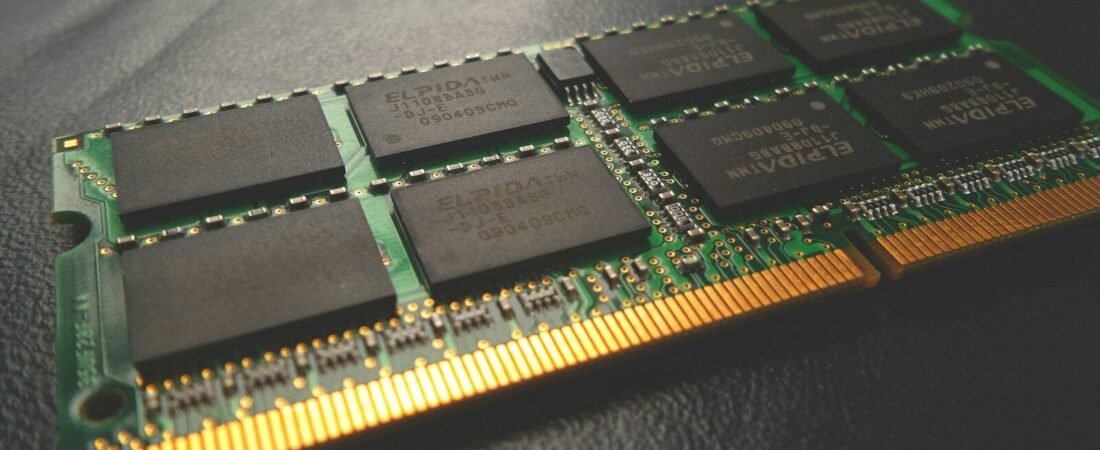
On 30 September, a German memory distributor called MEMPHIS Electronic added two product families from Puya Semiconductor, a Shanghai chipmaker, to its linecard: NOR flash and EEPROM. The release is four paragraphs of linecard boilerplate. Its own quote concedes that NOR and EEPROM “might not be groundbreaking memory technologies.” That is true, and it is exactly why the announcement matters.
NOR flash stores the boot code and firmware that bring devices to life, from a car’s brake controller to a data centre’s retimer chips. It is the least glamorous memory in computing. In 2026, it is also among the tightest.
The announcement is a symptom, not a story
Distribution agreements rarely carry news value. This one does, for what it signals about supply. MEMPHIS has spent 35 years selling memory and carries products from more than 18 manufacturers. When a specialist distributor expands its linecard during a shortage, it is buying optionality for its customers.
The nuance buyers keep missing: a second source relieves the risk that a part disappears. It does not relieve the price. Chinese NOR suppliers sit inside the same tight cycle as everyone else. Adding them to a linecard spreads the risk of a gap, not the cost of the chip.
Why AI suddenly eats NOR flash
An AI server needs three to five times as much NOR flash as a conventional server. The reason is physical. Every retimer — the chip that cleans up a high-speed signal — carries its own NOR flash to load microcode. Complex AI racks contain hundreds of them.
The numbers are large for such a small market. In Nvidia’s GB200 NVL72 rack, NOR content already exceeds $600, and reports suggest it could reach $900 within two years. More than 30 NOR devices sit in each rack, up from three to five in earlier designs. Morgan Stanley estimates Nvidia’s next-generation Vera Rubin platform will carry over 50% more NOR than Grace Blackwell.
The demand does not stop at the data centre. Edge AI systems, AI PCs and robots stream larger firmware than their predecessors. Low-earth-orbit satellites use radiation-hardened NOR for fast boot and over-the-air updates. Cars remain the most inelastic buyer of all: ADAS, digital cockpits and body control consume three to five times the NOR of a conventional vehicle.
The squeeze, in numbers
TrendForce has the clearest picture. NOR flash contract prices rose a cumulative 100-120% in the first half of 2026. High-capacity parts of 256Mb and above are forecast to rise another 90-110% in the second half. Low-density parts of 128Mb and below will rise only 10-20% in the fourth quarter, because Chinese capacity is finally coming online at those densities.
The supply story is structural, not cyclical. Samsung, SK Hynix and Micron have redirected mature-node capacity to HBM and advanced 3D NAND. Every wafer that moves up-market is a wafer NOR cannot use. New NOR capacity takes quarters to arrive, because process migration, yields, qualification and customer design-in all intervene before a chip reaches production.
The economics explain the neglect. A 12-inch wafer running mainstream NAND generates close to $20,000 in revenue. The same wafer producing SLC NAND — NOR’s sibling in the specialty class — generates $6,000 to $8,000. TrendForce expects no significant capacity expansion for either.
The adjacent market is tighter still. Samsung is exiting MLC NAND, cutting global capacity by a forecast 41.7% this year. Kioxia is retiring 2D NAND, with final orders due by September 2026. SLC NAND prices are forecast to rise 120-170% in the second half. Lead times for NOR and SLC NAND now run six to nine months, and fixed pricing has given way to allocation-based quotes, where price is confirmed only when product is allocated.
This is not 2017
NOR flash has been here before. Prices spiked in 2017 on AMOLED and touch-display demand, then a wave of new capacity ended the party. The difference now is direction of travel. In 2017, suppliers left a growing market and returned. In 2026, the leaders are leaving permanently, because AI capacity earns more and stays sold.
The industry’s history explains its fragility. NOR revenues peaked near $8 billion in 2006 and fell to about $2 billion by 2016. Spansion went bankrupt in 2009, merged into Cypress in 2014, and Cypress was absorbed by Infineon in 2020. Samsung exited NOR in 2010.
Three suppliers — Winbond, Macronix and GigaDevice — now hold roughly 90% of the market. Small markets with few suppliers behave badly under demand shocks.
Who gets hurt
Automotive and industrial buyers, disproportionately. Their NOR is wide-temperature, AEC-Q100 qualified and functionally safety-rated. Replacing it means six to eighteen months of requalification. TLC and QLC NAND cannot substitute in a brake controller. When automotive NOR goes short, the programme stops.
The market data already shows the pattern. Tracking mainstream automotive NOR parts, one procurement analysis found prices up 17% and channel inventory down 48% between early March and early May 2026 — before any shortage headline broke. Suppliers tightened quotes quietly, ahead of the news.
The China factor
China is the pressure valve, and it is not fully open. GigaDevice, the world’s number-two NOR supplier with about 18.5% share, plans to lift its global share to 25% within three to five years. Wuhan XMC and Puya have added more than 30,000 wafer starts per month at 55nm since 2024. That capacity pushed commodity prices down by up to 20% — a fact that now looks like ancient history.
Puya itself is the purest expression of the cycle. Founded in 2016 and listed in Shanghai in 2021, it ranked sixth globally in NOR by 2023, shipped over 4.9 billion units in 2024, and reported first-half 2026 net profit up 1,930%. It raised NOR and MCU prices by 15-50%. One caveat worth noting: Puya’s NOR designs rest partly on SONOS process technology licensed from Cypress, and that licence runs to December 2028.
Chinese suppliers dominate low and mid densities. They are not yet full substitutes at automotive grade, where qualification, yield stability and delivery capability still favour the Taiwanese incumbents. That gap is why the squeeze bites hardest at the top of the market.
What it means in India
India imports virtually all of its memory. The country has no commercial memory wafer fab, and over 90% of demand arrives from South Korea, Taiwan and Japan. All sub-55nm NOR wafers come from Taiwan or China. The domestic NOR market is small — about $91 million in 2026 — but exposed.
The macro effect is already visible. India’s import value for memory integrated circuits grew 314% year-on-year by June 2026, against 60% volume growth. The 12-month rolling trade deficit in AI-enabling products reached 2.0% of GDP in July 2026, higher than the gold deficit. Pen-drive and external hard-disk inflation jumped from 3.9% in January to 16.8% in August.
Handset prices crossed 3.5% inflation, their highest in years. Micron’s Sanand plant assembles DRAM and NAND. It does not make NOR.
What buyers should do
Three practical moves. First, audit your bill of materials for every 256Mb-and-above NOR part and every legacy SLC or MLC device, then check channel inventory weekly rather than quarterly. Second, treat second-sourcing as continuity insurance, not a price fix — verify the alternative’s own inventory and pricing before switching. Third, resist the reflex to migrate legacy parts onto pSLC configurations without checking capacity loss; a 32GB device can shed two-thirds of its usable space in that mode.
The wider lesson is uncomfortable. The AI buildout is not only consuming the fastest memory ever made. It is consuming the slowest, oldest and most boring memory too — and no factory is being built to replace it.
Editor’s Note
This article draws on MEMPHIS Electronic’s distribution announcement of 30 September 2026; TrendForce memory research as reported by EE Herald, Tom’s Hardware and BigGo Finance; EE Times’ reporting on NOR flash demand in AI servers; ic.net’s analysis of automotive NOR supply; Microchip USA and Rebound Electronics market bulletins; Mordor Intelligence’s NOR flash and India NOR flash market data; IndexBox’s India semiconductor memory market report; Livemint’s analysis of India’s memory import bill; and reporting on Samsung, Kioxia and Micron legacy NAND exits. Price forecasts, lead times and the GB200 NOR content estimates are third-party analyst figures, not audited results. Market-size estimates differ between research houses; the article uses a mid-range figure. The framing of the distribution agreement as a symptom rather than a story is TechRecast’s own.